A REMINDER ABOUT REALITY

We’re only four days into this week and I’m feeling like we’ve been reminded about reality.

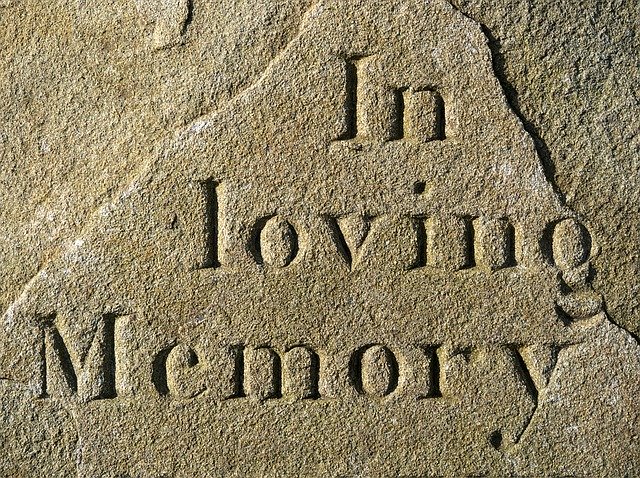
It began on the first day of the week (Sunday) with the news of Kobe Bryant’s death in a helicopter crash. Whether you are an NBA, Lakers, or Kobe fan or not, I’m sure you have a sense of his greatness as a basketball player. There have been many tributes to Kobe since his passing on the news and from individuals who admired him.

What has impressed and encouraged me is the reports of how much Kobe grew and matured the last few years. Since his retirement he had been doing many good things and contributing in many ways. No matter what anyone thought about him as a player, I think everyone would agree that Kobe’s death at the age of 41 is a huge loss.

But it was not just Kobe who died in the accident. There were eight others, including one of Kobe’s daughters, who were killed in the crash.

Sunday night I learned of another unexpected death that understandably did not get the attention of the day’s earlier death. The father of a longtime friend and ministry partner of mine passed away early Sunday morning. He was in his late 70s, but his death (as was Kobe’s) was unexpected. And like Kobe’s family, friends, and fans, my friend’s dad left family and friends to grieve his loss.

This week I have had multiple conversations with members of our church’s senior population about hospital visits and medical procedures. Some of the reports have been more encouraging than others.

The reality is that all of us are going to face and deal with problems of all kinds including health issues and eventually death (if Jesus doesn’t return first). And with regard to death, we won’t know the how or when until it happens. Both Kobe’s passing, and my friend’s dad’s death, remind us of that.

In my conversations with people about death I usually tell them I’m prepared, but not ready. I realize some hear that as a contradiction, but what I mean is that if I die unexpectedly I am prepared, but at the age of 68 I’m not really ready as I hope to keep going for a while.

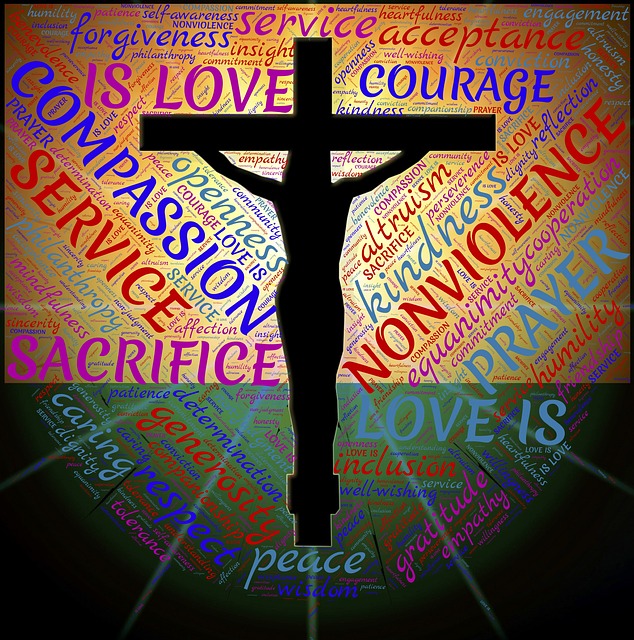
One final thought about reality that should encourage us: “Biblical faith insists that God doesn’t love us because we’re worthy; we have worth and value because God loves us” (Peter W. Marty). Hallelujah!

Feel free to leave a comment below and/or share this post on Facebook or other social media.

Image by <a href=”https://pixabay.com/users/aitoff-388338/?utm_source=link-attribution&amp;utm_medium=referral&amp;utm_campaign=image&amp;utm_content=1207568″>Andrew Martin</a> from <a href=”https://pixabay.com/?utm_source=link-attribution&amp;utm_medium=referral&amp;utm_campaign=image&amp;utm_content=1207568″>Pixabay</a&gt;


THE AGONY AND ECSTASY OF AGING

When I retired in 2014 I bought and read a variety of books about retirement to learn as much as I could about my transition. A lot of what I read was informative and helpful, and I wrote some blog posts about retirement.

Since officially retiring I have continued to work part time and for the last couple of years have had the privilege of being Pastor to Senior Adults at our church. A couple of weeks ago in our Encore Bible Study we began a study of what comes after retirement: aging.

While we are digging into a variety of Bible passages, we are also reading and discussing a book by J.I. Packer entitled FINISHING OUR COURSE WITH JOY: Guidance from God for Engaging with Our Aging. The title says much about its content and the brief 99 pages are giving us seniors a lot to think and talk about.

Yesterday we began our meeting with several participants answering Packer’s question, “How should we view the onset of old age?” Packer suggests “The common assumption is that it is mainly a process of loss” (p. 14). Someone in our group wisely noted “it is inevitable.” In one of his books (written over 35 years ago) Charles Swindoll affirms “The fact is that all of us are getting older. There is no getting around it.” Most of us, I’m sure, are more open to aging than we would be to the alternative.

There are a couple of unvarnished assessments of aging in the Old Testament. One is by a man named Barzillai in II Samuel 19:31-37a. I find his evaluation to be pretty negative. A better known assessment is from the wise man Solomon in Ecclesiastes 12:1-7. Using a variety of metaphors he describes the process of loss in aging. You can go to a commentary for help with the metaphors, but here is the passage from New International Version:

Remember your Creator
in the days of your youth,
before the days of trouble come
and the years approach when you will say,
“I find no pleasure in them”—
before the sun and the light
and the moon and the stars grow dark,
and the clouds return after the rain;
when the keepers of the house tremble,
and the strong men stoop,
when the grinders cease because they are few,
and those looking through the windows grow dim;
when the doors to the street are closed
and the sound of grinding fades;
when people rise up at the sound of birds,
but all their songs grow faint;
when people are afraid of heights
and of dangers in the streets;
when the almond tree blossoms
and the grasshopper drags itself along
and desire no longer is stirred.
Then people go to their eternal home
and mourners go about the streets.

Remember him—before the silver cord is severed,
and the golden bowl is broken;
before the pitcher is shattered at the spring,
and the wheel broken at the well,
and the dust returns to the ground it came from,
and the spirit returns to God who gave it.

For those who may be interested, Psalm 71 is a noteworthy read as well in what Derek Kidner calls “A Psalm for Old Age.”

In my collateral reading for our study of Packer’s book I also read an older book by Sherwin B. Nuland entitled The Art of Aging: A Doctor’s Prescription for Well-Being. I think his observations give us some things to think about in terms of aging:

“Nothing is accomplished by soft-pedaling the physical and emotional realities of aging” (p. 10).

“. . . individual men and women age at different rates” (p. 23).

“Aging is not a disease” (p. 24).

“It is not the adversity itself that determines the shape of the future, so much as our response to the adversity” (p. 114).

It seems obvious that one’s outlook and attitude is extremely important in terms of not only the onset of aging, but the process of aging. As the title of this post suggests, for most people aging will include both the good and enjoyable as well as the bad and troublesome.

At the age of 68 I’m into the process and mostly enjoying it. However, I also realize a lot of the things Ecclesiastes 12 looks forward to will be coming to me in the years ahead. My hope and prayer is that Packer’s book title will be true for me – that in the coming years God will allow me to finish my course with joy.

Hopefully whether you are young or old or in between, you too will stay on course and finish it with joy.

Feel free to leave a comment below and or share this post on Facebook or other social media.

Image by Besno Pile from Pixabay


WHO DOESN’T NEED THIS?

There are multiple possible answers to the question, “Who doesn’t need this?” What I want to suggest is everyone needs, wants, and appreciates encouragement. Some may say they don’t need it, and they may think they don’t, but I can’t imagine anyone not appreciating it when it is given. Truett Cathy, founder of Chick-fil-A, once made the point when he said, “How do you identify someone who needs encouragement? That person is breathing.”

I’ve thought about the idea of encouragement for many years and in my life have both received a lot as well as tried to give a lot. Looking back I think in my early years I received more than I gave, but in the last 25 years or so I think I have been more on the giving end. That makes sense because as we mature we realize just how important encouragement can be.  

My interest in encouragement and desire to be even more intentional about encouraging has been intensified by a book I ordered and read last month entitled Encouragement. Written by Mark Chanski, this book greatly expanded my understanding of encouragement and how to encourage people. I love the sub-title Adrenaline for the Soul as it paints a picture of what encouragement does for people.

In the New Testament the Greek word sometimes rendered encourage or encourager can also be translated with a variety of other words. Jesus’ word for the Holy Spirit in John’s Gospel can be translated encourager. Other options include advocate (or counselor), helper, comforter, exhorter, and consoler. The core of all these options is that the one who encourages is someone who is called to stand beside and help another. (All this certainly describes the work of the Holy Spirit in our lives.)

In Romans 12:8 the Apostle Paul lists encouragement as a spiritual gift some Christians have. John R.W. Stott notes the verb has “a wide range of meanings, ranging from encouraging and exhorting to conciliating or consoling” (Romans, pp. 327 and 328).

No Christian has all of the spiritual gifts listed in Romans 12, but that does not mean a believer who does not have the gift of encouragement should not be an encourager. I especially like Paul’s instruction to his readers in I Thessalonians 5:11, “Therefore encourage one another and build each other up, just as in fact you are doing.” After instructing them he practices what he is saying by encouraging them!

All of us should be encouragers, and we need to be honest encouragers. By honest I mean we should not mislead others with what we know are unrealistic expectations. Rather than encouraging, I think doing so may do just the opposite. (What a challenge for parents and grandparents as they cheer on their children and grandchildren!)

I close these thoughts with a quote from the 19th century influential English “Prince of Preachers” Charles Spurgeon, “It does people good to be told how highly we value them. There is many a Christian man and woman who would do better if now and then someone would speak a kindly word to them, and let them know that they had done well.”

Perhaps you and I can be more aware of the good it does when we speak such a word to others.

Feel free to leave a comment below and/or share this post on Facebook or other social media.

Image by <a href=”https://pixabay.com/users/Alexas_Fotos-686414/?utm_source=link-attribution&amp;utm_medium=referral&amp;utm_campaign=image&amp;utm_content=3276716″>Alexas_Fotos</a&gt; from <a href=”https://pixabay.com/?utm_source=link-attribution&amp;utm_medium=referral&amp;utm_campaign=image&amp;utm_content=3276716″>Pixabay</a&gt;


PRIDE – GOOD, BAD, OR UGLY?

In both the Old and New Testament the Bible warns about the danger of pride. The book of Proverbs has much to say about pride, and the best known verse is probably Proverbs 16:18 that declares “Pride goes before destruction, a haughty spirit before a fall.” In Proverbs 8:13 wisdom personified lets us know “I hate pride and arrogance.”

A lesser known Old Testament verse that has always grabbed my attention is Obadiah 3a where God tells Edom, “The pride of your heart has deceived you.” When I read that I cannot help but think that Edom was not the last to be deceived by a prideful heart.

There are not as many references to pride in the New Testament, but both James 4:6  and I Peter 5:5 quote Proverbs 3:34, “God opposes the proud but shows favor to the humble.” I John 2:16 notes the pride of life, along with the lust of the flesh and the lust of the eyes, “comes not from the Father but from the world.”

It’s obvious that there is a kind of pride that is bad; and not just bad, but sinful. Historically Christianity has put pride first in the list of “the seven deadly sins.”

There is a kind of pride that is bad, but most of us recognize that there is also a good kind of pride. In Romans 11:13 the Apostle Paul writes “I take pride in my ministry.” And in II Corinthians 5:12 he tells his readers he is giving them “an opportunity to take pride in us.” Two chapters later in 7:4 he affirms them with “I take great pride in you.” In Galatians 6:4 Paul instructs, “Each one should test their own actions. Then they can take pride in themselves alone, without comparing themselves to someone else.”

Pride is not always self-centered and boastful. One writer observes, “In a good sense it means having a feeling of self-respect. People can be satisfied with their achievements. They can be proud of something good that they have done.”

There is also a good pride we have in others. I take Proverbs 27:2 seriously: “Let someone else praise you, and not your own mouth; an outsider, and not your own lips.” I’m 68 years old and still appreciate it when someone tells me “I’m proud of you.” And is there any parent or grandparent reading this who has not taken pride in their child or grandchild? Tell them you are proud of them, but don’t overdo it!

In thinking about this subject I was impressed by an article in Psychology Today by Leon F. Seltzer entitled “8 Crucial Differences between Healthy and Unhealthy Pride.” Here are a few selected paraphrased nuggets that made sense to me:

Healthy pride is about self-confidence and represents a positive notion of self-worth.

Healthy pride is not about bragging and boasting.

Healthy pride has nothing to do with comparing oneself to others.

Those with healthy pride motivate and inspire others.

Healthy pride isn’t egocentric. And that’s why those with such pride can take pride not just in their own accomplishments, but in those of others as well.

So there is a bad kind of pride and a good kind of pride – but I also want to suggest there is an ugly kind of pride that goes beyond bad pride. Ugly pride not only brags and boasts about oneself, it also demeans and devalues others. Ugly pride displays an air of condescending superiority towards others.

In his “Parable of the Pharisee and the Tax Collector” in Luke 18:9-14 Jesus painted a picture of ugly pride. Luke’s introduction sets the stage by noting Jesus’ audience: “To some who were confident of their own righteousness and looked down on everyone else, Jesus told this parable.” You may want to read or reread Jesus’ powerful story.

I conclude by encouraging you to have good pride, guard against bad pride, and make every effort to never engage in ugly pride.

Feel free to leave a comment below and/or share this post on Facebook or other social media.

Image by <a href=”https://pixabay.com/users/pixsila-1193636/?utm_source=link-attribution&amp;utm_medium=referral&amp;utm_campaign=image&amp;utm_content=3011747″>pixsila</a&gt; from <a href=”https://pixabay.com/?utm_source=link-attribution&amp;utm_medium=referral&amp;utm_campaign=image&amp;utm_content=3011747″>Pixabay</a&gt;


SELF-CARE OR SELF-DISCIPLINE?

Like many who will read this post, I have thinking about changes I would like to make as we begin another New Year. I’m not making a list of resolutions as such – they never seem to last very long for me – but I have been thinking about the two concepts of self-care and self-discipline.

Obviously I’m not a medical doctor, a psychiatrist, a psychologist, or a trained counselor; but at the age of 68 I’m experienced enough to know that it would be in my best interest to make some changes. I’ve been asking myself if I need more self-care or more self-discipline; and I’ve come to the conclusion that I need more of both.

Self-care and self-discipline are not exactly the same thing, but they do have a lot in common as they overlap in many ways. Let me share some things I’ve come across as I have been reading about both.

One observer defines self-care as “activity that we do deliberately in order to take care of our mental, emotional, and physical health.” For those who might think of self-care in terms of something negative, Agnes Wainman explains “it is something that refuels us, rather than takes from us.” Neither is self-care being selfish. We take care of ourselves so that we can care for and contribute to our loved ones and others.

Serious self-care involves practices and activities that we include as well as those we exclude. To take care of ourselves we have to identify those things that do not contribute to our well-being and cut back on them or totally eliminate them. At the same time we need to incorporate activities and practices that do contribute to our well-being.

The three practices that are most often mentioned in connection with physical health include healthy eating, getting adequate sleep, and physical exercise. (Of the three, the one I most need to pay attention to is healthy eating. Having diabetes ups the ante when it comes to healthy eating.)

But self-care is not just about our physical health, but also about our mental, emotional, and spiritual health. Specific suggestions for these other three avenues of health are not as obvious or talked about as much as those for one’s physical health. Most of us know what would be helpful for our spiritual health, it’s just a matter of doing it. My sense is that for mental health we should regularly read to feed our minds and challenge our thinking. In terms of our emotional health, I’m thinking we should make sure we spend time with people who are encouraging and uplifting rather than just those who are negative and depressing.

A basic definition of self-discipline is “the ability to make yourself do things when you should, even if you do not want to do them.” I don’t particularly like this definition and would prefer something along the lines of “self-discipline is the resolve to choose to do things you should do even if and when they are not pleasant.”

Self-discipline is very similar to self-control; and the emphasis upon self suggests we do or not do something without needing anyone else to tell us to do or not to do it. Like self-care, self-discipline is about both doing some things and not doing others.

Self-improvement author Remez Sasson explains “Self-discipline appears in various forms, such as perseverance, restraint, endurance, thinking before acting, finishing what you start doing, and as the ability to carry out one’s decisions and plans.” He adds what most of us have heard all our lives, “One of the main characteristics of self-discipline is the ability to forgo instant and immediate gratification and pleasure, in favor of some greater gain or more satisfying results, even if this requires effort and time.”

True self-discipline is an expression of inner strength that enables a person to be more patient, tolerant, understanding, and considerate. It also helps us withstand external pressure and influence.

One final thought on self-discipline from mental skills coach H.A. Dorfman, “Self-discipline is a form of freedom. Freedom from laziness and lethargy, freedom from expectations and demands of others, freedom from weakness and fear and self-doubt.”

If you have read so far, I hope your thinking has been stimulated regarding self-care and self-discipline. And if appropriate for you, I encourage you to give consideration to taking some steps forward in terms of both self-care and self-discipline. Neither is something that just happens – we need to be intentional. As like so much in life, self-care and self-discipline take practice!

Feel free to leave a comment below and/or share this post on Facebook or other social media.

photo credit: DaPuglet <a href=”http://www.flickr.com/photos/43810158@N07/47925027771″>Happy Birthday Boo Lefou!</a> via <a href=”http://photopin.com”>photopin</a&gt; <a href=”https://creativecommons.org/licenses/by-sa/2.0/”>(license)</a&gt;

FINALLY!

This year’s Christmas season has not been like previous years for me. The past few weeks I’ve been more like the Grinch and Scrooge before their turnarounds than after the light dawned on them. Yesterday and today, however, it’s been getting better and I’m finally there.

I’ve been listening to Christmas music on the radio as I drive and rereading both the traditional Christmas passages in Matthew and Luke as well as what I call non-traditional Christmas verses.

It was attending our Christmas Eve service a couple of hours ago that put me over the top. I was reminded of all the similar services I led the past 30 plus years. There’s nothing like children reading the Christmas story, singing the carols, enjoying special music, and lighting candles to get into the Christmas spirit.

All along during the past few weeks I’ve been rereading a book entitled The First Days of Jesus written by Andreas Kostenberger and Alexander Stewart. One thing they said that rang my Christmas bell the most was this: “He [Jesus] wasn’t born like a king; he didn’t live like a king; and he certainly didn’t die like a king. He was nonetheless God’s promised and long-waited King” (p. 142).

I’m excited about tonight and looking forward to tomorrow. I hope you are enjoying the Christmas spirit and have a Merry Christmas. (By the way, the picture above is not of our living room!)

Feel free to leave a comment below and/or share this post on Facebook.


WHY DID JESUS COME?

In this third and final post about what I call “non-traditional” Christmas verses I want to underscore three more in which Jesus himself clarifies why he came.

The first is in the Sermon on the Mount in which Jesus corrects a misunderstanding about his coming:  “Do not think that I have come to abolish the Law or the Prophets; I have not come to abolish them but to fulfill them” (Matthew 5:17). Rather than doing away with the Old Testament, Jesus was completing it. His coming was the fulfillment of prophecy, his teaching (especially in the Sermon on the Mount) was “filling full” God’s prescriptions for his people, and his eventual crucifixion provided atonement for disobedience and sin.

The second of these statements in which Jesus speaks about the reason for his coming is in Matthew 20:28, “the Son of Man did not come to be served, but to serve, and to give his life as a ransom for many.” In an exchange with his disciples Jesus made it clear that the purpose of his coming was not to be served, but to serve by providing the ultimate service through his death on our behalf.

The third is John 10:10b when Jesus calls himself the Good Shepherd and contrasts the purpose of his coming with those who had come before him. Calling them thieves and robbers, he proclaims, “I have come that they [his sheep] may have life, and have it to the full.” Jesus’ coming and service was to give his followers life – not just life, but a totally different quality of life.

By highlighting these non-traditional Christmas verses I am not suggesting we should neglect the traditional passages in Matthew and Luke about Mary’s conception of Jesus by the Holy Spirit, Gabriel’s assurance to both Mary and Joseph, their trip to Bethlehem, Jesus’ birth and the manger, the angels and shepherds, or Herod and the Magi.

As I do every year, this month I have spent time in both Mathew’s and Luke’s accounts of Jesus’ birth. These accounts are the heart of our Christmas celebration and always will be. However, these three non-traditional verses, and the context in which they are given, can also add to our focus on Jesus’ coming as a baby and why he came.

Feel free to leave a comment below and/or share this post with others.


JOHN’S CHRISTMAS VERSES

In last week’s post I introduced three Bible verses that I call non-traditional Christmas verses. Even though they do not speak directly to The Christmas Story, they clearly relate to Christmas. All three remind me of Christmas. You can read or reread that post here: https://bobmmink.com/2019/12/11/non-traditional-christmas-verses/. In this post I want to underscore two more non-traditional verses that come from John’s Gospel.

Only two of the four gospels record details of The Christmas Story – Matthew and Luke. And although both tell the story, they give us different details of what happened. In terms of the miraculous conception, Matthew tells us primarily about Joseph and Luke tells us primarily about Mary. Luke records information about the trip to Bethlehem, the birth of Jesus, the angels, and the shepherds. Matthew records information about King Herod, the Wise Men, and going to Egypt.

Mark, the shortest of the gospels, says nothing about the birth of Jesus, but begins his account with John the Baptist, Jesus’ baptism, and the launch of his public ministry.

John’s account is the most unique of the four. He doesn’t include The Christmas Story as such, but begins similarly with the book of Genesis talking about the beginning. In the opening verse of chapter one John uses the term Word to refer to Jesus as being present with God from the beginning. In verses 2-13 he says much more about the Word.

Verse 14 is one of John’s two Christmas verses as he declares, “The Word became flesh and made his dwelling among us. We have seen his glory, the glory of the one and only Son, who came from the Father, full of grace and truth.” John 1:14 says a lot about Jesus referring to his birth, who he was, and where he came from. Jesus was both fully divine and fully human, both at the same time.

John’s second Christmas verse is arguably the most famous verse in the entire Bible. Following his account of an exchange between Nicodemus and Jesus in John 3:1-15, in verse 16 John declares, “For God so loved the world that he gave his one and only Son, that whoever believes in him shall not perish but have eternal life.” As authors Kostenberger and Stewart note, “God loved the world not because it was so worthy and deserving of his love, but because it was so needy and desperate for it” (The First Days of Jesus, p.190). It wasn’t the Wise Men who began the tradition of giving for Christmas!

As I do every year, I am spending time this month reflecting on both Matthew and Luke’s accounts of The Christmas Story. You are probably revisiting them too. Perhaps these two simple but profound verses from John’s Gospel will add something to our focus this year on Jesus’ birth and God’s gift.

Feel free to leave a comment below and/or share this post on Facebook or other social media.

Image by Jonathan Fahrny from Pixabay

NON-TRADITIONAL CHRISTMAS VERSES

During these weeks leading up to Christmas most of us are hearing and/or reading the traditional passages of Matthew and Luke about Zechariah and Elisabeth, Mary and Joseph, the shepherds and angels, and the wise men. Even though we know the passages, we are still glad to hear and consider them again as we celebrate the occasion.

There are also a number of verses in the New Testament that relate to Christmas that are non-traditional in our Christmas focus. In this post I want to highlight three of them and in the next two weeks underscore five more. None of them will replace what we have in Matthew and Luke or familiar Old Testament prophecies, but each of these less noted references can add to our Christmas celebration.

The first non-traditional Christmas passage is Galatians 4:4 and 5. Paul writes, “. . . when the set time had fully come, God sent his Son, born of a woman, born under the law, to redeem those under the law, that we might receive adoption . . .” (NIV). That clearly summarizes the Christmas message, doesn’t it? I won’t elaborate on what Paul writes, but I encourage you to reflect on each phrase.

A second non-traditional Christmas verse that always reminds me of Christmas is also from the Apostle Paul. He writes in II Corinthians 8:9, “. . . you know the grace of our Lord Jesus Christ, that though he was rich, yet for your sake he became poor, so that you through his poverty might become rich” NIV). That’s a condensed, but clear statement about what Jesus did for us, isn’t it? Again, take some time to unpack Paul’s creative Christmas explanation.

The third and final verse in this post is much different from the first two; but to me it is especially appropriate for Christmas. In Acts 20:35 Luke records Paul citing a teaching from Jesus not included in any of the Gospels, “In everything I did, I showed you that by this kind of hard work we must help the weak, remembering the words the Lord Jesus himself said: ‘It is more blessed to give than to receive’ ” (NIV).

The reason I think Acts 20:35 is a Christmas verse is because giving and receiving is such a large part of our Christmas celebration. Note that Jesus did not say there is no blessing in receiving, but the blessing of giving is greater. We all have been greatly blessed through receiving; not just at Christmas, but throughout our lives. Hopefully we all also have been even more blessed through our giving. It’s not an either/or, but a both/and.

This year as we revisit the beautiful Christmas passages that mean so much to us let’s allow them to warm and fill our hearts as they do each year. Perhaps we also can ponder these three non-traditional verses that I believe can also mean much to us and fill and warm our hearts during this season.

Feel free to leave a comment below and/or share this post on Facebook or other social media

Image by Jeff Jacobs from Pixabay


THANKSGIVING: WHAT’S THE BIG DEAL?

The way the question above is asked suggests that Thanksgiving isn’t a big deal. However, I disagree – the holiday of Thanksgiving is a big deal and so is the giving of thanks.

The Thanksgiving holiday is not the only day of the year we should be thankful, but it is a day of emphasis and focus on being thankful. If someone is not in the habit of expressing gratitude on a regular basis, at least once a year the holiday does raise the subject.

I don’t know if the holiday is a big deal to God or not, but giving thanks seems to be. The Bible includes numerous calls and instruction to be thankful as well as examples of expressing thanks (especially in the book of Psalms). Luke 17:11-19 tells of an occasion when Jesus healed 10 lepers; only one returned to thank him and while Jesus appreciated the one who did return, he was apparently disappointed the other nine did not.

I think the importance of being thankful and expressing it is seen in the Apostle Paul’s letter to the Colossians. In a three verse section he underscores being thankful three times: “Let the peace of Christ rule in your hearts, since as members of one body you were called to peace. And be thankful. Let the message of Christ dwell among you richly as you teach and admonish one another with all wisdom through psalms, hymns, and songs from the Spirit, singing to God with gratitude in your hearts17 And whatever you do, whether in word or deed, do it all in the name of the Lord Jesus, giving thanks to God the Father through him” (Colossians 3:15-17). Giving thanks seems like a big deal to Paul, doesn’t it?

God’s call to us as his children is not just to be thankful on the holiday, but all year long. And the challenge is not just to be grateful to him, but to all those who serve us, care for us, bless us, and enrich our lives. What we must guard against is just going through the motions of politely saying thanks without really feeling gratitude. Hopefully, those to whom we express thanks appreciate it; but expressing thanks is also good for us!

I hope you have a wonderful Thanksgiving Day with family and/or friends, a tasty and satisfying meal, and a meaningful public or private time of expressing gratitude. And thank you for reading this post.

Feel free to leave a comment below and/or share this post on Facebook or other social media.