A TRIBUTE TO MY FATHER-IN-LAW

We got the call Saturday afternoon that Jan’s dad had passed away. We were not surprised because he was almost 95, had been battling pneumonia, and had lost his wife this past June. Understandably, the last four months had been difficult for him. As well as being an interesting man, in my personal experience Willard H. Kissell was a loving father, a gracious father-in-law, and a caring grandpa.

I got some real insight into his love for his daughter the night I asked him for permission to marry Jan. He asked me two questions. The first was did I think I would make enough as a pastor to support her. At that point I was a part time youth minister, but I assured him I was confident I would. His second question was did I have any thoughts about being a missionary. I don’t think he would have objected if I said yes, but after I assured him I felt no calling to be a missionary he gave me his blessing.

My respect for him was evidenced through the years as I always addressed him as Mr. Kissell. I don’t know how many times he told me to call him Bill, but for some reason I was never comfortable doing so. My respect for him was not one-sided. I know he had great respect for me as well as his son-in-law, a pastor, and the father of two of his grandchildren.

After Jan’s mom passed away Mr. Kissell married a woman who had two girls who were still in at home and in school (she also had a son who was older and on his own). Without trying to take the place of their father, he accepted them and treated them as though they were his. Those two girls and their families, as well as their brother and his family, are grieving Mr. Kissell’s passing in some respects the same as Jan and her brother.

One thing about Mr. Kissell I especially enjoyed was his competitive spirit. Downstairs at their house he had a bumper pool table and when Jan and I were dating we would play. Some evenings I spent more time playing bumper pool with him than I did with Jan. After he retired he took up golf and we played when we visited in Cincinnati, Tennessee, and Tucson. The last time I visited, we played multiple solitaire. At the age of 94 he still beat Jan and me. (The picture above is from that last visit.)

Mr. Kissell was a member of what Tom Brokaw called “The Greatest Generation.” He was a US Navy veteran of WWII serving in the South Pacific. We talked about that during my last visit and in answer to a question told me about seeing General MacArthur.

As with many of the greatest generation, Mr. Kissell only worked for one company his entire career. Following his graduation from Penn State he went to work for Procter & Gamble and stayed there until he retired. He also lived in the same house 52 years leaving that home just a few months ago.

A few words come to mind as I reflect on my experience with and knowledge of my father-in-law: loyal, kind, stable, respectful, patriotic, and generous.

Please join me in praying for Willard H. Kissell’s family and extended family as they grieve, and especially for my wife, Jan, and son, Rob, as they travel to Cincinnati.


WHAT WAS I THINKING?

Most readers are probably familiar with the 17th century French philosopher Rene Descartes’ statement: “I think: therefore I am.” I’m not sure exactly what it means, but most people think it is profound. Not too long ago I was reminded of a lesson about thinking that reminded me of Descartes’ words.

What got my attention was the report from a friend that something I had said to another friend was offensive. And it troubled me because the person I offended has done a lot for me and is someone I greatly respect. The sad part is that I was trying to be funny, but was oblivious to the fact that my words had landed with a thud.

Since then I’ve been wondering about all the people I have spoken to through the years who may have been hurt by what I said and I didn’t even know it. And my sense is that most of the time when it happened I was trying to be funny.

My friend who shared with me how my words had hurt our mutual friend challenged me to do better in the future by thinking about what I say. Borrowing from and adding to Descartes words, I want to suggest a lesson we all need to keep in mind and practice: “You think, therefore you are—therefore think about what you say—before you say it.”

And there are two additional important lessons for me not prompted by Descartes: don’t always try to be funny, and remember teasing is not always appropriate.

If the question is “What was I thinking?”, too often in my life the answer has been “I wasn’t thinking.” In the future I plan and hope to do more thinking about what I say– and before I say it.

Feel free to leave a comment below and/or share this post on Facebook for other social media.

License: <a href=”https://creativecommons.org/licenses/by-nd/2.0/”>(license)</a&gt;

DON’T ACCEPT IT—DON’T DO IT!

My first job in the church was as a youth minister intern in the summer of 1970 when I was 19 years old. At the end of that summer I went back to college and became the part time youth minister at a church in Cincinnati.

During those years as a youth minister I often quoted the Apostle Paul’s words to Timothy, “Don’t let anyone look down on you because you are young” I Timothy 4:12 (NIV). Because I was so young myself, I not only shared the instruction with our youth, I took it to heart as well.

I am now 66 and took a new church job this summer as Pastor to Senior Adults. This past Saturday evening at our ENCORE senior adult ministry kick off banquet I again quoted I Timothy 4:12. But I flipped the reason Paul gave to Timothy from “because you are young” to “because you are older.”

I don’t think it was a word when Paul wrote Timothy, but what he was talking about is what is known today as ageism. The pure definition of ageism is “prejudice or discrimination on the basis of a person’s age.” And while today it usually is associated with those who are older, depending upon who is doing the looking down upon, it can be any age group—including young people (as it was with Timothy).

I’ve thought a lot about Paul’s instruction “don’t let anyone look down on you because of your age” (younger or older). And the reality is that we cannot stop it, can we? I’m thinking a better rendering might be “don’t accept anyone looking down on you because of your age.” (I’m not saying don’t accept them, but rather don’t accept their looking down on you.) We can’t stop them, but we don’t have to accept it.

I really like some of the other translations of Paul’s words about ageism: don’t accept it when others “think less of you because you are young/old” (NLT), “treat you as if you are unimportant because you are young/old” NCV), “make fun of you, just because you are young/old” (CEV), “put you down because you are young/old” (The Message), “disregard you because you are young/old” (JB), and “slight you because you are young/old” (JB).

Readers who are familiar with I Timothy 4:12 probably remember the second part of Paul’s instruction, “Don’t let anyone look down on you because you are young, but set an example for the believers in speech, in conduct, in love, in faith and in purity.” My take on what Paul was calling Timothy to do was not to go down to the level of those who thought less of him because of his age, but to set and be an example for them.

In my new ministry I’m doing the same thing I did in my first ministries, except with  a different age group. Then I was challenging young people not to accept people looking down on them because they were young, but to be an example to them. Now I am challenging senior adults not to accept people looking down on them because they are older, but to be an example to them.

Here’s my challenge to those who read this post: don’t look down on anyone because of their age, and don’t accept it when it happens to you or someone else!

Feel free to leave a comment below and/or share this post on Facebook and other social media.

Photo License: <a href=”https://creativecommons.org/licenses/by-nc-nd/2.0/”>(license)</a&gt;


SHOULD WE BOAST? IT ALL DEPENDS

Should we boast? My inclination is to say “no.” There are numerous warnings against pride and calls for humility for the people of God in the Bible. Pride is generally ugly and boasting is usually irritating.

That’s why a lot of people, if they don’t already know it, will be surprised to learn that the Bible actually tells us to boast.

In I Corinthians 1:31 the Apostle Paul paraphrases Jeremiah 9:24, “Therefore, as it is written: ‘Let the one who boasts boast in the Lord’.” Before this quotation Paul reminds his readers that when they became Christians they were not in the upper class. In the second part of verse 26 he writes, “Not many of you were wise by human standards; not many were influential; not many were of noble birth.” But in spite of that, and because they had no reason to boast, God chose them. But now that they are in Christ, if they are going to boast, they should boast in the Lord.

To get a better grasp of what is being said, I think it is helpful to review the context and fuller statement of Jeremiah from which Paul borrows. Jeremiah 9:23 tells us the LORD says: “Let not the wise boast of their wisdom or the strong boast of their strength or the rich boast of their riches.” It reminds me of what Paul told the Corinthians they were lacking when they became Christians.

But then in Jeremiah 9:24 Jeremiah continues, “but let the one who boasts boast about this: that they have the understanding to know me, that I am the LORD who exercises kindness, justice and righteousness on earth, for in these I delight.” That sounds like the reasoning Paul gave for God choosing the Corinthians.

So we know what we aren’t to boast about (and not everything that we are not to boast about is listed in Jeremiah 9:23), and what we are to boast about: God, who He is, and that we know him. But I don’t think that means we are to be smug about it, but that our boasting is to be humble and not self-serving.

As Christians we do know God, but we don’t know or understand everything about him. To act and talk like we do is not the kind of boasting the Bible calls for.

Last week I was working on a Bible study I am teaching and in my preparation came across a quote by Frederick Dale Bruner I had underlined when I first read the book in 2013. In the book THE HOLY SPIRIT: Shy Member of the Trinity Bruner notes there is an attitude that “is confident that, in at least some divine matters, it has the truth, the whole truth, and nothing but the truth. Hence, it is prepared to cast into the outer darkness all who do not agree with it” (p. 67). I’m confident that is not what God, Jeremiah, or Paul meant when suggesting we boast in the Lord.

Have you ever been confident that you had the truth, the whole truth, and nothing but the truth about God? I have, and I was wrong.

Should we boast? Yes; but if we boast we should do so with and in a spirit of humility.

Feel free to leave a comment below and share this post on Facebook or other social media.


ONE OF THE BUNCH

I don’t know what your job is, but I know a lot of us are “just one of the bunch” where we work. And there’s nothing wrong with that—most of us not only work with others, we need those who work with us to do what our job requires of us. Team is a better word to describe the group we work with, but I want to use bunch to help make the point of this post.

Earlier this summer I saw an ad for a soon to be published book entitled “HOW TO LEAD WHEN YOU’RE NOT IN CHARGE.” Since I had just been added as a part-time staff member at our church, I thought it was something I would enjoy reading, so I pre-ordered it. I received it a couple of weeks ago and have not been disappointed.

For the past 30 years I had been the leader of the team at the church I served and now I was just a member of the team. Not only was I no longer the top banana, I wasn’t even the second banana. You can see why the title of the book got my attention; but the sub-title closed the deal for me: Leveraging Influence When You Lack Authority. It isn’t that I want to be in charge, I don’t. But I do want to have some influence with our senior pastor, our staff, and our church leadership.

Author Clay Scroggins is currently the lead pastor of North Point Community Church serving under Andy Stanley (well-known pastor and popular author). In this book he draws on his own experience as he has worked his way through a variety of organizational levels having started as a facilities intern. While the context of the book is church ministry and pastoral staff, his observations and suggestions are not limited to a church setting. There is a lot to consider for anyone who is not in charge, but wants to contribute to the direction of the team of which they are a part.

The book is divided into three sections with ten chapters. For me, chapter 8 (Challenging Up) was the most intriguing. The title tells what the chapter is about, and it deals with the most sensitive aspect of leading when you’re not in charge. Sensitive as it is, Scroggins thoughtfully gives sound advice and direction for doing it.

A few quotes will give you a taste of the book, as well as some things to think about:

“. . . we don’t need authority to have influence” (p. 27).

“The lie we believe is that we must wait until we’re in the leader’s seat before we can have . . . influence.” (p. 33)

“. . . leading when you’re not in charge does not mean you learn skills to get ahead by circumventing the authority above you.” (p. 70)

“If you are in a season of waiting, what can you learn now that you can only learn from the seat you’re in?” (p. 164)

“The way you lead into a conversation can often trump the content of the conversation.” (p. 207)

“. . . the whole purpose of this book is to encourage you to begin leading from where you are.” (p. 214)

“Leadership is not simply a matter of authority. Leadership is about influence.” (p. 193)

If the subject of this book interests you, I recommend it. If you plan to get it, let me know. And if you get it, after you read it, please let me know what you thought. Even if you’re not interested, I hope this post has given you something to think about.

Feel free to leave a comment below and/or share this post on Facebook.

Photo License: <a href=”https://creativecommons.org/licenses/by-nc-nd/2.0/”>(license)</a&gt;

IDENTITY: WHO AM I?

We’ve read and heard a lot about identity the last few years. Along with many other possibilities, people discuss racial identity, gender identity, and identity politics. Earlier this week I read that dictionary.com named identity their Word of the Year for 2015.

It also seems like I hear and read a lot about people who experience what is called an identity crisis. I don’t think I’ve ever experienced an identity crisis, and hope I never do. I’ve seen enough TV shows and movies to know amnesia would be awfully frightening. I also have been around enough people with Alzheimer’s to pray that the Lord protects me from it.

So who am I? I know a variety of factors contribute to my identity; and I’m fairly certain it’s the same for you. Three big aspects of my identity right now include being a grandpa, a high school Bible teacher, and a pastor to senior adults. But I’m also a racquetball player and a golfer (but not really that good in either sport). In terms of a lot of current discussion I am white, male, and politically none of your business.

I am also a husband, father, brother, friend, citizen of the USA, Ohio State University and Dallas Cowboy football fan, dog owner, neighbor, and resident of Texas. I could go on, but I think you get the point. I am a lot of different things to different people. But who am I to me?  Is there something that is basic and at the core of who I am? Is there anything that is most important in terms of my identity?

Challenged by some things I have recently read and heard, I’ve been thinking lately about my identity. I hope it won’t surprise readers who know me to read that I think the foundation of my identity is in two areas: I am a child of God and I am a follower of Jesus.

In a very real sense, every human being is a child of God because the Bible teaches that every person is created in the image of God. Some may not accept that, and many do not act like it, but I believe it is true. While every human being is a child of God, not everyone is a follower of Jesus. Being a Christian is a choice one makes for herself or himself.

As we go through life some aspects of our identity change. Some readers probably remember going from being a teenager to an adult; or from a student to an employee; or from being single to being married; or to becoming a parent. One of the greatest adjustments of my identity took place almost three years ago when I stepped down as senior pastor of the church I served for 30 years. As challenging as it was, I didn’t see it as an identity crisis.

I’m fulfilled and enjoying who I am at this stage of my life. And I know more changes lie ahead for me. But what will not change is that I am a child of God and a follower of Jesus.

Who are you?

Feel free to leave a reply below and/or share this post on Facebook or other social media.

Photo by Warren Wong on Upsplash

I DON’T KNOW

As the years have passed and I have gained experience I have come to realize I don’t know as much as I once thought I did. And it isn’t that my faith has eroded or I am any less committed as a Christian; it’s just that in some areas I am more flexible than I was in the past. It’s now easier for me to say “I’m not sure” or “I don’t know”.

What brought this to mind was an article I recently read about the Bible’s teaching on the relationship and role of women and men in marriage and the church. Within the greater Bible believing community, there are two basic understandings: complementarianism and egalitarianism.

For readers to whom these terms are new, they represent a more “traditional” view and less “traditional” view. As the terms suggest, complementarianism stresses the complementary nature of men and women while the egalitarianism stresses the equality of both genders. The two basic understandings inform both the role of women in church leadership and a wife’s submission to her husband.

In my teaching from the creation account, I always stress that men and women are equal, but they are not the same. That doesn’t address the issues of submission in marriage and the role of women in church leadership, but I don’t see how anyone could disagree with my statement. The basic meaning of both complementarianism and egalitarianism are true.

In June I read an interesting book, the title of which got my attention. PARTNERS IN CHRIST: A Conservative Case for Egalitarianism says a lot about the author, John G. Stackhouse, Jr. Those who hold that all egalitarians are liberal and don’t believe the Bible may be interested in reading Stackhouse’s book.  I also like the primary title because I too see the creation account of male and female in marriage as a partnership.

Paul’s instruction to wives and husbands in Ephesians 5 is challenging. Wives are instructed to submit to their husbands and husbands are instructed to love their wives. I’ve never heard anyone suggest that since Paul does not tell the wives to love their husbands, they don’t need to love them. Of course wives are to love their husbands. It seems to me that in the same way there is to be mutual love in marriage, there also will be mutual submission. Love is not limited to husbands, nor is submission limited to wives.

I am familiar with a variety of Bible passages that speak to the role of women in ministry and leadership in the church, but none similar to Ephesians on marriage. I continue to read those passages, as well as what other informed and committed believers say about them. When it comes to the issue of women and men in church leadership and the role of men and women in marriage, there is a lot I don’t know. I am, however, more flexible than I was in the past.

It is something to keep on thinking and talking about, isn’t it?

Feel free to leave a comment below and/or share this post on Facebook or other social media.

Photo License: <a href=”https://creativecommons.org/licenses/by/2.0/”>(license)</a&gt;


“I WON’T BE BACK!”

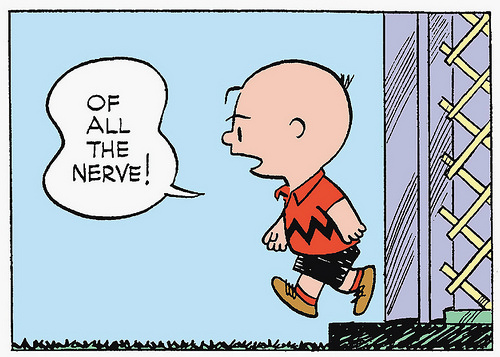
“I won’t be back!” That’s what I told our pastor as we left church following worship this past Sunday. In his message he talked about Sabbath, restlessness, always checking our mobile devices, doing too much, always being busy, never slowing down, and a lot of other related things I found offensive. And I told him so.

I asked him why he didn’t just go ahead and call me out by name. I knew he was talking to me, and I told him I didn’t come to church to be convicted and challenged by him about the things he had addressed.

In the sermon he reminded us of when Jesus went off by himself early in the morning to pray and how Peter seemed to chastise him because everyone was looking for him (Mark 1:35). But that didn’t seem to bother Jesus. Our pastor also pointed us to a time Jesus invited the apostles to get away with him by themselves to a quiet place to get some rest (Mark 6:31).

As he neared the end of his talk he took us to Psalm 46 (a passage I was already quite familiar with). In my ministry I often used the opening verses at funerals about God being our refuge and strength, an ever-present help in trouble (Psalm 46:1). I knew about the rejoinder in verse 2 that therefore we would not fear no matter how bad things got because God was still in heaven and active.

I also knew about the last verse of Psalm 46 and God’s call for us to “Be still, and know that [he] is God.” And God’s promise that “he will be exalted among the nations and in the earth” (verse 10).

What I don’t think I had ever done before was connect the first part of Psalm 46 with the last part—especially verses 1 and 2 with verse 10. Since “God is our refuge and strength, an ever-present help in trouble,” it seems appropriate that we would take the time, relax, and “Be still, and know that he is God.” Not only does that seem appropriate, I’m thinking it is also very important.

I’ve had a couple of days to think it over, and I’ve changed my mind about not going back. I’m going to go back. And I’m going to take to heart some of what he said on Sunday. But I hope he heard me: I don’t go to be challenged and convicted. Do you?

Feel free to leave a reply below and/or share this post on Facebook or other social media.

photo credit: Tom Simpson <a href=”http://www.flickr.com/photos/11279883@N00/26307465315″>Of all the nerve!</a> via <a href=”http://photopin.com”>photopin</a&gt; <a href=”https://creativecommons.org/licenses/by-nc-nd/2.0/”>(license)</a&gt;

WHAT IRRITATES YOU?

If everyone who reads this post would give two or three answers to the title question there would be a lot to read! I’m not asking you to send me your answers, but I would like you to think of a couple of things that irritate you. Most of us probably have a few in common, and a few of us may have one or two that are unique to us. If anyone says nothing irritates him or her, you are more mature than the rest of us, or you may struggle with honesty.

The reason this is on my mind is because I have been regularly irritated with many drivers on my side of the city. There are two specific places where I make a right hand turn from one road to another, and the road I’m turning onto has a lane exclusively for those entering. What irritates me is that almost every driver in front of me stops, looks back, and waits until there is an opening to move into the next lane while ignoring hundreds of feet of entry lane. These are not freeway entries, but the principle is the same. Why can’t these drivers see that and keep going?!?!

As much as I would like to, I do not sit on my horn and shake a fist at them. Surprising to me, I don’t even blow my horn or give them a dirty look. Believe it or not (some of you won’t), I patiently and calmly wait for them to get out of the entry lane, and then I model the way the engineers planned the road construction by slowly continuing in the entry lane and merging behind the person who irritated me. So far I don’t think anyone has caught on.

The purpose of this blog is not to impress you with my driving, or to instruct readers about entering surface streets that have entry lanes. In addition to asking about what irritates you, I want to ask you two additional questions: why does what irritates you irritate you, and what does your irritation lead you to do? Questions two and three are more important than the first one I asked at the beginning. I confess I am a person who is too easily irritated–and that is not becoming of a pastor, Christian, husband, father, or grandfather.

The reason I am convicted about being easily irritated is because in I Corinthians 13:5 the Apostle Paul tells us love “is not irritable” (New Living Translation and English Standard Version) or “not touchy” (Living Bible and Phillips Modern English). I think some the other translations are more definitive: “isn’t quick tempered” (CEV), “is not easily provoked” (KJV), “is not easily angered” (NIV), and “is not quick to take offense” (NEB). Real love is more than just not being irritable–love is not easily irritated. In his commentary on I Corinthians, Gordon Fee tells us the verb is in the passive voice and “it suggests that the one who loves is not easily provoked to anger by those around him or her.”

You can see why I am troubled by being too easily irritated. I want to be a loving person; and being easily annoyed by what others do is not loving. It’s really not about being irritated by drivers who don’t understand the entry lane. It’s about being easily irritated by and expressing that irritation to those who are close to me—those I love. I think what I need to do is stay aware of my tendency, consider why I am too often touchy, and keep on monitoring and restraining my response when I am irritated. After all, these are people I love.

Where are you with this unattractive trait? It can be irritating, can’t it?

Feel free to leave a reply below and/or share this post on Facebook or other social media.

Picture used with permission of our grandson’s mother, our daughter.

SOMETIMES, IT’S JUST EASIER TO . . .

How would you complete the title of this post? The possibilities are endless given the situations and subjects that may come to mind.

The title is part of a quote that caught my eye and sparked my thinking. Talking about our response to new music, American music critic Stephen Hyden suggested, “Sometimes, it’s just easier to stick with what you know.” I think all of us would agree with Hyden’s observation. When it comes to music, it is easier to stick with what we know because it is music with which we are familiar.

I don’t think, however, that Hyden’s insight is limited to music. Do you? When it comes to new things, most of the time it is easier to stick with what we know—that with which we are familiar and comfortable. And that is certainly understandable. With a lot of our preferences, practices, and habits sticking with what we know is fine. But not always.

My concern is that there are times when we stick with what we know when we shouldn’t. A couple of phrases that raise a yellow flag for me are “We’ve always done it this way” and “Let’s not rock the boat.” Those phrases suggest a hesitancy or unwillingness to try something new. Sticking with what we know may be easier and more comfortable, but it very well may also result in our being stuck.

If we never rock the boat, and if we always do it the way we’ve done it, it will be difficult for us to make changes, move forward, and do better. Not only that, sticking to what we know doesn’t require more from us or challenge us. As good as what we know may be, there may be something even better. Sticking with what we know can keep us from learning and stifle our creativity and growth. Not sticking to what we know may enhance what we know and who we are.

When should we stick with what we know and when should we not stick with what we know? When should we rock the boat and when should we not rock the boat? I’m confident there are times when we should stick with what we know and I’m also sure there are times when we should not stick with what we know. How do we know when to do which?

Before I answer the question I want to relay a quote from a book I have been reading today that has absolutely nothing to do with the subject of this blog post. Yet what the author wrote speaks to pretty much all of life: “there is no point in pretending that we know more than we do” (Canon of Scripture by F.F. Bruce, p 9). I don’t know when we should stick to what we know and when we shouldn’t. Deciding is part of the challenge, isn’t it?

What do you think?

Feel free to leave a reply below and/or share this post on Facebook and other social media.

photo credit: spaceyjessie <a href=”http://www.flickr.com/photos/29106084@N06/30832484316″>Red vs Blue</a> via <a href=”http://photopin.com”>photopin</a&gt; <a href=”https://creativecommons.org/licenses/by-nc-nd/2.0/”>(license)</a&gt;