MY BASEBALL COACH

The man who was my Little League Baseball coach died on Monday. He was my first, last, and only baseball coach. I think I played around eight years for him. Since I am now almost 65 I would guess he had to be in his late 80s.

When I first started playing Little League Baseball my dad was still a weekend alcoholic and not really engaged with my brother and me. As a matter of fact, I don’t think he ever went to watch me play in one of the games. Mr. Nell was not a father figure to me, but he was a man who did a lot for me.

During my years of Little League Baseball we practiced on Tuesday and Thursday evenings and played our games on Saturday mornings. Mr. Nell picked me up at my house for every practice and game and dropped me off at home afterwards. After most games he took us out for ice cream.

His wife was also very involved and his son was on the team. But neither parent treated Timmy any different from the rest of us. Mr. Nell taught us how to catch, throw, hit, bunt, and run the bases; but he taught us much more. His attitude, style, outlook, and gentle discipline set the example for us. I don’t remember a time when he ever went over the top in dealing with any of us or in disputing an umpire’s call.

As much as he meant to me as a baseball coach, that was not the most important thing he did for me. Around the age of 10 one day he dropped me off at my house and said “We’ll see you in church on Sunday Bobby.” I replied, “Mr. Nell, I don’t go to church.” And my best friend chimed in, “Why don’t you come to my church?” My best friend’s church was close enough for me to walk on Sunday mornings.

I went to church the next Sunday morning and have been going ever since. My older brother started going with me and we both became Christians. My mom started going and eventually rededicated her life. And after a few years my dad began going and eventually became a Christian. After high school I went to Bible College and became a pastor. When I was ordained as a Christian minister the elder at my home church who said the prayer was my dad.

Several years later my home church invited me back to preach on Father’s Day. Somehow Mr. Nell found out about it and came that Sunday instead of going to his church. What a privilege it was for me that morning to affirm, honor, and thank both Mr. Nell and my own dad. I spoke by phone with Mrs. Nell Sunday evening from the hospital and she indicated that Sunday meant a great deal to him.

I haven’t seen Mr. Nell in many years but my emotions are stirred by that Sunday evening phone conversation and learning of his passing on Monday. I thank God for Mr. Nell and how God used him to make a huge difference in my life and family. And I hope and pray that God has used me and will use me to make a difference in the lives of others like me.

Feel free to comment below and share if you think others would enjoy this post.

photo credit: <a href=”http://www.flickr.com/photos/24949967@N08/2592977872″>Jack-catching</a&gt; via <a href=”http://photopin.com”>photopin</a&gt; <a href=”https://creativecommons.org/licenses/by/2.0/”>(license)</a&gt;


THE BOTTOM LINE

THE BOTTOM LINE

Usually the phrase “the bottom line” refers to the net profit gained or lost with a business after expenses. But the phrase is also used in a variety of other contexts to note the essential or most important consideration for an endeavor, decision, or result. What is the bottom line when it comes to following Jesus and serving Him? An exchange between Jesus and the Apostle Peter following his well-known triple denial of Jesus the night He was arrested suggests an answer to the question.

Those familiar with the biblical record will remember earlier that night Peter boasted “Even if all fall away on account of you, I never will” (Matthew 26:35). He was responding to Jesus’ warning and referring to his fellow apostles. In response to Jesus’ prophesy Peter would deny Him three times Peter insisted “Even if I have to die with you, I will never disown you” (verse 35). Jesus, of course, was right and Peter was wrong.

The exchange between Jesus and Peter I find so comforting and encouraging occurred early one morning a few days following Jesus’ resurrection on the shore of the Sea of Galilee. The editors of my Bible have the heading “Jesus Reinstates Peter” over the section beginning in John 21:15. Jesus asks Peter, “Simon son of John, do you love me more than these?” I’m not sure what Jesus meant by “these,” but His question is clear. Peter replies, “Yes, Lord, you know I love you.” And Jesus commissions him, “Feed my lambs.”

Two more times Jesus asked Peter the question. And most observers think Jesus asked him three times because Peter had denied Jesus three times. Peter said yes the next two times and Jesus responded “Take care of my sheep” and “Feed my sheep.” We can relate to Peter I’m sure when John tells us “Peter was hurt because Jesus asked him the third time” but Jesus was making a point. And the point was, and still is, that the bottom line for following Jesus and serving Him—no matter how miserably we have failed—is our love for Jesus.

In volume 2 of his brief books John for Everyone N.T. Wright affirms, “Here is the secret of all Christian ministry, yours and mine, lay and ordained, full-time or part-time. It’s the secret of everything from being a quiet, back-row member of a prayer group to being a platform speaker at huge rallies and conferences. If you are going to do any single solitary thing as a follower and servant of Jesus, this is what it’s built on. Somewhere, deep down inside, there is a love for Jesus” (p. 165).

I think Wright’s right. What do you think?

Tell us in the comments below and share this post if you think others would be encouraged by it.

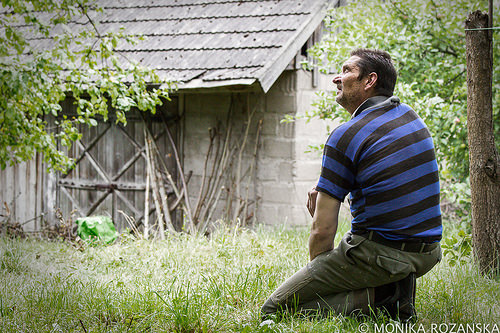
photo credit: <a href=”http://www.flickr.com/photos/90986326@N03/14755699311″>Looking at the sky</a> via <a href=”http://photopin.com”>photopin</a&gt; <a href=”https://creativecommons.org/licenses/by-nc-nd/2.0/”>(license)</a&gt;


WHO WANTS TO BE ORDINARY?

Most people would probably answer the title question of this post, “Not me,” but I’m not sure I would be unhappy with the designation for myself. Michael Horton’s 2014 book Ordinary was written for Christians who are always looking for the next radical, epic, impactful, life-changing, ultimate, extreme, awesome thing in the Christian life and/or church. Oversimplifying his point, he suggests this hunger keeps us disillusioned and disappointed. His suggestion: “we need a renewed appreciation for the commonplace.”

I had forgotten about Horton’s book until this week I was reading about the apostle Philip in Leon Morris’s commentary on The Gospel of John. In Matthew, Mark, and Luke Philip is included in the list of apostles, but nothing else is said about him. He is mentioned four times in the Gospel of John, and Morris observes “each time he seems somewhat out of his depth, and it is probable that he was of limited ability.” (Who isn’t?)

Philip is mentioned in John 6:7 when he reports to Jesus there is no way they could gather the funds to feed the people. He is mentioned in John 12:21 when he is checking with Andrew about some visitors who have come to see Jesus. And he is mentioned in John 14:8 when in the upper room he requested of Jesus, “Lord, show us the Father and that will be enough for us” (14:8). Philip was no Peter, James, or John; neither was he a Matthew or Thomas; and Philip was no Judas (thankfully).

But what I find interesting and encouraging is John’s first mention of Philip: “The next day Jesus decided to leave for Galilee. Finding Philip, he said to him, ‘Follow me’” (1:43). Morris suggests “the fact that on this occasion he did not seek Jesus, but Jesus went to find him may indicate some lack of initiative.” (Perhaps, but not necessarily.)

It is what Morris wrote next that grabbed my attention: “It is so encouraging to reflect that Jesus went out of His way to find this perfectly ordinary Philip and to enlist him in the apostolic band. Some of the apostles were undoubtedly men of great ability, but Philip compels us to reflect that others were perfectly ordinary people. Christ had and has use for such followers.”

I’m wondering if we shouldn’t rethink what it means to be ordinary. I remember a sermon many years ago from Matthew 25:14-40. Translated now in the NIV as “The Parable of the Bags of Gold,” it then was called “The Parable of the Talents.” If you’re not familiar with the account it’s about a master giving three of his servants five talents (bags of gold), two talents (bags of gold), and one talent (bag of gold). In the message the preacher noted “God must really love one talent people—he made so many of them!”

The takeaway from the parable is that the master did not expect the two talent man to perform as the five talent man or the one talent man. He wanted each of them to perform in terms of what he had given them. The one talent man was not judged because he didn’t accomplish what his two colleagues did, but because he did not do anything with what he had been given.

If you’re ordinary you’re in good company. The Lord wants to use you. He doesn’t expect you to be someone else—He wants you to be who He made you to be.

Comment below and feel free to share this post.

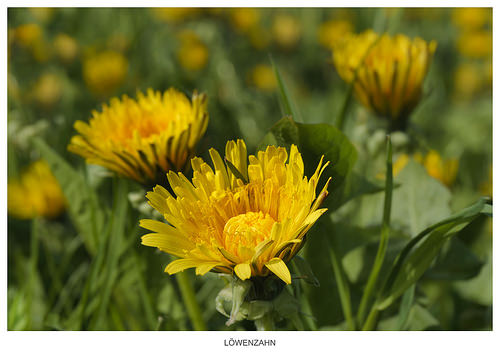
photo credit: <a href=”http://www.flickr.com/photos/127751590@N03/17367866236″>dandelion</a&gt; via <a href=”http://photopin.com”>photopin</a&gt; <a href=”https://creativecommons.org/licenses/by-sa/2.0/”>(license)</a&gt;


IT’S A NEW YEAR, SO WHAT?

From one perspective moving from Thursday to Friday this week is no big deal. Many will party Thursday evening and a lot of us will watch college football on Friday, but both are simply a part of the season as we celebrate the New Year’s holiday.

From another perspective, however, closing one year and beginning a new one can be significant. And through the years that significance has been found in New Year’s resolutions. While statistics show most resolutions are broken within the first month, a few people actually keep their resolutions and that changes their lives.

None of us are probably surprised to learn that one research group found that resolutions related to better health was the number one resolution. Somewhat surprising, however, was that a better relationship with God came in a close second. Older Americans, African-Americans, Hispanics, and Christians all were more likely to make resolutions about God than about health. A spokesperson for the research noted, “We don’t hear a lot about it, but a relationship with God is still something people want.”

In reading about the research group’s findings I was reminded of a Facebook post by a longtime friend of mine a couple of days ago that simply said “I want to get closer to God.” I commented on his post “Good for you.” His response made my day: “You planted the mustard seed. I need to grow it. Thank you!”

The ending of one year and the beginning of a new one gives us the opportunity to look back as well as to look forward. We can note some of the things we did that we shouldn’t have done and some of the things we didn’t do that we should have done. For a lot of us that includes how we can make God a greater part of our lives.

I would not presume to suggest you make New Year’s resolutions or not. But I do think we can use the occasion of a New Year to do some thinking and remind ourselves of some things.

I have used the following poem for more than 40 years in speaking to youth and adults about a New Year. As you savor the words of this anonymous author I hope this poem comforts, challenges, and encourages you as we turn the page this year from 2015 to 2016.

He came to my desk with a quivering lip, the lesson was done. “Have you a new sheet for me, dear teacher? I’ve spoiled this one.”

I took his sheet, all soiled and blotted and gave him a new one all unspotted. And into his tired heart I cried, “Do better now, my child.”

I went to the throne with a trembling heart, the year was done. “Have you a new year for me, dear Master? I’ve spoiled this one.”

He took my year, all soiled and blotted and gave me a new one all unspotted. And into my tired heart he cried, “Do better now, my child.”

HAPPY NEW YEAR!

(Feel free to leave a reply below and/or share this post.)

photo credit: <a href=”http://www.flickr.com/photos/22168167@N00/11681619475″>Nouvel An 2014 à Montréal</a> via <a href=”http://photopin.com”>photopin</a&gt; <a href=”https://creativecommons.org/licenses/by/2.0/”>(license)</a&gt;

The Sights, Sounds, and Smells of Christmas

Here is the link to an article I wrote about this week’s celebration. I hope you enjoy it.

http://christianstandard.com/2015/12/the-sights-sounds-and-smells-of-christmas/

Feel free to share and post any observations below.

And Merry Christmas.

photo credit: <a href=”http://www.flickr.com/photos/20005495@N00/69363174″>meet me at the plaza</a> via <a href=”http://photopin.com”>photopin</a&gt; <a href=”https://creativecommons.org/licenses/by-nc-sa/2.0/”>(license)</a&gt;

THREE CHRISTMAS QUESTIONS

As we come to our Christmas celebration next week I want to highlight four non-traditional Christmas Bible references and ask three questions about Christmas. It isn’t that I don’t like the familiar passages from Matthew 2 and Luke 2; how could anyone not like those two wonderful accounts? But these four that are not usually read at Christmas also speak to what we are remembering. And while I don’t think “cherry picking” verses is the best way to read the Bible, these four passages are pretty clear.

The first is John 1:1 and 14: “In the beginning was the Word, and the Word was with God, and the Word was God. The Word became flesh and made his dwelling among us. We have seen his glory, the glory of the one and only Son, who came from the Father, full of grace and truth.”

The second verse is II Corinthians 8:9: “You know the grace of our Lord Jesus Christ, that though he was rich, yet for your sake he became poor, so that you through his poverty might become rich.”

The third verse is Galatians 4:4: “When the time had fully come, God sent his son, born of a woman, born under the law.”

The last of these passages is Philippians 2:5b-7: “Have the same mindset as Christ Jesus: Who, being in very nature God, did not consider equality with God something to be used to his own advantage; rather he made himself nothing by taking the very nature of a servant, being made in human likeness.”

Before Jesus was conceived and born He was with God and was God. He was also rich, but He did not insist upon maintaining that status. He was willing to become a human, a poor servant. His conception was unique, but not His birth. He was born like you and I, of a woman, and at the time God had selected. He gave up His status and wealth and became a poor human servant for us—that we might become rich. For us to become rich means that we might be redeemed (Galatians 4:5)—forgiven and saved and become children of God (John 1:12). This Jesus whose birth we celebrate was full of grace and truth. And the Apostle Paul calls and challenges us as Jesus’ followers to be like Him.

Now the three questions (the first two were asked by the pastor in a message I heard in church this past Saturday evening).

Are you amazed? As we remember and celebrate the birth of Jesus again this year are you amazed by what God did? Think about it. God became a man through the normal birth process with the purpose of providing for our salvation.

Are you humbled? As we remember and celebrate the birth of Jesus again this year are you humbled by what God did for you? He became poor that we might become rich. He became human, a humble servant, that we might be restored as children of God.

Is what God did for you through Jesus making a difference in your life? I’m pretty sure we all can say “yes.” Perhaps this Christmas it can make even more of a difference.

Which of these non-traditional Christmas passages or Christmas questions most gets your attention? Let us know in the comments below and feel free to share this post.

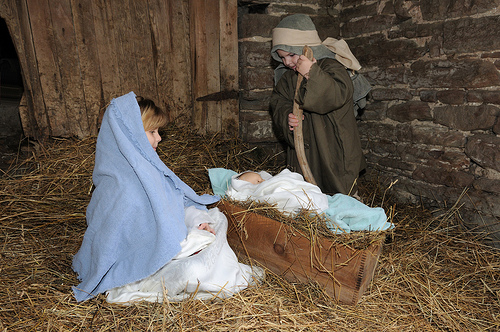
photo credit: <a href=”http://www.flickr.com/photos/7957780@N06/2533021494″>Manger Scene</a> via <a href=”http://photopin.com”>photopin</a&gt; <a href=”https://creativecommons.org/licenses/by-nc-nd/2.0/”>(license)</a&gt;

SOUNDS LIKE A GOOD LIFE

“Sounds like a good life” was the last of three emails I received last week from someone I did not know but who contacted me. He was working on a book about a specific aspect of ministry and wanted feedback on the first chapter from some pastors. I don’t know how he got my name and email. I told him I had stepped down from my position of Senior Pastor over a year ago and declined.

I was surprised but appreciative that he wrote back and asked, “What are you doing now?” To which I replied, “Teaching as an adjunct professor, writing, and guest preaching. But my favorite is being a grandpa!” His five word final email got my attention: “Sounds like a good life.”

Prior to this previously unknown pastor’s observation I hadn’t really thought much about how good my current life is. Do I miss leading, working, serving, and preaching as Senior Pastor? Yes I do; most of it. But I have never regretted or questioned my decision to step down after 44 years of ministry and the last 30 at the church I planted. It was a good life. But as my new friend observed, so also is what I am privileged to do now.

Teaching first year college students is both challenging and rewarding. As each semester plays out, and I get to know the students, I find myself relating to them like I did to young adults in the church. What an opportunity I have to teach two introductory Bible classes.

Writing is a joy but it also can be a grind. Occasionally what I want to write flows but usually it takes a lot more time and effort than you might think. (I rewrote the previous sentence five times and I’m still not satisfied!) While completing something brings a sense of accomplishment, hearing from those who read and appreciated what you wrote is the payoff. (I am currently finishing a book entitled Questioning Jesus: Considering His Responses that I hope will be available in January.)

Guest preaching is a delight. I love to preach and being invited to different churches to do so is an honor. With 40 years of messages the hardest part is choosing which one to pull out of the file to brush up on and update. I give attention to making sure what I teach is something I am excited about and is fresh. And the people everywhere I have been in the past 14 months have been responsive and complimentary.

I was a grandpa before I stepped down in October of 2014 but the role has continued to evolve and become more and more a privilege. Our two grandsons are now 5 and 2 and with my new schedule I have been able to go to Texas more frequently. Everyone (especially me!) is so excited when we arrive. But with the passing of time I do become fatigued playing games someone my age should not be playing. (So far I have not had any serious injuries.) Then as we prepare to leave and load the car I am sad; and I usually shed a few tears as we drive away.

I have been far more personal in this post than usual and I hope you are encouraged by my update. Does it sound like a good life to you? To me it not only sounds like a good life, it is a good life!

Feel free to share this with others and I welcome comments below.

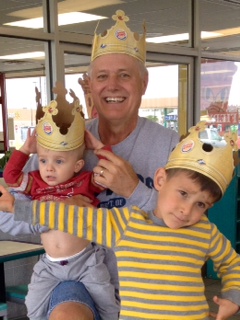
Photo credit: grandma.


MY DAD

The following was my “Preacher’s Pen” column in our church newsletter December 8, 1993. It is included in chapter 12 (Preacher’s Pen Columns) of my book A Pastor and the People: An inside Look through Letters. I share it in this week’s blog post as I come to the 22nd anniversary of my dad’s death.

My dad died last night.  It wasn’t unexpected, we knew it was coming; but the phone call and the news still had a significant impact upon me.  As much as you can think ahead and prepare for the inevitable, you can’t face it until it comes.

Dad had been ill for over a year with leukemia.  When he took a turn for the worse in October Jan and I went to visit him.  Although he was weak, we had a good visit.  I asked him about his readiness to go and his confidence in the Lord and he assured me he knew where he was going.  When I left I told him that although I probably wouldn’t see him again in this life, we would see one another in the next life.  He again assured me he knew that was true.

Over the last five weeks I have called home regularly, but because of his condition only spoke with him three or four times.  We last talked Sunday afternoon.  Since our family was planning to visit over the holidays, I asked him if he was going to make it until then.  He said yes, and although we both knew it might not happen, we affirmed we were looking forward to seeing one another then.  There won’t be a visit later this month like we planned, but the plans we made in October are still in place.

The truth is that my dad and I weren’t really that close.  Because of his drinking we weren’t close during my formative years and when he gave that up and committed himself to the Lord I was already a teenager.  For the past 20 years we have lived so far apart that visits were only once or twice a year.

My dad was a trophy of God’s grace.  A trophy is not valuable for what it is, but because of what it represents.  My dad was an example of what God can do in and for a person.  His life, his marriage, and his family were all transformed by God’s grace.

Even though we weren’t that close, there are two extremely important things I know about my dad:  he loved me and he was proud of me.  One of the most gratifying events in my life was when he had the prayer for me when I was ordained as a minister.  I’m pretty sure my dad knew I loved him, but I doubt he knew I was proud of him.  I was, and I am.

Feel free to comment below and to share this post.

Photo: My dad with our daughter and son/his grandchildren a few years before he became ill.


HOW TO CULTIVATE CONTENTMENT

Many think the 10th commandment is the most difficult to obey. And for those who don’t immediately remember, it says: “You shall not covet.” The antidote to covetousness is contentment.

Don’t misunderstand this word contentment. It is not laziness, the absence of ambition, or the failure to have challenging aspirations and goals. The Apostle Paul gives us some insight into what contentment is when he writes in Philippians 4:11b and 12a: “I have learned to be content whatever the circumstances. I know what it is to be in need, and I know what it is to have plenty.” Contentment is to be appropriately satisfied in your situation and with what you have.

Here are five suggestions to cultivate contentment:

Don’t compare yourself with others. Comparing seems to be at root of the 10 commandment. The complete commandment reads “You shall not covet your neighbors’ house. You shall not covet your neighbor’s wife, or his male or female servant, his ox or donkey, or anything that belongs to your neighbor.” I think we would be far less likely to covet if we didn’t compare. But we do compare, don’t we?

Enjoy what you have. A vital step for contentment is to enjoy what we have. One observer wisely noted: “There is an obvious problem when our focus is more on what we do not have than on what we have.” And that focus gets in the way of enjoying what we do have. I Timothy 6:17 reminds us that what God has provided us is for our enjoyment.

Treasure what is truly valuable. Some things are more valuable than others and we need to recognize the limitation of money and stuff. What William Barclay wrote years ago is still true today: “If the possession of things brought happiness and contentment, then this would be the happiest and most contented age in history.” But it isn’t, is it? Stuff is important, but what is truly valuable are our relationships. I spent the last few days with my 5 year old and 2 year old grandsons in Texas. They have plenty of nice toys, but what I treasure, and what I think they treasured, was our time together.

Practice generosity. Being generous is both a path to contentment as well as evidence of it. Generous people seem to be content and contentment is enhanced by generosity. And while it does include money, I’m using generosity with a far greater sense than just money. Being generous with our time, our energy, our knowledge, our skills, and our resources will strengthen our state of satisfaction with what we have.

Finally, be grateful and express it. There is something attractive and compelling about gratitude. Being grateful and expressing it is an antidote not only to covetousness, but also to pride and many other attitude shortcomings. First we should be grateful and express gratitude to God. And doing that is a vital part of our worship. But we should also be grateful to others as well—family, friends, and those we do not know personally who enrich our lives by the things they say and do.

What would you add to this list? Comment below; and if you liked this post share it on social media.

photo credit: <a href=”http://www.flickr.com/photos/69520098@N04/16127876813″>Contentment</a&gt; via <a href=”http://photopin.com”>photopin</a&gt; <a href=”https://creativecommons.org/licenses/by-nc-sa/2.0/”>(license)</a&gt;

SOME THINGS TO THINK ABOUT

When I started this blog five months ago I indicated a lot of my posts would be inspired or prompted by the writing of others in articles and books. Over the past couple of weeks I have jotted down several ideas for blog posts from my reading. But instead of choosing one and expanding on it, in this post I want to share a few selections from a variety of places that grabbed my attention and caused me to think. Hopefully they will do the same for you.

From a her.meneutics article in a christianitytoday daily newsletter by Kim Gaines Eckert entitled “A Psychologist Faces Her Own Anxiety”:

“Our always connected, hyper-productive culture creates a perfect breeding ground for anxiety as a way of life, so it can be hard and humbling for us to simply take the time to pause.”

I don’t know how humbling it is to take time to pause but I do know how hard it is when we are so caught up in everything we have to do. Perhaps reading these quotes will give you the occasion to pause and think.

From an article by John Acuff at ChurchLeaders.com:

“Sometimes the frequency of divorce makes us forget the heartache of it. It’s such an ordinary thing these days that we tend to rush right by the extraordinary pain it causes.”

If you have gone through a divorce you know how painful it is. If you haven’t maybe this observation will remind you of the pain of those around you in the midst of divorce.

From How to Read the Bible for All Its Worth by Gordon Fee and Douglas Stuart:

“We must be careful that we do not make any part of Scripture say what we would like it to say.”

Perhaps preachers may need to hear this more than others, but I think all of us could use the reminder.

From The Holy Spirit by Stanley Hauerwas and William H. Willimon:

“To be a holy people does not mean the church is without sin.”

Have you been too hard on some of the people who attend and/or are a part of your church? Are your expectations unrealistic?

From The Soul of Shame by Curt Thompson:

“Possibly one of the least helpful things a parent can tell his or her child is ‘We only expect you to do your best.’ No one can do his or her best at everything, for no one has that much time or energy.”

Being a parent isn’t easy but it is a great blessing. We may put pressure on our children without even knowing it.

From My Utmost for His Highest by Oswald Chambers:

“We should be so one with God that we don’t need to ask continually for guidance.”

We already know a lot about what we should do as well as what we shouldn’t do. Don’t we?

From Jesus is the Christ by Leon Morris:

“Believers [Christians] are not meant to live out the life of Christian service in their own strength, thus the gift of the Spirit if very important.”

I remember one day in a class years ago when Dr. Lewis Foster suggested “I don’t think we make enough of the indwelling gift of the Holy Spirit.” I think he was right.

Take a few minutes to read these quotes again and give them an opportunity to challenge and encourage your thinking. Let us know in the comments below which one you most appreciate. (Or if you thought this was a dumb idea!)

photo credit: <a href=”http://www.flickr.com/photos/37660097@N08/8405826312“>Satchmo</a> via <a href=”http://photopin.com“>photopin</a> <a href=”https://creativecommons.org/licenses/by-sa/2.0/“>(license)</a>