
PRAYER, FAITH, UNANSWERED PRAYER, AND TRUST

All of us who are Christians would agree that prayer is an important aspect of the Christian life. While driving to a meeting yesterday I realized my prayer life had waned. Right then I acknowledged it to the Lord (without bowing my head and closing my eyes!) and resolved to get back on track.

This morning I read in C.S. Lewis’s The Screwtape Letters Screwtape’s observation that if his subject [a Christian he was tempting] was attending to God Himself, both he and Wormwood would be defeated. Screwtape’s advice to Wormwood was that the simplest way to prevent such a thing was “to turn their gaze away from Him [God] towards themselves.” I wondered if that is what I had done. Later I was reminded of one of the great testimonies in the Old Testament about this matter.

Most readers will remember the account of Shadrach, Meshach, and Abednego in Daniel 3. These three young Jewish men refused to obey King Nebuchadnezzar. He had set up an image and ordered on his command everyone to fall down and worship it. In keeping with the king’s mandate, because of their refusal, they were going to be thrown into a blazing furnace.

Daniel 3:16-18 tells us their response to Nebuchadnezzar, “O Nebuchadnezzar, we do not need to defend ourselves before you. If we are thrown into the blazing furnace, the God whom we serve is able to save us. He will rescue us from your power, Your Majesty. But even if he doesn’t, we want to make it clear to you, Your Majesty, that we will never serve your gods or worship the gold statue you have set up.”

Even in their trying situation Shadrach, Meshach, and Abednego were clearly attending to God Himself and did not turn their gaze away from God toward themselves. Even though we are not told they prayed, we can assume they did. And I think we can be encouraged and learn from their response.

  1. Note their commitment expressed by telling the king they didn’t have to defend themselves to him.
  2. Note also their faith that God was able and could save them
  3. Note finally their acceptance of whatever God decided.

In his book Eyes Wide Open Terry Lewis observes their words even if he doesn’t “is not a lack of faith, it is the acknowledgement of God’s sovereignty.” Lewis then makes application for us, “What God does about our situation is up to Him, but we do know that He is able!”

In terms of the title of these thoughts – PRAYER, FAITH, UNANSWERED PRAYER, AND TRUST – I’m suggesting it takes faith to pray as well as trust in accepting it when God says no to our prayer requests.

(For those who may be interested, I recommend the new collection of C.S. Lewis writings on prayer entitled How to Pray: Reflections and Essays.)

Feel free to leave a comment below and/or share this post on Facebook or other social media.

 

IS IT OK TO CRY?

In my Amarillo High School Bible class the last two days we wrapped up our study of Joseph in Genesis 45-50. I had forgotten that the writer tells of seven times Joseph cried or wept from the time his brothers went to Egypt for their second visit until their father’s death years later.

I then thought of some well-known expressions that discourage crying. Boys are sometimes told “don’t be a sissy” when they cry or tear up. There is also the number one hit by the Four Seasons in the 1960s “Big Girls Don’t Cry.” And then there is the oft repeated observation from Tom Hanks in the film A League of their Own “There’s no crying in baseball.”

Is it ok to cry? My answer is yes.

Let me underscore five “Personal Reflections” to consider from Gene Getz in his 1983 book Joseph: From Prison to Palace with added observations from me.

  1. God created human beings with the capacity to weep. (Which in and of itself doesn’t automatically make it ok.)
  2. Weeping is not necessarily a sign of weakness. (For men, boys, women, or girls.)
  3. There is a time and place to weep and it’s to be done with proper motives. (Which suggests weeping can be done with an improper motive–like manipulation.)
  4. Weeping often clears the way for objective communication. (Honesty often is the result of crying.)
  5. Weeping can be a true test of our motives. (See #3.)

I am not embarrassed to admit that I am a person who cries from time to time in a variety of situations. Crying for me is often a release of emotion: stress, relief, gratitude, sorrow, guilt, or joy. Sometimes a song induces a few tears. And sometimes anger and its aftermath brings some tears.

It’s not just babies who cry; and I would hope we never call someone who weeps a crybaby. Some cry more easily and more often than others, but my sense is all of us should be open to crying from time to time and do not need to apologize for it.

I conclude with the two questions Getz asked in his “Personal Challenge” to stimulate our thinking:

  1. When was the last time you wept?
  2. Why have you wept?

Feel free to leave a comment below and/or share this post on Facebook or other social media.

 

MISSING THE MARK

A word of caution from Jordan B. Peterson in his current best-seller 12 Rules for Life reminded me of something important I taught for years, but have not said much about the last few years. In Rule 10 (Be Precise in Your Speech) he warns, “Don’t ever underestimate the destructive power of sins of omission” (p. 271).

A good definition I used for sin in my “Bible Basics and Our Church” class was that sin is “missing the mark.” The image suggests shooting an arrow at a target and missing it. I always made the point that there were two ways to miss. One was missing by going past the target. The other was to miss by coming up short of the target.

When it comes to sin there are two ways to miss the mark: there are sins of commission and there are sins of omission. The root verb of the word commission is to commit—to do something God has told us not to do. The root verb of the word omission is to omit—not to do something God has asked us to do (to leave something out).

My sense is that in general the Church and Christians have overemphasized sins of commission to the neglect of sins of omission. We have majored in those things we should not do and minored in those things we should do. Some have known Christians more for what they are against than for what they are for.

I not suggesting we should quit talking about the things God has clearly instructed us not to do. With many people first coming to Christ, dealing with sins of commission would seem to be the first kind of sin to address. But soon on the heels of that, I would hope an equal emphasis would be put on sins of omission.

I’m excited to teach a Sunday evening class this fall entitled Overcoming and Replacing the Seven Deadly Sins. The focus of overcoming the seven deadly sins will be on sins of commission. The emphasis on replacing them will be primarily about sins of omission.

We all miss the mark when it comes to living as the Lord has called his followers to live. We need to deal with both sins of commission and sins of omission. And I think Peterson’s observation—“Don’t ever underestimate the destructive power of sins of omission”—is worth taking to heart.

Feel free to make a comment below and/or share this post on Facebook or other social media.

 

THERE IS A DIFFERENCE

Often in my reading or discussions with others I become aware of something I had never thought of before. The last several days I’ve been mulling over something I read last week that was totally new to me. It was in a recent book of selected previously published writings by C.S. Lewis entitled How to Be a Christian: Reflections and Essays (published by HarperOne).

Lewis acknowledges that unless he is very careful, “when I think I am asking God to forgive me I am often in reality asking Him to do something quite different. I am asking Him not to forgive me but to excuse me.” He then adds, “But there is all the difference in the world between forgiving and excusing.”

What is the difference? For Lewis the difference concerns circumstances and responsibility.

He also notes that excusing and forgiving is not limited to our relationship with God, but with others as well. We both need to be forgiven and/or excused by others, and others need to be excused and/or forgiven by us. But it is not always a simple matter of either one or the other. Lewis notes that many times, either between us and God, or between people, there may be needed a mixture of both forgiveness and excusing.

What Lewis writes that most convicts me is “the trouble is that what we call ‘asking God’s forgiveness’ very often really consists in asking God to accept our excuses.” He didn’t note the connection, but I was struck that often when we ask to be excused (instead of forgiven) the request comes with excuses. While there can be “extenuating circumstances,” those circumstances rarely completely excuse our sin.

Summarizing what Lewis suggests (in my own words), we have to admit, confess, and/or own what is inexcusable in terms of our sin. Real forgiveness is the result of being honest with ourselves and God and asking Him for it.

The basic premise is the same when it comes to forgiving and being forgiven by others. Forgiving and excusing wrongs and hurts are not the same thing. Lewis declares “To be a Christian means to forgive the inexcusable, because God has forgiven the inexcusable in you.” (Lewis does not raise the issue, but I personally do not believe forgiving someone means we have to put ourselves back into a situation in which they can wrong us again or continue to wrong us.)

Thank God for His love, mercy, and grace shown in forgiving us. Let’s make fewer excuses and take more responsibility for our sin. And let’s do what Jesus told us to do: forgive others in the same way we are forgiven.

Feel free to leave a comment below and/or share this post on Facebook or other social media.
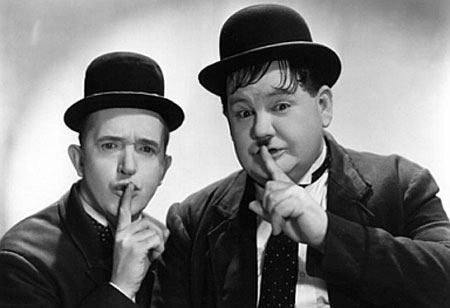
photo credit: Hvnly <a href=”http://www.flickr.com/photos/79336750@N00/354040672″>Hmmmmmm…</a&gt; via <a href=”http://photopin.com”>photopin</a&gt; <a href=”https://creativecommons.org/licenses/by/2.0/”>(license)</a&gt;


TOO MUCH

Many things in life are good, but when there is too much of some of them they are not so good. Talking is one of those things — too much is not so good. I’m a person who talks too much.

Talking less has been one of my New Year’s challenges the last couple of years, but I’ve made only minimal progress. Here are some wise warnings and insights about the issue from the book of Proverbs:

“When words are many, transgression is not lacking, but whoever restrains his lips is prudent.” (Proverbs 10:19,NLT)

“Those who guard their lips preserve their lives, but those who speak rashly will come to ruin.” (Proverbs 13:3, NIV)

“The tongue of the wise commends knowledge, but the mouths of fools pour out folly.” (Proverbs 15:3, ESV)

“A truly wise person uses few words; a person with understanding is even-tempered.” (Proverbs 17:27, NLT)

“Fools find no pleasure in understanding but delight in airing their own opinions.” (Proverbs 18:2, NIV)

“There is more hope for a fool than for someone who speaks without thinking.” (Proverbs 29:20, NLT)

I’m not confessing my talking too much violates each one of these nuggets of wisdom, but I am acknowledging I think I talk too much.

In general I talk too much, but specifically I sometimes tease and kid too much.  I have some ideas of why I talk too much, but I’m not sure why I talk and tease so much.

Several years ago I mentioned this in a sermon and told the congregation that I tease people I like. Afterwards a woman approached me and asked, “Why don’t you tease me?” I told her, “Because I don’t like you.” But in my response I was teasing her and hope she realized I did like her. I do tease people I like.

The danger with constant teasing is that you can go too far and wound or hurt someone. I know that is true because my teasing of others invites them to tease me back. And since I have been wounded by some I know I too have wounded some.

Two quotes in my reading the last couple of months prompted me to give some thought to my habit of teasing others. One quote is from Timothy Keller’s book God’s Wisdom for Navigating Life in which he asks, “Do you tend to turn everything into a joke or carry on in a lighthearted way? That can be pleasant to some, but might it not be a denial of or insensitivity to the genuine sadness of life?” (p. 108) Ouch! You see why I underlined it when I read it, don’t you?

The other quote comes from Rabbi Daniel Lapin’s book Thou Shall Prosper in which he suggests, “How you think of someone and how you refer to someone will ultimately impact how you relate to that person, even if you protest that you don’t mean anything by the appellation.” (p. 315) I don’t completely agree with the Rabbi, but I do think what he says is worth thinking about.

You may or may not personally identify with all this, but you probably know people who talk too much and/or tease too much. I want you to know that I’m aware of it and working on it. And even if you don’t identify with me, I hope you will take seriously the verses from the book of Proverbs.

Feel free to leave a comment below and/or share this post on Facebook or other social media.
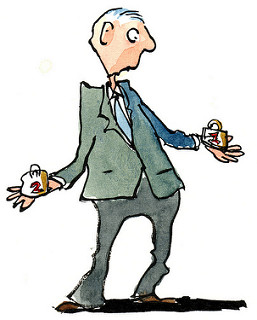
photo credit: Raquel Camargo <a href=”http://www.flickr.com/photos/18202205@N03/3296054642″>shh</a&gt; via <a href=”http://photopin.com”>photopin</a&gt; <a href=”https://creativecommons.org/licenses/by-nc/2.0/”>(license)</a&gt;

TOO MUCH

Many things in life are good, but when there is too much of some of them they are not so good. Talking is one of those things — too much is not so good. I’m a person who talks too much.

Talking less has been one of my New Year’s challenges the last couple of years, but I’ve made only minimal progress. Here are some wise warnings and insights about the issue from the book of Proverbs:

“When words are many, transgression is not lacking, but whoever restrains his lips is prudent.” (Proverbs 10:19,NLT)

“Those who guard their lips preserve their lives, but those who speak rashly will come to ruin.” (Proverbs 13:3, NIV)

“The tongue of the wise commends knowledge, but the mouths of fools pour out folly.” (Proverbs 15:3, ESV)

“A truly wise person uses few words; a person with understanding is even-tempered.” (Proverbs 17:27, NLT)

“Fools find no pleasure in understanding but delight in airing their own opinions.” (Proverbs 18:2, NIV)

“There is more hope for a fool than for someone who speaks without thinking.” (Proverbs 29:20, NLT)

I’m not confessing my talking too much violates each one of these nuggets of wisdom, but I am acknowledging I think I talk too much.

In general I talk too much, but specifically I sometimes tease and kid too much.  I have some ideas of why I talk too much, but I’m not sure why I talk and tease so much.

Several years ago I mentioned this in a sermon and told the congregation that I tease people I like. Afterwards a woman approached me and asked, “Why don’t you tease me?” I told her, “Because I don’t like you.” But in my response I was teasing her and hope she realized I did like her. I do tease people I like.

The danger with constant teasing is that you can go too far and wound or hurt someone. I know that is true because my teasing of others invites them to tease me back. And since I have been wounded by some I know I too have wounded some.

Two quotes in my reading the last couple of months prompted me to give some thought to my habit of teasing others. One quote is from Timothy Keller’s book God’s Wisdom for Navigating Life in which he asks, “Do you tend to turn everything into a joke or carry on in a lighthearted way? That can be pleasant to some, but might it not be a denial of or insensitivity to the genuine sadness of life?” (p. 108) Ouch! You see why I underlined it when I read it, don’t you?

The other quote comes from Rabbi Daniel Lapin’s book Thou Shall Prosper in which he suggests, “How you think of someone and how you refer to someone will ultimately impact how you relate to that person, even if you protest that you don’t mean anything by the appellation.” (p. 315) I don’t completely agree with the Rabbi, but I do think what he says is worth thinking about.

You may or may not personally identify with all this, but you probably know people who talk too much and/or tease too much. I want you to know that I’m aware of it and working on it. And even if you don’t identify with me, I hope you will take seriously the verses from the book of Proverbs.

Feel free to leave a comment below and/or share this post on Facebook or other social media.

photo credit: Raquel Camargo <a href=”http://www.flickr.com/photos/18202205@N03/3296054642″>shh</a&gt; via <a href=”http://photopin.com”>photopin</a&gt; <a href=”https://creativecommons.org/licenses/by-nc/2.0/”>(license)</a&gt;

WHICH IS BETTER?

Driving home earlier this summer from a Men’s Retreat I was listening to a CD of some old songs and hymns. One of our seniors had loaned it to me and wanted me to listen to it. I was on something of a spiritual high from the retreat and thought it would be a good time to listen. While I didn’t enjoy all of the selections, there were a few that inspired me as well as caused me to think. One song in particular got my attention and I have been thinking about it on and off since that Sunday morning.

Here are the words of one of the verses and the chorus:

I would love to tell you what I think of Jesus,
Since I found in Him a friend so strong and true.
I would tell you how He changed my life completely;
He did something no other friend could do.

Chorus

No one ever cared for me like Jesus;
There’s no other friend so kind as He.
No one else could take the sin and darkness from me;
O how much He cared for me.

All my life was full of sin when Jesus found me;
All my heart was full of misery and woe,
Jesus placed His strong arms about me
And He led me in the way I ought to go.

As beautiful and powerful as the words are, it is not my story. I became a Christian and was baptized a few months short of becoming a teenager. Stay with me on this, but my life was not completely changed that day (as the song writer meant it). At that point my life was not full of sin, my heart was not full of misery and woe, and I don’t recall the sin and darkness being taken from me as the song notes. All I knew was that my older brother was going forward that Sunday morning to be baptized and I was going to do it too.

I had started attending the church at the invitation of my best friend. It was a small church with no children’s or youth ministry beyond Sundays, but it was a warm and welcoming church. My brother and I were accepted and loved without either of our parents accompanying us. The people rejoiced in our decision and congratulated us like we were their own. And we were.

The small church we began attending grew in every way eventually bringing on staff a part time youth minister God greatly used in my life. I stayed an active member of Forest Dale Church of Christ until I left following high school graduation to attend Cincinnati Bible College.

Here’s what sometimes troubles me when I hear songs like No One Ever Cared for Me like Jesus, Amazing Grace, and many others: I don’t have a testimony that matches those words. In my life I have committed my worst sins since I became a Christian. We wouldn’t describe too many 12 year olds as wretches, would we?

Not to be presumptuous, but isn’t my story similar to many Christians who are reading this? Churches, parents, pastors, and children’s ministry leaders have done and do a great job of leading young people to accept Jesus and make a faith commitment to him.

I was baptized at the age of 12, but my father came to Christ in his forties a few years after my brother and I did. If I could talk with him about what I am writing, I’m confident he would identify with Amazing Grace and No one Ever Cared for Me like Jesus far greater than I can.

So let’s ask the question that is the title of this post: which is better? Some may disagree with me, but I don’t have an answer. Regardless of when we came or come to Christ, what is most important is that we have done so or do come to Christ.

Going back to the song, in my case Jesus did change my life completely. He changed it from what it would have been had I not started going to that little church. In my dad’s case, the Lord changed his life completely as a father with two teenage sons from that moment forward.

Feel free to leave a comment below and/or share this post on Facebook or other social media.

photo credit: Frits Ahlefeldt – FritsAhlefeldt.com <a href=”http://www.flickr.com/photos/32066106@N06/5726812891″>man-2weights illustration</a> via <a href=”http://photopin.com”>photopin</a&gt; <a href=”https://creativecommons.org/licenses/by-nc-nd/2.0/”>(license)</a&gt;

IS OLD BAD?

In answer to a question from an interviewer, author John Goldingay responded, “When we talk about something being ‘old’ in our culture, we typically mean that it’s out of date. It goes along with the idea that what’s new is what counts.” The context of the exchange was about a new translation of the Old Testament by Goldingay entitled The First Testament and Glenn Paauw was asking about the title. Goldingay thinks Old Testament “inhibits people from reading it” and he hopes “that changing the name can get people’s attention.”

I don’t know if he is right or not about the Old Testament versus The First Testament, but I am interested in his general observation about old and new in our culture. And I think most of us would agree with his assessment about our culture (even if we don’t agree with our culture).

When I take cheese out of our refrigerator when making a sandwich I check the expiration date. I no longer can play 8-track or cassette tapes in my car. Very few people wear bell bottom pants like we did when I was in high school and college. And don’t you want to laugh when you see the short pants on basketball players when watching videos from years ago?

There is much that is old and out of date in our culture. However, just because something is old does not make it out of date. Neither is something bad just because it is old.

Flipping through the channels on our TV a few weeks ago I discovered we had the MeTV channel. They were advertising a summer series of John Wayne movies and since then I have watched and enjoyed four old movies. I’ve also been watching and enjoying old Andy Griffith, Bonanza, and Columbo shows. (Most of us would say the same thing about music.)

What about the idea that in our culture “what’s new is what counts?” With some things it’s true, especially with regard to technology and medical advancements; but it’s not always true with everything for everyone. In my experience, understandably and in general, the older among us are less enthusiastic about the new and the younger among us are more enthusiastic.

A lot of what is new is what counts. Yet, just because something is new does not necessarily make it better or good.

I hope it is obvious why I take interest in Goldingay’s stimulating comment about something being old in our culture and what’s new. It opens the door for a lot of meaningful and passionate discussion about many things–especially with Christians and the church. I encourage such discussion, but challenge those who engage in it to keep in mind that there is much more to it than just something being old or new. I also hope the discussion would be carried out with openness and mutual respect.

By the way, I like the idea of calling the Old Testament the First Testament, but I don’t need another translation, nor do I think the new name will gain a great deal of traction.

What do you think? Feel free to leave a comment below and/or share this post on Facebook or other social media.

 

KNOW THE DIFFERENCE

A couple of weeks ago I read an article based upon the Apostle Paul’s instruction to his protégé in II Timothy 4:2 to “Preach the word.” Even though the New Testament was not finalized at the time Paul wrote this letter, his intent was clear: preachers are to get the foundation of their teaching from the Bible.

A couple of weeks later I finished reading a short book entitled Practicing His Presence (Volume I of The Library of Spiritual Classics). I was instructed and motivated by what Brother Lawrence and Frank Laubach wrote about maintaining an awareness of the presence of Christ throughout one’s day. As good as the book was, I reminded myself that what it contained was not on par with the Bible.

Recently in a Bible class I was leading, an attendee participated in our discussion by reading from a study Bible. Remembering what I had been thinking about the last month or so I reminded the entire class that the notes in any study Bible are not on par with the actual Bible. (I also reminded them that what I say in my teaching is not on par with the Bible.)

Now there is nothing wrong with study Bibles, devotional books, commentaries, and the many Christian books available to us today. I have two study Bibles, many commentaries, theological dictionaries, books of sermons, and books on specific topics about the Bible, the Christian life, the church, and a variety of theological subjects. I consult them regularly in my teaching and preaching.

Preachers, pastors, professors, Christian authors, theologians, and others have much to offer the Christian community as well as those exploring the Bible, the Christian life, the church, and theology. All of us can greatly benefit from the thinking and writing of others about these important topics. But none of these resources are on par with the Bible.

My point in this brief article is to remind readers of what I recently reminded myself of as well as my Bible class: sermons, Bible studies, Christian books, Bible commentaries, and study Bibles are not on the same level as the Bible itself. Most of them are helpful and we need them to help us understand and apply what the Bible teaches. We need those who have studied long and hard and given themselves to teaching the Bible.

At the same time, periodically we need to be reminded that what people think the Bible says and means is not always exactly what it means and says. And my sense is that there are parts of the Bible that no one can say definitively this is what it means. On the other hand, there is much in the Bible that we can definitively say this is what it means.

We need to know the difference between what the Bible says and what different people think and believe it says. They are not always the same.

Feel free to leave a comment below and/or share this post on Facebook or other social media.


IMPRESSED, CONVICTED, AND CHALLENGED

A couple of weeks ago I read an introduction to the writings of the 16th century Catholic Francois Fenelon and a few of his writings. While I appreciated the samples I read, I was impressed, convicted, and challenged by the observation made by Robert J. Edmonson that “Fenelon won the hearts of the Protestants with his gentleness and moderation.”

I don’t know of too many leaders, writers, politicians, and other public figures in our day who would be described by the words gentle and moderate. But shouldn’t all Christians be noted for showing moderation and gentleness in their discourse?

As I thought about the idea of gentleness a couple of Bible references came to mind. I looked the word up on BibleGateway.com and think these three are especially pertinent:

Proverbs 15:1, “A gentle answer turns away wrath, but a harsh word stirs up anger.”

Matthew 11:29, Jesus said, “Take my yoke upon you and learn from me, for I am gentle and humble in heart.”

Ephesians 4:2, “Be completely humble and gentle; be patient, bearing with one another in love.”

The basic idea of moderation is prevalent in the Bible for followers of Jesus. An explanation of moderation is the avoidance of excess or extremes, especially in one’s behavior or political opinions and in a way that is reasonable and not excessive. It may not be exactly the same thing as self-control, but it is close. I find it interesting that the final two fruit of the Spirit in Galatians 5:22 and 23 are gentleness and self-control.

Impressed by how Edmonson said Fenelon won the hearts of Protestants, I was also convicted. Edmonson’s characterization of how Fenelon won people’s hearts “with his gentleness and moderation” reminded me that those two words would probably not be used to describe me by those who have heard me discuss and debate a variety of issues.

I was not just impressed and convicted by Edmonson’s insight, I was also challenged to be more gentle and moderate in my teaching, discussions, and disagreements. Reflecting on both Jesus’ self-description in Matthew 11:29, and the Apostle Paul’s instruction in Ephesians 4:2, I’m thinking a key to being gentler and more moderate is cultivating humility. My sense is that pride is the engine that drives a lot of us to be lacking in gentleness and moderation in our conversations.

Having written what I have so far, I want to be clear that I’m not suggesting being gentle and moderate requires people to compromise their convictions. I think it means we do what Paul urges in Ephesians 4:15 in terms of “speaking the truth in love.”

One more observation from Edmonson sheds light on the risk of showing gentleness and moderation. Defining gentleness and moderation with a new word, he notes “Fenelon’s restraint did not pass unnoticed among more extreme Catholic factions, who blocked his nomination as bishop.” Does that mean that those who are gentle and moderate and show restraint will pay a price from those are contentious? Possibly.

Again, I am impressed, convicted, and challenged. And I hope you are as well.

Feel free to leave a comment below and/or share this post on Facebook or other social media.