DO YOU NEED THIS?

Although I’ve never participated in Ash Wednesday, like many Christians, for many years I have focused my devotional life in a variety of ways during Lent. As we approach Palm Sunday, Holy Week, Good Friday, and Easter Sunday, I have been intensifying my focus. Earlier this week I read something that has given me a fresh challenge during these last two weeks of the season.

I was reading a 2004 college commencement address by Dallas Willard and his definition of repent got my attention. He said “Repent means to change the way you’ve been thinking and acting.” I don’t know about you, but given that definition, I need to do some repenting.

Most of the time we think of repentance as something that is needed and takes place at the beginning of the Christian life. Both John the Baptist, as well as Jesus, called people to repent as they launched their public ministries. And on the Day of Pentecost, when the Church was born, Peter told those present they needed to repent.  Clearly there is an initial repentance in becoming a follower of Jesus; but I don’t think that’s the only time believers need to repent.

With Willard’s definition in mind, I went to an old book by William Barclay I remembered that had a brief discussion of repentance. In it he reports that repent “literally means an afterthought as opposed to a forethought. An afterthought, a second thought, is usually a changed thought.” It’s not as crisp a definition as Willard’s, but if you read it slowly it has some pop.

As I read Barclay’s description I could not help but think about Jesus’ Parable of the Prodigal/Lost Son in Luke 15:11-32. In the story, after the boy had lost everything, Jesus tells us in verse 17 “When he came to his senses” he had a change of heart and decided to go home. Verses 17-20 paint a picture in Barclay’s words of an afterthought, a second thought, which was a changed thought. I think the boy repented.

The general understanding of repentance is that it requires three things: a recognition of having done something wrong, regret/sorrow for doing it, and a resolve to do better. I hope you see why I don’t think repenting is something limited to the beginning of the Christian life, but is needed throughout the Christian life.

Today through Easter Sunday seems to me like a good time to consider the practice of repenting. Beyond that, participating in the Lord’s Supper seems like an appropriate time. Would it be too much to suggest we give it some thought on a daily basis?

Feel free to leave a reply below and/or share this post on Facebook.

photo credit: Saunderses <a href=”http://www.flickr.com/photos/24845565@N00/14130360300″>U Turn Permitted Sign</a> via <a href=”http://photopin.com”>photopin</a&gt; <a href=”https://creativecommons.org/licenses/by-nc-sa/2.0/”>(license)</a&gt;


SOME THINGS HAVE CHANGED

In a book published in 1985 that is new to me, the author declares “to note the obvious: some things have changed.” Yes, it is obvious; some things have changed. At the age of 66, and having recently moved from Southern California (after 32 years) to the Texas Panhandle, I’m well aware of much change in my life. And I am intrigued by this matter of change.

Change is inevitable. Yesterday I went to get my Texas driver’s license and had to fill out those four areas describing my appearance. My height, weight, and eye color are all still the same as my old license; but I changed my hair color from brown to gray. (I don’t mind my gray hair–at least I have hair!) Not only is change inevitable with our bodies and physical appearance, change is inevitable with almost anything and everything. We may not like it, but we cannot stop it.

A lot of change is good. Much of what we call progress is good change. In my life I have benefited, and hope to benefit in the future, from changes in the medical field. As Christians we want to change—we want to grow and be transformed into the kind of people the Lord has called us to be. Admittedly, the process of even good change can be uncomfortable, but we like the result.

Change often is good, but not everyone agrees whether certain changes are good or bad. Change that is progress to some is certainly not progress to others. Often a person’s perspective on whether social and cultural changes are good or bad is generational. I think it’s safe to say not all the changes are good, nor are they all bad.

I am most interested in changes in Christian theology and doctrine, understanding and interpreting the Bible, and living the Christian life. When I was in high school our youth group was split down the middle with regard to the question “Can Christians dance?” That may or may not be a question asked today, but I’ve always agreed with Tony Campolo’s answer: “Some can, some can’t.”

A couple of current high profile controversial issues in the larger Christian community, not necessarily related, are the role of women in ministry and the traditional view of sexuality and marriage. A variety of Christian leaders have changed their views on one or both while many have maintained longstanding positions.

I don’t think it is wrong for a Christian to change her or his mind about a particular issue, doctrine, or biblical interpretation. For years the magazine The Christian Century published a number of essays titled “How My Mind Has Changed.” And in 2010 a book titled How I Changed My Mind about Women in Leadership was published with multiple authors contributing.

I think there is value in the suggestion made by the author I quoted earlier that perhaps what we presently believe, as well as believed in the past, both need to be carefully rethought. Those two words “carefully rethought” get my attention. It seems to me a lot of changes are made that are not carefully rethought as well as some changes resisted without careful rethinking.

One thing we do know is that God does not change. Theologians call it the immutability of God. A.W. Tozer explains that means “He never differs from Himself.” Later he adds: “What peace it brings to the Christian’s heart to realize that our Heavenly Father never differs from Himself.” In his classic book Knowing God, J.I. Packer has a chapter entitled “God Unchanging.” In it he notes God’s life, character, truth, ways, purposes, and Son do not change. He summarizes, “This thought brings comfort as we enter into the perplexities of each day; amid all the changes and uncertainties of life, God and Christ remain the same.”

Some things have changed and things will continue to change. I gain comfort and peace from knowing God doesn’t. Don’t you?

Feel free to leave a reply below and/or share this post on Facebook and other social media.

photo credit: Colin-47 <a href=”http://www.flickr.com/photos/38972744@N06/30578612195″>Autumn</a&gt; via <a href=”http://photopin.com”>photopin</a&gt; <a href=”https://creativecommons.org/licenses/by-nc-nd/2.0/”>(license)</a&gt;


PRODUCING FRUIT

For the past couple of weeks I have been slowly working my way through a new book by Christopher Wright entitled Cultivating the Fruit of the Spirit. I’m not necessarily recommending it, but reading it has challenged me once again to give some thought to just how the fruit of the Spirit is produced in our lives.

To refresh your memory if needed, the Apostle Paul talks about the fruit of the Spirit in Galatians 5:22 and 23. He contrasts the nine qualities of love, joy, peace, patience, kindness, goodness, faithfulness, gentleness, and self-control with an undesirable list of “the acts of the flesh.”

While reading Wright’s book I watched a short video online by a pastor who suggested that telling believers the fruit of the Spirit is “character traits we should try to work on” is wrong. He emphasized “the fruit of the Spirit are [sic] the result of walking by the Spirit.”

In his introduction about the fruit of the Sprit, Wright declares “these are the qualities that God himself will produce in a person’s everyday, ordinary human life because the life of God himself is at work within them.” Later in the book, however, when discussing patience, Wright asserts “It is fruit, but at the same time we need to work at it. There is effort and struggle involved.” Those two statements seemed almost contradictory to me.

I then went to a commentary on Galatians by one of my favorite writers, John Stott, and read his observation that the fruit of the Spirit is “the natural produce that appears in the lives of Spirit-led Christians.” I then checked another commentator I like, and writing about love as fruit of the Spirit he noted it requires “deliberate effort” to never seek anything but the best for someone. These two statements also seemed somewhat contradictory.

How is the fruit of the Spirit produced in a believer’s life? Is it automatic? Does the Holy Spirit just make it happen? Or do we have a part to play? Do we have to put forth effort and work at it? We don’t completely understand how the Spirit produces His fruit in us, but it seems obvious we have a part to play.

I think the reality is, that in order to produce this “cluster of nine Christian graces” in our lives, we must cooperate with the Holy Spirit whom the Lord has given to live in us. Citing two phrases from the larger context of Galatians 5:16-26, Stott clarifies: “there is clearly a distinction between ‘being led by the Spirit’ and ‘walking by the Spirit’, for the former expression is passive and the latter is active. It is the Spirit who does the leading, but we who do the walking.”

We have a part in producing the fruit and the Holy Spirit has a part. The Spirit will not do it without our cooperation and we cannot do it without His help. I’d like to see more of this fruit produced in my life. How about you?

Feel free to leave a comment below and/or share this post on Facebook or other social media.

photo credit: [Crewe] <a href=”http://www.flickr.com/photos/18832207@N00/484603274″>Fruit Basket</a> via <a href=”http://photopin.com”>photopin</a&gt; <a href=”https://creativecommons.org/licenses/by/2.0/”>(license)</a&gt;


A NEW HOUSE PRAYER

(Many readers know that in December Jan and I moved from Southern California to the Texas Panhandle to be closer to our two grandsons. On one of her visits in November Jan went house hunting and eventually decided we would buy a new house. The only problem was the new house was still to be built. They built the house in about three months and last Friday we closed. The truck with our belongings arrives today. This is the prayer I prayed last night.)

Heavenly Father,

As we move into this new house, our hearts are filled with gratitude for your blessings upon us. Occupying our own house marks the next step in the transition to this new chapter of our lives. What a transition it has been and will continue to be in the weeks and months ahead. You have been with us every step of the way and we pause to thank You as we take this next step. We also again thank You for the quick and easy sale of our house in Moreno Valley and for Rob’s outstanding work as our realtor. Having our son as our realtor was an extra blessing!

This will be the third new house You have allowed Jan and me to buy in our almost 43 years of marriage. We realize many never have the opportunity to buy a house at all, let alone a new one—and yet we have had the privilege of buying three! I am so grateful for and to Jan for taking the lead with everything in purchasing this house. (However, as You know, it only seems appropriate since I did it over 32 years ago when we moved from Philadelphia to California.)

Living with our daughter and two grandsons the last three months has been a wonderful experience. We will miss what we have enjoyed so much, but it’s time for us to have our own home. Having our own house, and being so close to them, will be the best of both worlds! We’ll probably visit more often than we should; and we look forward to regularly having the boys spend the night with us.

We ask You to watch over our possessions and us as the truck travels from California, things are moved in, and this house becomes our home. Help us both be patient (mostly me!) as we arrange our furniture, unpack the boxes, and set up the TV, computers, and other things I don’t understand.

Lord, we want our house and home to be a place of warmth, peace, and love—for us, our family when they visit, and guests we hope to welcome from time to time. We want to be good neighbors and servants to those in our development; and we want Your light to shine though us that others may see it and glorify You. Help us to be both wise in our witness and humble in our service.

Father, I certainly don’t know the future, but You do. This very well could be the last house we own. Not only do we thank you for our new home, and ask for Your blessing upon it and us, we also dedicate it to You. Like everything you have committed to our care, this house is also Yours. Help us we pray to enjoy it and take care of it. May it be a place where Your love is preeminent and Your name is always honored.

In Jesus’ name, Amen.

Feel free to leave a comment below and/or share this post on Facebook.

I SAW IT

This past Sunday evening I went by myself to see the movie The Shack. For several days I had read a number of comments about it from a variety of writers—most of which were negative and critical. Having read the book a number of years ago, and leading a well-attended three week Wednesday evening study of it at church, I wanted to see what they had done with the book in a movie.

As a pastor for more than 45 years I have gone to see many movies with biblical and Christian related themes with the expectation I would be asked about them. I have recommended some like Son of God, God is Not Dead, and Risen. I have also panned others such as Noah and Gods and Kings. I have yet to see a movie along these lines with which I was completely satisfied.

My short response to The Shack is I am glad I saw it. I realize some will be disappointed by that, but I am neither recommending nor discouraging you see it or not. That is your decision.

The Shack (like God is Not Dead) is not about a biblical story or account, but about theology and the Christian life. And while it is a story, it is fiction. But as we all know, fiction can be powerful. My sense is that many will be touched, challenged, and encouraged by this story and film. I won’t tell the story, but will make a few observations about it.

The primary message of the movie is that God loves people. At one point God tells Mack “you have no idea how much I love you” and later affirms “you were created to be loved.” People need to “know what it’s like to feel truly loved.” The issue, however, that puts into question God’s love is “the problem of evil.” “Evil is real” and there is “no promise of a pain free life.” God tells Mack “when all you see is your pain you lose sight of me.” Part of God’s answer is “I can work incredible good out of tragedy, but that doesn’t mean I orchestrate it.” The challenge is that even when we do not understand, God wants us to trust Him.

The most creative aspect of the movie for me was the depiction of God as the Trinity. The Father is called “Papa” and is played by a black woman. Jesus is a non-white male and the Holy Spirit is an Asian female. The interaction among the three, as well as the dialogue with Mack, was interesting and imaginable to me. I especially appreciated the moments of humor.

At one point in the movie Jesus invites Mack to walk on the water with Him to the shore. Later Mack starts to walk back on the water ahead of Jesus and is unable to do so. Jesus tells him to wait, and then as they walk together notes “it is better when we do this together.”

As others have observed, The Shack has both some good and some bad points. And some of them are very subtle. I find that to be true with most of the biblical/Christian themed movies I see and books I read. Flawed as it is, The Shack challenged and encouraged my thinking about theology and the Christian life.

Feel free to leave a reply below and share this post on Facebook and other social media.

ARE WE THERE YET?

Although the title question of this post is usually asked when traveling somewhere by car, it can also be asked in a variety of situations and circumstances. In early December I wrote about Jan’s and my move from Southern California to the Texas Panhandle under the title “A Bright Sadness.” She left a couple of weeks ahead of me and as I packed my car to drive from Moreno Valley to Texas I concluded my thoughts: “Right now my bright sadness is sadder than it is bright. Soon, however, the brightness will outshine the sadness.” After almost three months I’m asking myself, “Are we there yet?” The short answer is “Not yet, but we’re making progress.”

I have been overwhelmed by the welcome and warmth of so many of the people we have met. It seems like everyone we meet is cordial and interested in us. I’ve never been addressed as “honey” so often in my life. One lady two weeks ago actually called me “sugar.” I think the last person who called me that was my mom many years ago. When we walk the dogs we almost always see people we greet by name and who greet us by name. I joined Gold’s Gym and a racquetball league and the guys have all been friendly. I have yet to win a game, but after each match the guy who beat me has given me a free lesson!

I’ve played golf a few times and joined up with others a couple of times, but have not yet found any regulars with whom I can play. I hope to connect with a couple of the guys I play racquetball with and return the favor in golf they have shown me in racquetball. As so many told me ahead of time, the real drawback for golf here is the wind. I did join single players on two occasions and exchanged contact info with them. The one sent me an email saying I was “a hoot to play with.” The other, who is 79, told me to call him if I was willing to play with someone that old. I am and I will.

All the churches we have visited have welcomed us with open arms and we have officially become members at one. I am looking forward to the opportunity to preach in a couple of weeks as all the preaching pastors will be gone on a Mexico mission trip. I believe this church is going to be a great place for Jan and me to worship, serve, and fellowship.

I do have a gentleman I would call my best friend in Amarillo. And he truly is a gentleman. We connected over three years ago when Jan and I first started thinking about relocating to Amarillo. Over the course of those three years we stayed in touch and since arriving he has been a great help and friend to me. He is a man of faith, we are about the same age, and so far, he is the only person I have been able to beat in racquetball!

I am still exploring potential opportunities for part time work that will allow me to serve in ministry in some way, but nothing yet has solidified. I am not, however, discouraged.

The brightest aspect of our move, of course, has been the opportunity to live with our daughter and two grandsons and help take care of them.  Jan and I stayed home with the little guy (age 3) sick last Tuesday and I stayed home with the big guy (age 6) sick last Thursday. I have rug burns on both knees and elbows. We move into our own house in a couple of weeks, but we will stay deeply involved and closely connected with them.

We have transferred our cars and put Texas tags on them, but we cannot get Texas driver’s licenses until we have utility bills. We still grieve the passing of our cat, but our dog, Macy, is doing great playing with her new friend Leonard (Audrey’s dog). I am looking forward to a return to Southern California for a visit in late April or May.

I think people ask the question “Are we there yet?” because they have unrealistic expectations with regard to how long it will take to get to where they are going. And those unrealistic expectations result in impatience which makes the trip even more frustrating. It would probably be helpful if we tried to enjoy the trip itself. Jan and I have not fully arrived, but we are making good progress—and we will get there.

(If you have not read the post “A Bright Sadness” you can do so at https://bobmmink.com/2016/12/05/a-bright-sadness/ )

Feel free to leave a reply below and/or share these thoughts on Facebook or other social media.

photo credit: iainmerchant <a href=”http://www.flickr.com/photos/135123601@N08/32968356026″>Road Trip!</a> via <a href=”http://photopin.com”>photopin</a&gt; <a href=”https://creativecommons.org/licenses/by/2.0/”>(license)</a&gt;


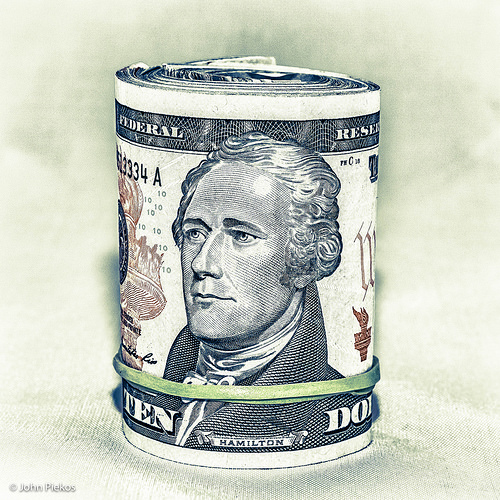
YOUR RELATIONSHP WITH $$$$

In December I came across an offer to get the new book Your New Money Mindset: Create a Healthy Relationship with Money for $5. Since I am a lover of books, and that was a significant discount, I ordered it. Co-authored by Brad Hewitt and James Moline and published by Tyndale House, I read it the last week of January and it offers a lot of good thoughts.

An added bonus of the book is a free New Money Mindset Assessment you can take to enhance your reading. Below are some pithy quotations for your consideration. If these samples whet your appetite I think you would enjoy and benefit from the book.

“Consumerism is our desire to acquire more for ourselves when we already have enough” (p. 12).

“When it comes to dealing with money, we believe that a completely carefree or reckless attitude is unwise. Kept in proper perspective, a desire for financial security can be healthy and normal” (p. 58).

“Young kids live in the present, and being there for them is crucial if we are to develop meaningful attachments with them” (p. 68).

“We live in a culture that exaggerates our need for security and safety” (p. 71).

“. . . some put away every last penny until their frugality sucks the joy from their life” (p. 75).

“The God of the Bible meets the needs of his beloved people, although not always on our time schedule” (p. 85).

“There are limits to how much the Internet can connect us with others, but a sense of community is surely one of its draws” (p. 114).

“. . . the church may be a divine institution, but it is also a human one . . .” (p. 117).

“When we act with generosity, our world expands; when we succumb to stinginess, our lives shrivel” (p. 125).

“In particular we have observed two things that get people in over their heads: square footage and number of wheels” (p. 139).

“Housing and transportation costs are the expenditures that put virtually everyone who struggles with money into the danger zone” (p. 140).

“Materialism and consumerism endanger us because they promise pleasure to the eye but can never satisfy the heart” (p. 149).

“When we let a longing for success drive our lives, we lose sight of the abundant life Jesus offers and become engrossed in the never-attainable images of perfection” (p. 180).

“Spending disposable income on experiences leads to increased happiness, while spending it on stuff does not” (p. 185).

“Living your calling means finding and following God’s unique purposes for you” (p. 194).

In Matthew 6:25-34 Jesus “is just saying that in the midst of our sensible planning, we don’t have to become slaves to anxiety. We don’t have to run because we are worried” (p. 226).

Even if you do not get the book, I hope these quotes give you some things to think about in your life and your relationship with money.

Feel free to leave a reply below and/or share these thoughts on Facebook.

photo credit: John Piekos <a href=”http://www.flickr.com/photos/15449269@N04/32133055336″>Click-boom: Alexander Hamilton Bankroll</a> via <a href=”http://photopin.com”>photopin</a&gt; <a href=”https://creativecommons.org/licenses/by-nc-nd/2.0/”>(license)</a&gt;


CONVICTED

This past Sunday the preacher at the church Jan and I visited talked about “True Love.” Noting the upcoming holiday, in his introduction to the sermon he reflected on a wedding he presided over many, many years ago on a Valentine’s Day. He couldn’t remember the names of the couple, but he said he wondered how they were doing in carrying out the commitments they made to one another that day.

The preacher and most of those in attendance at this small non-instrumental Church of Christ were elderly making Jan and I feel younger than we are. Everything about the church and service was old school, but we thoroughly enjoyed it. The preacher spoke to the couples present who had been married for many years emphasizing the challenges we had all faced and overcome in our life together.

For the most part I was affirmed and encouraged by what this non-contemporary preacher said. But one passing reference in one part of his sermon got my attention. He read Paul’s description of love from I Corinthians 14:4-7:  Love is patient, love is kind. It does not envy, it does not boast, it is not proud. It does not dishonor others, it is not self-seeking, it is not easily angered, it keeps no record of wrongs. Love does not delight in evil but rejoices with the truth.  It always protects, always trusts, always hopes, always perseveres. The reminder that “love is not easily angered” (“not irritable” in the NLT) was like a punch in the stomach or a slap in the face. Too often I am easily irritated or angered. As a matter of fact, while we were walking the dogs Saturday night, I got irritated not once–but twice with Jan. I was convicted.

Jan and I went to lunch on Valentine’s Day. And as I expected, she gave me a card. I thought about getting her a card but decided not to; I wanted to do something better. I didn’t need to remind her about Saturday night, but I did let her know I was convicted by the sermon on Sunday. And I told her for Valentine’s Day I was committing to trying a lot harder to show her my love by not being so easily irritated.

If you’re married may I ask how you are doing in carrying out the commitments you made on your wedding day? And in the afterglow of Valentine’s Day, which of the qualities of true love in I Corinthians 13 do you most need to work on?

Feel free to leave a reply below and share this post on Facebook.

photo credit: Captured Heart <a href=”http://www.flickr.com/photos/98192834@N07/31428647825″>Shot Through The Heart</a> via <a href=”http://photopin.com”>photopin</a&gt; <a href=”https://creativecommons.org/licenses/by-nc/2.0/”>(license)</a&gt;

LOOKING AHEAD

At the age of 61, and two years before I stepped down from the church I served as pastor for 30 years, I began reading about retirement and aging. In the last five years I have read numerous books and articles about these subjects. In this post I want to recommend in some ways the best book I have read so far. I am recommending it to those who are retired and aging, those who hope to retire in the future, and those who know and love relatives and friends who are retired and aging. The title of the book is The Back Nine: Life Beyond Retirement by Doug Manning.

Readers do not have to understand the golf metaphor in the title The Back Nine to appreciate the book’s content; it’s about Life Beyond Retirement and much more. While Christians are not to worry about tomorrow (see Matthew 6:25-34) or boast about it (James 4:13-16), that does not mean we should not look ahead. Manning has much to offer to those giving consideration to the challenges and opportunities that retirement and aging bring.

There is a lot I like in this book, not the least of which is its brevity.  It is divided into three sections comprised of 14 short chapters, and is only 100 pages. It is by far the shortest book I have read on the subject. It is also personal, practical, and real. Manning knows what he is talking about as he writes with the voice of experience. In his eighties, he is semi-retired, a widower, color blind, and almost blind as well. He asks that readers pardon his personal illustrations, but he adds “I have no other way of explaining what I mean” (p. 20). Later in the book he tells us “my opinion is just one man’s opinion and should be looked at as just that” (p. 55).

Manning doesn’t write in theory, but about reality. And that reality got this 65 year old reader’s attention. For example, in the introduction he acknowledges “My greatest dread is not death, it is living too long and living beyond my ability to not be a burden” (p. 13). Some of what he relates sounds pessimistic and almost depressing. He defines aging as “the slow process of losing people, things, health, significance, purpose, position and most of all what we hold dear in life” and acknowledges that  “those losses hurt” (p. 17).

One of the most practical suggestions Manning offers deals with avoiding war between “aging parents” and “caring children.” In chapter two, he challenges parents to “change the relationship long before the care giving is needed” (p.24). And while it is not easy or quickly done, he thinks “the most important thing we can do . . . is build an adult to-adult relationship with our kids” (p. 24). I think it is unrealistic to think a parent can ever stop being one, but I certainly agree with the need for a changed relationship as children become adults.

Other chapters include practical and real discussions about legal issues, relocation, death of a spouse, living alone, and funerals.

The final two chapters in Section III continue the practical discussion, but also are positive and encouraging. Chapter 13 cautions “It is very easy for us to grow more and more self-absorbed as we age” (p. 87) and challenges us to live in the now by listening to others. In chapter 14, Manning calls us in our final years to rid ourselves of our anger and grudges, limit our limitations, embrace technology, cultivate gratitude, and to keep growing and loving.

Taking about gratitude, Manning tells about a friend who was diagnosed with an untreatable form of cancer. He went to visit him “to give comfort and perhaps some perspective or some answers to his questions.” When Manning arrived, his friend told him, “I have been so blessed in my life, if God heard me complain He would throw up” (p. 95). Manning notes, “I am convinced that gratitude is the thing that ties a knot we can cling to when we reach the end of our ropes” (p. 96).

I’ll be 66 next month and am resolved to continue growing and loving, as well as cultivating and expressing gratitude. How about you?

Feel free to leave a reply below and/or share this review on Facebook.

The Back Nine: Life Beyond Retirement is available at InSightBooks.com or amazon.com

(If you are interested, here are links to my two previous posts about this topic: https://bobmmink.com/2016/07/13/getting-older-retirement-and-aging/ and https://bobmmink.com/2016/08/09/more-on-getting-older-and-aging/.)

photo credit: Miradortigre <a href=”http://www.flickr.com/photos/68018236@N03/32502037616″>Along the road</a> via <a href=”http://photopin.com”>photopin</a&gt; <a href=”https://creativecommons.org/licenses/by-nc/2.0/”>(license)</a&gt;


IT MUST BE IMPORTANT!

If something is repeated multiple times in a short space, I think we can assume it is important to the one who is saying or writing it. It may turn out that it is not important to us, but that doesn’t mean it is not important to the writer or speaker. When I teach college classes I let the students know what I think is important (and will be on the test) by saying certain things over and over again.

For no particular reason, I recently sat down and read through the three chapters of the Apostle Paul’s letter to Titus. Their relationship was like a father and son and Paul was writing to encourage and instruct Titus in his ministry and teaching. As I read what Paul wrote, I noted for the first time in my reading of the letter that he told Titus to teach the same thing five times in 21 verses. Being astute as I am, I concluded it must be important.

Here are the references:

In Titus 1:8, concerning qualifications for elders: they must be self-controlled.

In Titus 2:2, he should teach older men: they are to be self-controlled.

In Titus 2:5, he should teach older women: they are to be self-controlled.

In Titus 2:6, he should encourage young men: to be self-controlled.

In Titus 2:12, the grace of God teaches all of us: to live self-controlled.

Would you agree that in Paul’s mind teaching, challenging, encouraging, and expecting Christians to be self-controlled is important? In Galatians 5:23 Paul lists self-control as part of the fruit of the Spirit in a believer’s life. The Greek words translated self-control are different in Galatians and Titus, but the meaning is basically the same.

What is self-control or what does it mean to be self-controlled? I think we all have a sense of what it means to have and express this quality. Both patience and gentleness are certainly related to it. Alternative translations of the Titus references include live wisely, be sensible, and be sober-minded. I don’t think it means we cannot be intense or passionate; it relates to how we handle, express, and live out our intensity and passion.

I’m willing to admit (would confess be a better word?) that at the age of 65, after being a Christian so long, and after all the years I’ve had the privilege of being a pastor, self-control is a quality I need to give attention. And in giving it some thought, I’m most convicted about my eating habits and my short fuse or easily being irritated.

To be self-controlled is important. The lack of self-control can be ugly, dangerous, and destructive in so many ways. Having self-control, however, is healthy, helpful, and attractive. Going back to Galatians 5:22 and 23 and the fruit of the Spirit, let me suggest that we ask the Holy Spirit to help us and that we cooperate with Him to cultivate this important quality. What do you think?

Feel free to leave a reply below and share this post on Facebook and other social media.

License: <a href=”https://creativecommons.org/licenses/by-nc-sa/2.0/”>(license)</a&gt;