WHO ARE YOU FOLLOWING?

Are there people you follow on Twitter? How about on Facebook? Are there one or more blogs you follow? Do you have a favorite baseball team you follow? Are you excited about the beginning of another football season because you have a favorite college or pro team you follow? Is there a favorite TV show you follow? We have many options when it comes to who and what we want to follow, don’t we?

The person I am most interested in following is Jesus. There is nothing wrong with any of the other options mentioned in the first paragraph; it’s just that the most important person to follow is Jesus. And to follow Jesus does not mean we cannot follow someone on Twitter or have a favorite team we follow.

During His ministry Jesus called people to follow Him and explained what that meant. Matthew 16:24, Mark 8:34, and Luke 9:23 all record Jesus as saying, “Whoever wants to be my disciple must deny themselves and take up their cross daily and follow me.” There is additional important teaching from Jesus that follows this verse, but this verse is the essence of it.

To be Jesus’ disciple is to follow Him—that’s what it means to be a disciple. His first disciples literally followed Him from place to place, but today we do not have that privilege. New Testament and Greek scholar William Barclay suggests a number of ways follow was used in classical Greek that adds to the meaning of following Jesus: among other associations it was used of a soldier following his commander, it was used of slave attending his master, it was used of following or obeying someone’s advice or opinion, and it was used of obeying the law.

In His own words Jesus said to be His disciple requires the denial of oneself. When He adds a follower must “take up one’s cross” He deepens the qualification of denying oneself. Those who first heard Jesus offer this challenge would have understood that taking up one’s cross meant to carry a crossbar to the place of one’s execution by crucifixion. While crucifixion was a reality for some early Christians, taking up the cross for us has to do with self-denial. It means we must completely give ourselves to the Lord and surrender to Him. Only Luke has the added word daily in connection with taking up one’s cross, which tells us it is not something that is done only once but is to be a way of life. The reality is that to follow Jesus often calls us to sacrifice.

Those first disciples who followed Jesus gave up something to follow Him. Peter, Andrew, James, and John gave up their work as fisherman (Mark 1:18 and Luke 5:11). Matthew gave up his lucrative career as a tax collector to follow Jesus (Matthew 9:9). We don’t know about the others, but we can be sure they too gave something up. And it seems consistent to conclude that those who follow Jesus today will be expected to give something up in order to do so.

Let’s ask again what we did in the title of this post: who are you following? Or, even more direct, are you following Jesus? Simply appreciating and admiring Jesus will never be enough. We are called to follow Him; and that means a denial of self and a taking up of our cross to do so. How a person responds to Jesus is the most important decision they will ever make.

Feel free to leave a reply below and/or share this post.

photo credit: <a ref=”http://www.flickr.com/photos/54677546@N02/28708106350″>Grizzly bears at Knight Inlet</a> via <a href=”http://photopin.com”>photopin</a&gt; <a href=”https://creativecommons.org/licenses/by-nc-sa/2.0/”>(license)</a&gt;


WHICH WAY?

Last Friday driving back to California from Texas by myself I decided to take a different route than we usually take. Since it was a new way for me to return I called my wife, who was still in Texas, to get directions. She checked things out on the internet and got back to me. Following her suggestions I had no problems and got home. She flew back to California on Sunday and driving her home from the airport she asked me, “Which way do you think is better?” It’s an interesting question, isn’t it?

In an article I read earlier on Sunday I was reminded that in the book of Acts those who first believed in Jesus were called followers of “the Way.” The designation is found only in the book of Acts, and it is used multiple times with minor variations. Here are some examples:

In Acts 9:2 Christians are described as those who “belonged to the Way.”

In Acts 19:9 unbelievers “maligned the Way.”

In Acts 19:23 “there arose a great disturbance about the Way.”

In Acts 22:4 Paul acknowledged earlier he “persecuted the followers of this Way.”

In Acts 24:14 Paul claims to be “a follower of the Way.”

I agree with F.F. Bruce that the term was originally a self-designation for the early Christians. It seems obvious how and why this label was used. Note in each usage that the definite article the is used rather than the indefinite a. What is being referred to is not “a way” as one of many but rather “the way.”

When I think about this term I cannot help but think about Jesus’ claim in John 14:6, “I am the way and the truth and the life. No one comes to the Father except through me.” Note again the usage of the definite article the. There is a sense in which the truth and the life fill the meaning of the way. Jesus Himself makes it clear that He is the way to the Father. And the implication is that because He is the truth, following Him is the only way to live what may be called the life.

Belonging then to “the Way”, being a follower of Jesus, means that we give ourselves to living the kind of life He has called us to live. Jesus’ illustration of the wise and foolish builders at the end of the Sermon on the Mount (Matthew 7:24-27) is instructive. The rain, flood, and wind beat upon both the houses of the wise man and the foolish man. The wise man’s house did not fall because its foundation was on the rock—he heard the words of Jesus and put them into practice. But the foolish man’s house fell because his house was built on sand—he heard the words of Jesus but did not put them into practice.

One final thought for your consideration: within the way there must be some room for diversity and flexibility. We are not all the same and not everything about living and life is specifically and narrowly spelled out in the Bible. I’ll leave it up to you to decide what is clear-cut and where there is room for difference of opinion.

My answer to Jan’s question “Which way do you think is better?” in terms of driving from Texas to California was “I’m not sure.” If someone asked me “What is the best way to live?” I would say “Follow the Way of Jesus.” What would you say?

Feel free to leave a reply below and/or share this post on social media.

photo credit: <a href=”http://www.flickr.com/photos/99923398@N00/15075225885″>Which way do we go?</a> via <a href=”http://photopin.com”>photopin</a&gt; <a href=”https://creativecommons.org/licenses/by-nc-nd/2.0/”>(license)</a&gt;

ARE YOU IN THE BOOK?

An interesting phrase in the Bible that is most often associated with the book of Revelation is “the book of life.” It first occurs in Revelation 3:5, but is also used several more times in the remaining chapters. The Bible’s first reference to such a book, however, is not in Revelation. Both the exact phrase and the basic idea are used in other places in the Bible. Moses seems to be referring to this book in Exodus 32 following the sin of the people worshiping the golden calf while under Aaron’s leadership in Moses’ absence. Upon returning, and after he dealt with the situation, Moses went back to the LORD and asked Him to forgive the people.  In Exodus 32:32, Moses tells God that if He will not forgive the people’s sin, “then blot me out of the book you have written.”

There is also a clear Old Testament reference by David to this book in one of his prayers. In Psalm 69:28 David petitions God concerning his enemies, “May they be blotted out of the book of life and not be listed with the righteous.”

During His ministry Jesus seemed to be referring to the same idea when a large group of his disciples returned with much excitement after a successful mission outing. Luke 10:20 reports that Jesus told them not to “rejoice that the spirits submit to you, but rejoice that your names are written in heaven.”

The Apostle Paul knows of this book as well as he refers to it in his letter to the Philippians. Referring to his co-workers at the end of Philippians 4:3, he indicates their “names are in the book of life.” Commentator Ralph Martin suggests this denotes “God’s register of his people.”

The letter to the Hebrews speaks as Jesus did in Luke 10:20 referring “to the church of the firstborn, whose names are written in heaven” (12:23). Commentator Donald Guthrie suggests that both this reference, as well as Jesus’ usage in Luke 12:20, refer to those who are “enrolled in heaven.”

Speaking about the one who is victorious, in Revelation 3:5 Jesus promises “I will never blot out the name of that person from the book of life.” John writes in Revelation 13:8 that those who worship the beast are “all whose names have not been written in the Lamb’s book of life” (cf. Revelation 17:8). Revelation 20:12 and 15 have references to “the book of life” and Revelation 21:27 makes it clear that “only those whose names are written in the Lamb’s book of life” will enter the New Jerusalem.

What are we to make of these references in the Bible to “the book of life” and “names written in heaven”? The book of life is apparently a list of names of those who will spend eternity in heaven with God. New Testament scholar Bruce Metzger gives us some insight when he notes, “In ancient cities the names of citizens were kept in registers and were erased upon death or the commission of a treasonous act” (Breaking the Code: Understanding the book of Revelation, Abingdon Press, 1993, p. 40). These biblical references raise two doctrinal issues that have been controversial and debated for many years.

One of the issues is called the perseverance of the saints or eternal security. The question raised in this connection concerns whether a person who has been saved can ever lose his or her salvation. Moses suggests that salvation can be lost when he tells God that if He is unwilling to forgive the people, he would like God to blot him out. David suggests his enemies can be lost when he asks God to blot them out of the book of life. And in Revelation 3:5 Jesus says He will not blot out the name of the one who is victorious implying that the name of one who is not victorious may be blotted out.

I certainly do not believe God has a pencil with an eraser that He uses to write names in the book of life and then to erase (blot) them out, perhaps only to write them back in later. I believe Christians can have complete assurance that they are saved and going to be with the Lord when they pass from this life. However, I would not guarantee that a once believer who turned his or her back on the Lord, repudiated her or his faith, and lived a totally unchristian life would be saved. I believe a Christian can and should live with complete confidence, assured of salvation through faith in Christ.

A second issue is raised in the great white throne judgment scene of Revelation 20. In verse 12 we are told “books were opened” and after that “the book of life.” The verse concludes with “The dead were judged according to what they had done as recorded in the books.” What is the place of works, both good and bad, in a believer’s life? At first reading this report may suggest to some a contradiction to the clear teaching in the New Testament that one is saved by grace through faith and not by their good works. If we look closely at the entire verse I do not believe we will conclude Revelation 20:12 teaches salvation by works. We should keep in mind that there are not only books that contain what people have done and by which they are judged, but also “the book of life.” Allow me to make a few observations.

For one thing, it may very well be that it is only the lost who are judged by what they have done that is recorded in the books. If that is the case, then the saved are not judged according to what is in the books, but are saved because their names are in the book of life. And they are in the book of life, of course, because of their faith in Jesus.

I think Robert Mounce makes an important point when he asserts, “The issue is not salvation by works but works as the irrefutable evidence of a man’s [sic] actual relationship with God” (The Book of Revelation, Wm. B. Eerdmans, 1977, p.366). A believer demonstrates her or his faith by the things he or she does and does not do (works). And the opening of the books provides the evidence of the faith of the saved. But, going back to the matter of assurance of salvation, the reason a Christian can be assured of his or her salvation is because we are saved by grace through faith.

My sense is that in an overreaction to the false understanding of salvation by good works, some Christians underestimate the importance of godly living in the Christian life. We do not do good works and avoid bad works in order to be saved, we avoid bad works and do good works because we are saved and have faith.

One final observation about the books: “The opening of the books suggest that our earthly lives are important and meaningful, and are taken into account at the end” (Metzger p. 97). My professor of theology at Cincinnati Christian Seminary, Jack Cottrell, taught that there will be degrees of reward in heaven and these books (our works as believers) will be a part of that determination.

I don’t know if a person can be saved and have their name in the book of life only later to have it blotted out. Strong advocates of eternal security would say that a believer who turned his or her back on the Lord was never really saved to begin with. I have an opinion, but I don’t know if there will be degrees of reward for the saved in heaven.

I do know that the New Testament teaches that we are not saved by our good works but by grace through our faith in Jesus. I also know that followers of Jesus show their faith and their relationship with the Lord by the way they live—not that they are perfect, but they are walking with Him. Finally, I have every confidence that my name is written in the book of life; not because I am good enough, but because I have put my faith in Jesus. I hope your name is in the book as well and that you confident of it.

Feel free to leave a reply below and/or share this post on social media.

photo credit: <a href=”http://www.flickr.com/photos/11598937@N08/4927861752″>blank book open wash out</a> via <a href=”http://photopin.com”>photopin</a&gt; <a href=”https://creativecommons.org/licenses/by/2.0/”>(license)</a&gt;


MORE ON GETTING OLDER AND AGING

A few weeks ago I wrote a post in which I commented on several books that deal with getting older, retirement, and aging. If you did not read that post, or would like to review it, here is the link https://bobmmink.com/2016/07/13/getting-older-retirement-and-aging/ .

After I wrote that post I ordered a book highly recommended by R. Paul Stevens (author of Aging Matters). Written by Eugene C. Bianchi and originally published in 1982, the title Aging as a Spiritual Journey captured my attention. I would not say this book is better than either Stevens’ Aging Matters or Tournier’s Learn to Grow Old, but I did want to give a report on it as well as share a few salient quotes.

Aging as a Spiritual Journey has six chapters dealing with the two stages of midlife and elderhood. Chapter one is about the challenges of midlife, chapter two about the potentials of midlife, and chapter three discusses reflections from interviews about midlife. Chapter four is about the challenges of elderhood, chapter five about the potentials of elderhood, and chapter six discusses reflections from interviews about elderhood.

The author broadly defines midlife as the life span from about forty to sixty years of age and elderhood as beginning after age 60. Bianchi’s basic premise is that “middle and late adulthood present opportunities for combining the physical descent or gradual organic diminution with a spiritual ascent” (p. 7). At the age of 65 I don’t feel as though I have reached old age, but I think there is much for us to glean from his observations about both the challenges as well as potentials of midlife and elderhood no matter one’s current age.

I am not necessarily recommending you get and read the book, but I hope what follows will give readers something to think about. For those who are interested in this subject and the issues, this book, as well as the ones previously mentioned, all have a contribution to make.

Selected quotes from Aging as a Spiritual Journey by Eugene C. Bianchi:

“. . . the central issue of middle age is the loss of youth . . .”

“Too often in the aging process we settle for reminiscing rather than creating new memories.”

“For many persons in midlife, therefore, basic self-identity is called into question.”

“Those who cling to the dreams of youth against the reality of midlife tend to lull themselves into a life of illusion. . . .  They miss, therefore, taking advantage of the unique opportunity that midlife offers for deeper growth.”

“It is important to consider the matter of flexibility, because midlife is also the time when many persons become more rigid in their attitudes.”

“Midlife transitions provide the opportunity to move intimate relationships and friendships to deeper levels.”

“For deeper spiritual development the aging need to confront their true feelings about their physical decline.”

“The sometimes unique problems of elderhood are also fraught with potential for growth in spiritual life.”

“For many persons, old age is a time for experiencing losses and diminishments that deep affect basic self-image.”

“Changes in economic and social structures significantly affect the mental, emotional, and spiritual health of the elderly.”

“While everyone experiences some loneliness at any age, we do not give sufficient attention to the social factors that accentuate an especially acute loneliness for the old.”

“As grandparents, the elderly fulfill an important role for future generations. . . .  In the best situations, grandparents become models for meeting life’s problems with grace, wisdom, and courage.”

“The mere state of being elderly confers no special wisdom or talent.”

“A primary task for older people is to divest themselves of negative stereotypes of what it means to be old.”

“. . . for the elderly self to sustain its dignity in a profound way, the issue of death must be faced.”

“. . . growth through diminishment, based on a willingness to encounter the inner demons of old age with faith, can lead to authentic joy even amid hardships.”

“A final task of elderhood consists of finding healing and forgiveness by reviewing one’s life and preparing proximately for death.”

Leave a reply or ask a question below and/or share this report on social media if you think others would benefit.

photo credit: <a href=”http://www.flickr.com/photos/86797572@N02/8727658387″>Steinhof: The Couple</a> via <a href=”http://photopin.com”>photopin</a&gt; <a href=”https://creativecommons.org/licenses/by-nc/2.0/”>(license)</a&gt;

A 37 YEAR BATTLE CONTINUES

Last week an online Christianity Today Meditation entitled “The Gift of My Anxiety” got my attention and prompted this blog post. In the article author Laura Turner tells about her lifelong relationship with fear that began when she was four or five years old. She acknowledges “mostly I fear the future” and reveals “try as I might, I can’t get rid of it.” To my surprise she not only calls her anxiety a gift, she says “every bout of anxiety has driven me closer to God,” “persistent fear has kept me tethered to God,” and “If I could snap my fingers and be rid of my anxiety, I wouldn’t.”

I too battle anxiety. My first bout came on totally unexpected and for no reason when I was hiking the Appalachian Trail in my late 20s. I had never experienced it before that evening and there was nothing specific I was afraid of or concerned about. I was just overcome with anxiety and I have battled it on and off since then.

Through the years I have read widely and deeply about anxiety, consulted with counselors, and tried a variety of medications. Most of the time I have no anxiety, but there are times when I do have it—ranging from mild to somewhat debilitating. For the most part the only sure predictor for me is when I am preparing to travel by air—the intensity grows on the way to the airport, waiting to get on the plane, and then peaks as we board. Once we get to where we are going I am usually fine.

Experts report that while both women and men deal with the issue, women are more likely to deal with the problem than men. I guess that means I am deeper and more sensitive than most guys! My self-diagnosis is that my anxiety is neurotic and irrational and is technically called Generalized Anxiety Disorder.

Unlike Laura Turner’s report, as best as I can tell, my anxiety isn’t really about the future. Nor do I see it as a gift; and if I could snap my fingers and be rid of it I would in a second. Of course I pray about it and do my best to trust and lean on the Lord, but I don’t see how it has driven me closer to God or kept me tethered to Him. I think I’m tethered and close to Him with or without the anxiety.

I think Laura Turner’s Meditation is informative and worth reading. I agree with her on the helpfulness of sharing your anxiety issue with someone. On more than one occasion when I have been with a friend and anxiety has come upon me it has been lessened by telling my colleague about it. Not only that, occasionally as others hear about my anxiety they are encouraged to learn someone besides them struggles with it. That’s my primary reason for writing about my anxiety in this blog. If you deal with anxiety perhaps you will be relieved to know there are others too.

Share this post on social media if you think others would benefit and feel free to leave a reply below or send me an email (bobmmink@gmail.com).

Here’s the link if you would like to read Laura Turner’s Meditation: http://www.christianitytoday.com/ct/2016/julaug/gift-of-my-anxiety-ear.html?utm_source=ctdirect-html&utm_medium=Newsletter&utm_term=15819991&utm_content=454389237&utm_campaign=email

photo credit: <a href=”http://www.flickr.com/photos/32397300@N04/3697101013″>ILXLTT05410</a&gt; via <a href=”http://photopin.com”>photopin</a&gt; <a href=”https://creativecommons.org/licenses/by-nc/2.0/”>(license)</a&gt;


GETTING IT RIGHT

Last week while reading Frederick Buechner’s memoir The Eyes of the Heart, an observation he made about his deceased younger brother got my attention. Comparing his brother to himself he wrote, “I want to get it right about the way he took life as it came instead of, like me, brooding about the past or worrying himself sick about the future.” Read what he said again and consider which brother you are most like.

I wish I was more like his brother, but I am clearly more like the older Frederick. I wish I was better at taking life as it comes, but the truth is I spend too much time, energy, and heart brooding about the past and worrying about the future. How about you?

You and I both know people who are robbing themselves of a fulfilling life in the present because of what happened in their past. To get a better sense of its meaning I looked up brood in the dictionary. It means “to think a lot about something in an unhappy way” or “to dwell gloomily on a subject.”

We all have things in our past that negatively impacted us. The challenge is to keep those hurts and failures from destroying our present. It doesn’t mean we are not sorry for what we did or deeply hurt by what happened to us; nor does it mean we cannot learn from the past. But for our own good we need to deal with the past so that in the words of the Apostle Paul we can “forget what is behind” and “press on” (Philippians 3:13 and 14). Admittedly, for a lot of us that is easier said than done; but as trite as it sounds, we can’t go back. I do know, however, that talking with a counselor can be a great benefit for some who are so wounded by their past they struggle in the present.

We also know people who are too focused on and concerned about the future that they are treading water in the present. For me this is a bigger issue than brooding about the past. One morning last week after my prayer time I jotted down this question to myself: “Am I worrying so much about the future that I am not enjoying today?”

When I think about this habit I am reminded of Jesus’ teaching about worry in the Sermon on the Mount in Matthew 6:23-34. After a commonsense discussion about worry Jesus concludes in verse 34, “Therefore do not worry about tomorrow, for tomorrow will worry about itself. Each day has enough trouble of its own.” In this teaching Jesus is not forbidding our planning or preparing for the future. In the words of Archibald Hunter, Jesus is giving us a principle of living that “taking reasonable care, we are to face life trustingly, accepting each day fresh from God, and leaving the unknown in his hands.” In others words, rather than living a life of worry, we are to live a life of faith.

If I can borrow from Buechner, I too want to get it right about the way I take life as his brother did—as it comes. Both yesterday and tomorrow can be enemies of today. We can’t live either in the past or in the future. To get it right we must live in the present.

Share this post on social media if you think others would benefit and feel free to leave a reply below or send me an email (bobmmink@gmail.com).

photo credit: <a href=”http://www.flickr.com/photos/8510057@N02/4642838338″>Dead End</a> via <a href=”http://photopin.com”>photopin</a&gt; <a href=”https://creativecommons.org/licenses/by/2.0/”>(license)</a&gt;

HAVE YOU EVER LOST YOUR FOOTING?

Have you ever lost your footing? I’m fairly certain all of us have literally lost our footing on multiple occasions. But have you ever figuratively lost your footing? In Psalm 73:2 the writer acknowledges “I almost lost my footing. My feet were slipping, and I was almost gone” (New Living Translation). He was speaking figuratively.

When we go on and read verses 3-5 it is obvious he wasn’t speaking literally. “For I envied the proud when I saw them prosper despite their wickedness. They seem to live such painless lives, their bodies are so healthy and strong. They don’t have troubles like other people; they’re not plagued with problems like everyone else.”

If we were totally honest with ourselves, one another, and the Lord I think we all would admit there are times when we identify with the writer of Psalm 73. John Stott notes it’s “a problem which has always baffled the human mind.”

In verses 12-14 his frustration boils over: “Look at these wicked people—enjoying a life of ease while their riches multiply. Did I keep my heart pure for nothing? Did I keep myself innocent for no reason? I get nothing but trouble all day long; every morning brings me pain.”

I think he must be exaggerating but we get the point. Not only are bad people prospering, good people are not. And our writer includes himself among those who are good. He asks himself, “Don’t I get anything for being good?”

Remember in verse 2 the psalmist wrote “I almost lost my footing.” He tells about the beginning of his turnaround in verse 16: “So I tried to understand why the wicked prosper. But what a difficult task it is!” The basic point has been made by so many—life isn’t fair. Would you agree with that? I have heard Pastor Rick Warren say on more than one occasion that God never said life would be fair.

I think he tells us what halted his slide in verse 17, “Then I went into your sanctuary, O God, and I finally understood the destiny of the wicked.” I wrote in the margin of my Bible, “Did he go to church?” Maybe, but whatever he did he got back in touch with God.

When he got back in touch with the Lord things got better. He confesses in verse 21: “Then I realized that my heart was bitter, and I was all torn up inside.” Bitterness is a common outcome of comparing ourselves with others whom we think have it much better than we do.

Verses 23-25 provide great challenge, encouragement, and comfort for us when we realize we may be losing our footing: “Yet I still belong to you; you hold my right hand. You guide me with your counsel, leading me to a glorious destiny. Whom have I in heaven but you? I desire you more than anything on earth.”

So I conclude with a few questions you might ask yourself. Have you ever almost lost your footing? Do you find yourself at times comparing what others have with what you don’t have? Are their times when you envy sinners? Do you sometimes think God is not fairly rewarding you for the way you walk with Him? Is there anything on earth you desire more than God and your relationship with Him?

If you have the time go ahead and read Psalm 73 from beginning to end; you’ll enjoy it.

Share this post with others and feel free to leave a reply below.

photo credit: <a ref=”http://www.flickr.com/photos/89879880@N05/15343579766″>Ooops!</a&gt; via <a href=”http://photopin.com”>photopin</a&gt; <a href=”https://creativecommons.org/licenses/by-sa/2.0/”>(license)</a&gt;


GETTING OLDER, RETIREMENT, AND AGING

(This is an out of the ordinary blog post as I comment upon a variety of books that deal with the title’s subjects. Nevertheless, I hope readers of all ages will read the report and pass it on to family, friends, and associates in the broad age group these books target.)

At the time of this writing I am 65 and have been “semi-retired” for a little less than two years. I read my first book about the subject a few months before I turned 61. Shortly after that I began talking seriously with the elders of the church I served about when I would step down from my position as Senior Pastor. During the almost three years that followed prior to my stepping down I read a variety of related books.

For the first year and a half after I stepped down I continued to read a great deal, but I didn’t read anything about retirement or aging. The last two weeks, however, I have read two books that have informed, challenged, and encouraged me so much I wanted to write about them.

The book I read last week is a new book I saw advertised in a Christian magazine and ordered because of the title. Written by R. Paul Stevens, Aging Matters: Finding Your Calling for the Rest of Your Life (William B. Eerdmans, 2016) gives those entering retirement much to consider. Stevens gives his foundational point when he writes, “We do not retire from our calling even if we have retired from a career” (p. 17). The word calling in the title lets readers know Stevens is writing from a Christian perspective and he relates a variety of biblical passages. He asserts “that while one chooses a career, one is chosen for a calling” (p. 32).

Aging Matters features three sections divided into 9 chapters as well as an introduction and epilogue. The three chapters in Part One (“CALLING”) deal with “Reframing Retirement,” “The Immensely Important Matter of Late-Life Calling,” and “Late-life Calling and the People of God.”

For me the most convicting and helpful part of the book was the three chapters in Part Two (“SPIRITUALITY”). In chapter four (“Aging as a Spiritual Journey)” Stevens affirms that in aging we should become deeper spiritually. Part of the journey involves avoiding “The Vices of Aging” (chapter five) and part of it includes embracing “The Virtues of Late Life” (chapter six). While the vices discussed are not in themselves unique, they do present a unique challenge to the aging. For example, pride expressed by “the refusal to learn and the refusal to take instruction” may be intensified for the older person. The same is true for envy, wrath, sloth, avarice-greed, gluttony, and lust. He does the same thing with embracing the theological virtues of faith, hope, and love relating them specifically to those who are older. (At the age of 65 I am intensely interested in becoming deeper spiritually.)

Part Three (“LEGACY”) has three chapters dealing with “Leaving a Multifaceted Legacy,” “Life Review and Life Preview,” and “The End that is the Beginning.” The chapter dealing with legacy (seven) is practical dealing with financial matters. Chapter eight presents five challenges for “Preparing for Death” and six principles for “Finishing Well.” The most striking challenge for me in preparing for death was “practice progressive relinquishment” and the most practical principle for finishing well was “practice thanksgiving day and night.” The final chapter is a biblical and theological discussion about death.

Stevens cites numerous sources and I knew as I read the book I wanted to go deeper. The first citation is a powerful quote at the beginning of the book’s introduction: “Success in retirement depends in great measure on the way we lived beforehand.”  It was taken from Paul Tournier’s Learn to Grow Old (Harper & Row, 1983) and I ordered it before I finished Stevens. First published in French in 1971, Learn to Grow Old was the best of the 15 books I have read in the last five years about getting older, retirement, and aging. It was also the most challenging. Even though I read it in two days, it was not easy reading. As I read the book I noted in the front cover several passages and page numbers I want to “reread for myself.”

Since Learn to Grow Old is an older book, it is outdated in some places. Sensitive readers will object to what is now sexist language, but to disregard all the great material because of that would be a huge mistake. As might be expected from a psychiatrist, Tournier includes a lot of psychology that sheds light on what he writes. There is also a good bit of autobiography that also contributes to the overall presentation. And while he is clearly a Christian and writing from that perspective, those who are not Christians will not be “put off” by his faith. Tournier was 73 when he wrote the book and had been reading about the subjects for three or four years.

Tournier was invited by his publishers to write a book about retirement, but he goes far beyond the original assignment.  Instead of chapters the book is divided into six parts that are longer than chapters in most books. Part I addresses “Work and Leisure” and how leisure will be a factor in retirement. Part II (“Towards a More Humane Society”) and Part III (“The Condition of the Old”) are primarily an overview of how “the old” are viewed and treated in society and how that needs to change in a variety of ways. Part IV is a creative discussion about finding “A Second Career” after retirement that is fulfilling and not primarily for monetary compensation. After all the years of finding validity in one’s work, Tournier suggests one must find personal value in one’s own person. He defines career in this chapter in a very broad way. Part V is about “Acceptance” and was for me the most basic and challenging part of the book. Using my own words, he writes about “positive acceptance” in terms of saying “yes” to things that we do not chose and would like to refuse. Through acceptance we grow as persons and find meaning. Having started addressing the issue of death in Part V, in Part VI he continues the discussion and raises the issue of “Faith.” Again, while Tournier writes from a Christian viewpoint his discussion about faith is not overbearing, but honest and gentle.

These two books have several things in common. At the time of writing both authors were/are in their older years. They write at least in part from their own experience. Both make it very clear that it is best if people begin to prepare for retirement long before they retire. Both emphasize the need to keep reading, learning, and growing in retirement and old age. Both stress the need for acceptance and submission with regard to the entire process of getting older, retiring, and aging. Finally, both deal practically with death in a helpful way.

As I conclude this brief survey I want to highlight eight more books I have read over the past few years dealing with these subjects. I found each of these helpful and would recommend them to those who are interested in reading more.

THREE HELPFUL BOOKS ON DEATH:

THE ART OF DYING: LIVING FULLY INTO THE LIFE TO COME BY Rob Moll (IVP Books, 2010). An excellent resource about death from a Christian perspective.

(Here is a YouTube link to a message/sermon I preached entitled “Dealing with Death” inspired by Moll’s book: https://www.youtube.com/watch?v=zG8SwFUuE-s)

OUR GREATEST GIFT: A Meditation on Dying and Caring by Henri Nouwen (HarperOne, 1994). A brief pastoral consideration of death by a well-known Roman Catholic priest.

Being Mortal: Medicine and What Matters in the End by Atul Gawande (Metropolitan Books, 2014). An honest and gripping look at dying from a surgeon’s experience and perspective.

TWO HELPFUL BOOKS ON RETIREMENT:

Rich in Years: Finding Peace and Purpose in a Long Life by Johann Christoph Arnold (The Plough Publishing House, 2013). A practical book about the post-retirement years from a Christian perspective.

PURPOSE and POWER IN RETIREMENT: new opportunities for meaning and significance by Harold G. Koenig, M.D. (Templeton Foundation Press, 2002). Another practical book about retirement.

THREE BOOKS ABOUT GETTING OLDER WITH A SPIRITUAL FRAMEWORK:

FINISHING OUR COURSE WITH JOY: Guidance from God for Engaging Our Aging by J.I. Packer (Crossway, 2014). A short book by a great biblical scholar, theologian, and teacher.

FALLING UPWARD: A Spirituality for the Two Halves of Life by Richard Rohr (Jersey-Bass, 2011). An informative read by a Franciscan priest about spiritual growth in the second half of life.

SOULS IN FULL SAIL: A CHRISTIAN SPIRITUALITY FOR THE LATER YEARS by Emilie Griffin (IVP Books, 2011). Another informative book for older believers by a prolific author.

Please share this post with others who may be interested in this information and reply with questions and comments below.

Readers who have specific questions or would like more information about any of these books are invited to send me an email at bobmmink@gmail.com.

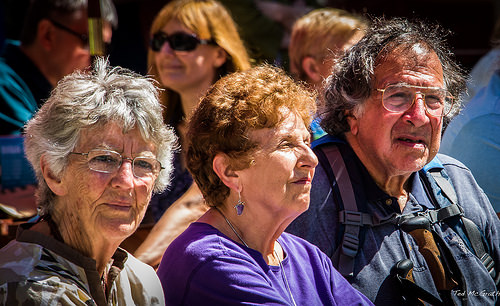
photo credit: <a href=”http://www.flickr.com/photos/90955804@N04/15553723141″>2014 – Vancouver – 3 at a Nooner</a> via <a href=”http://photopin.com”>photopin</a&gt; <a href=”https://creativecommons.org/licenses/by-nc-sa/2.0/”>(license)</a&gt;


IT’S EASY TO CRITICIZE THE PASTOR

It’s easy to criticize the pastor and I know that for two reasons. One is I was a preaching pastor for almost 40 years in two churches; and the other is that on many Sundays the last 20 months I have been listening as a worshiper in a variety of congregations. That means I have been criticized, and I have also criticized.

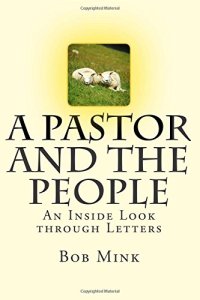
The reality is that like all positions of leadership and being up front pastors will be criticized. As has often been said: “it comes with the territory.” Pastors should not be surprised by criticism. And the criticism, of course, is not limited to their preaching. In my book A Pastor and the People: An inside Look through Letters I have a chapter entitled “Troublesome Letters” in which I include a variety of critical letters I received. To be fair I received many more letters of gratitude and appreciation than I did criticism, but the “Troublesome Letters” chapter is important.

Why do people criticize pastors? For many reasons. Charles Stone, who has written a lot about pastors, suggests seven reasons church people criticize pastors: they lack spiritual maturity, they feel they are losing the church they once knew, they don’t feel they have a voice, they don’t deal with change very well, they need to find something or someone toward which to vent their hurt caused by other life issues, they are truly malevolent people committed to your demise, and they have a point. Reasons two, three, and four in Stone’s list are all pretty much the same and do account for a lot of criticism. I have no personal experience with regard to reason six. I think reasons one, five, and seven are worth greater consideration.

We could probably attribute most criticism of pastors to a lack of spiritual maturity (Stone’s first reason), but not all of it. And if we look beneath the surface we will see a lot of venting of unrelated hurt (reason five) in people’s criticism of pastors. That’s a good thought for criticized pastors to keep in mind. But the reason I am most interested in is number seven: they have a point.

Pastors are not above or beyond criticism. No one is. In the introduction to A Pastor and the People I suggest “Perhaps the bottom line in receiving criticism is to ask if it is valid.” That requires a measure of humility, but the uncomfortable truth is that the critic may be right. In the opening to the chapter on “Troublesome Letters” I acknowledge “Not all of these letters are troublesome because they are critical. Several of them are troublesome because they are true” (p. 79). Pastors need to admit it when they are wrong without thinking the admission will diminish their status. It many cases it will enhance it.

To both pastors and those who criticize them I would encourage making a real effort to understand the other. Keep in mind that although it is not a spiritual gift, there is a place for constructive criticism. None of us is perfect. Criticism is rarely pleasant, but it is sometimes needed. As Pastor Jason Byassee notes, “it is comforting that God only has, and has ever had, sinners [imperfect people] to work with.”

Please share these thoughts with others and consider leaving a reply below.

If you would like to read Chapter 8 (“Troublesome Letters”) in my book send me an email at bobmmink.com and I will send you a copy of that chapter. Or if you would like to check out the book or order it click on the picture below.

pastor n people

photo credit: <a href=”http://www.flickr.com/photos/44452897@N05/14792848066″>PALCON 2014 – PLNU</a> via <a href=”http://photopin.com”>photopin</a&gt; <a href=”https://creativecommons.org/licenses/by/2.0/”>(license)</a&gt;

ARE YOU TROUBLED?

Last week in my reading through the Psalms I came to a phrase that really struck me. In the second part of Psalm 38:18 David states “I am troubled by my sin” (NIV). The Revised English Bible intensifies the thought with “I am troubled because of my sin” (italicize added).

When I first read the verse I thought I can identify with David. I won’t cite specifics, but there have been many times in my life when I have been deeply troubled by a specific sin in my life. But as I continued to consider the big picture it occurred to me that there are also a lot of sins in my life that ought to trouble me but don’t. Sins I don’t think of as big sins, but nevertheless are sins. So my question to you is, “Are you troubled by your sins?”

The purpose of the indwelling gift of the Holy Spirit in Christians is sanctification. That big word refers to our becoming the kind of people God has saved us to be. To move forward in actually becoming holy we have to make progress in dealing with our sin; one of the ways the Holy Spirit helps us is to make us aware of our sins.

I believe it is the Holy Spirit who is behind our being troubled by our sin. I think it is a good thing if we are troubled by our sins and that we should be thankful. For a Christian not to be troubled by his or her sins would be a bad sign and perhaps indicative of indifference to sin.  

Two pieces of New Testament instruction for Christians about the Holy Spirit came to my mind as I dwelt on Psalm 38:18b. The first was Ephesians 4:30, “And do not grieve the Holy Spirit of God, with whom you were sealed for the day of redemption.” What grieves the Holy Spirit? Since He is the Holy Spirit, and dwells in us, our sin (unholiness) grieves Him.

The second passage was I Thessalonians 5:19, “Do not quench the Spirit.” To quench has nothing to do with the Holy Spirit’s thirst, but rather has to do with extinguishing a fire. I have always thought of this command in terms of not “throwing a wet blanket” on or spurning the Spirit. While the Holy Spirit wants to help us become more and more what God wants us to be, we can ignore and reject His help. And the more we suppress His urgings the easier it will be to do so.

So I ask you again, “Are you troubled by your sins?” Are your sins grieving the Holy Spirit who lives in you and could He be involved in your being troubled? I think the answer is yes. And a clear biblical response to being troubled by our sins is given in I John 1:9, “If we confess our sins, he is faithful and just and will forgive us our sins and purify us from all unrighteousness.” When we acknowledge our sins and ask for forgiveness we need to believe God’s promise and move forward. Those sins should no longer trouble us. But we should still expect the Holy Spirit to trouble us about future sins.

What you think of this idea of being troubled by our sin? Leave a reply below and share these thoughts on social media if you think others would benefit.

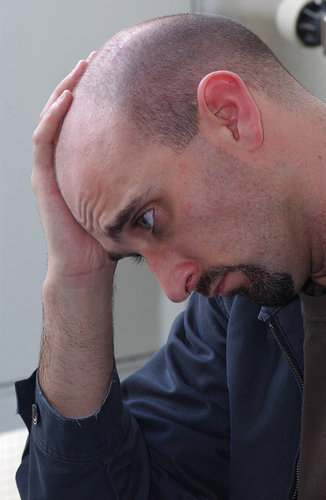
Photo from Photopin Creative Commons license.