A SEASON AND A TIME TO LAMENT

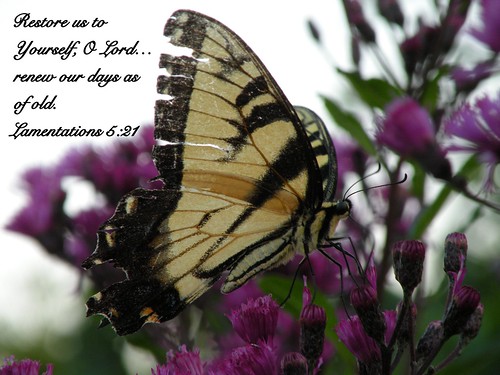
Although Ecclesiastes 3:1-8 does not specify lament, the first verse does say “There is a time for everything, and a season for every activity under the heavens.” We are presently in a season and a time to lament.

Prior to this past March I was not too aware of the idea and practice of lament. During the month, however, I read two books that brought me up to speed on it. The first book was entitled Hurting with God: Learning to Lament with the Psalms by Glenn Pemberton. The second book, Open and Afraid: The Psalms as a Guide to Life by W.
David O. Taylor, had a chapter simply entitled Sadness that addresses the subject.

Lament can be either a noun or a verb. As a noun lament is “a passionate expression of grief or sorrow” or “expression of loss.” As a verb it means to “mourn, bewail, bemoan, grieve, or express sorrow.” Lament, both as a noun and a verb, is in the Bible – primarily in the book of Psalms and the book of Lamentations, but elsewhere as well.

The Covid-19 pandemic alone has brought lament to us; and the tragic death of George Floyd and its aftermath has added to our lament. We have experienced and still are experiencing a variety of losses in our lives from all of this – obviously, some more than others.

To lament is not to be unspiritual or lacking in faith. Taylor goes so far to observe the psalmist’s complaint “is a sign of an active, not a passive, faith” (p. 73). Suffering and troubles are consistent subjects in the book of Psalms.

One writer suggests that in Genesis 6:6 God laments. In John 11:33-35 Jesus lamented the death of Lazarus and the grief of his sisters. Romans 8:26 tells us “the Spirit himself intercedes for us through wordless groans.” We need to give ourselves the freedom and space to grieve.

Lament is more than simply to complain or vent. As a matter of fact, lament can include praise and thanksgiving as we honestly respond to the Lord in our times of loss, pain, confusion, and disappointment. As we lament we can at the same time express our faith and ask God to act. Pemberton notes that those who lament in the Psalms “believe with all their hearts that their prayers make a difference in what God does” (p. 71).

This particular season and time of lament is not our first, nor will it be our last. As Taylor reminds us, “We live in a broken world” (p. 67), and as Jesus tells us, “In this world you will have trouble” (John 16:33). It is comforting to know that God is fully aware of what is going on and happening around us and to us, and that he hurts with us.

Feel free to leave a comment below and/or share this post on Facebook or other social media.

photo credit: Sapphire Dream Photography <a href=”http://www.flickr.com/photos/87199074@N05/10053364336″>Lamentations 5:21</a> via <a href=”http://photopin.com”>photopin</a&gt; <a href=”https://creativecommons.org/licenses/by-nc-nd/2.0/”>(license)</a&gt;

A BIRTHDAY TO REMEMBER

Most readers I would guess think all birthdays should be remembered. I especially think that would be true regarding the birth of a child. But the birthday I have in mind in this post is not the birth of a child, but rather the birth of the Church. This coming Sunday, May 31, is Pentecost Sunday and is the day many Christians acknowledge and celebrate the beginning of the Church.

Pentecost, also called the Feast of Weeks, is one of three main festivals Jewish people celebrated and still celebrate. Another of the three main festivals is Passover. It was during Passover that Jesus ate his final meal, was arrested, tried, and crucified. He rose from the dead on Sunday, what we call Easter, and appeared to his disciples for 40 days after which he returned to heaven. Pentecost Sunday came 10 days after Jesus’ ascension and commemorates the descent of the Holy Spirit on the Apostles and the launching of the Church.

The account of the birth of the Church is recorded in Acts 2 and I encourage you to read the account. What should we remember as we focus on the birthday of the Church?

Both the Old Testament, and Jesus in his teaching during his ministry, looked forward to the founding of the Church. In response to Peter’s declaration that Jesus was “the Messiah, the Son of the living God,” Jesus promised “I will build my church, and the gates of Hades will not overcome it” (Matthew 16:13-20).

Jesus also informed them of the coming outpouring of the Holy Spirit. In his last teaching session with his apostles before he was arrested Jesus told them about the coming of Spirit (John 14-16). And just before he ascended he told them in Acts 1:8, “you will receive power when the Holy Spirit comes on you; and you will be my witnesses in Jerusalem, and in Judea and Samaria, and to the ends of the earth.”

The Apostle Peter preached the first sermon on the Day of Pentecost and early on in his proclamation quoted the Old Testament prophet Joel about what God foretold would happen: “I will pour out my Spirit on all people. Your sons and daughters will prophesy, your old men will dream dreams, your young men will see visions. Even on my servants, both men and women, I will pour out my Spirit in those days” (Joel 2:27 and 28).

We should remember that the Church was God’s idea and that Jesus is the builder and Lord of it. We should also remind ourselves that he is still building his church today. What Peter proclaimed then is still true today: Jesus died on the cross and was raised on the third day. To become a part of the Church sinners are called to repent and be baptized; and when that happens Christians receive the gift of the Holy Spirit.

We should remember that Jesus is still building his Church and that the Holy Spirit is crucial in the life and ministry of the Church. We should remember that the Church is not perfect nor are any of her members. However, we should remember that her founder and builder, Jesus, is. Happy birthday Church!

Feel free to leave a comment below and/or share this post on Facebook or other social media.

photo credit: kmiller799 <a href=”http://www.flickr.com/photos/7936555@N07/3631479810″>My first fondant covered cake</a> via <a href=”http://photopin.com”>photopin</a&gt; <a href=”https://creativecommons.org/licenses/by-nc-nd/2.0/”>(license)</a&gt;

THE MOST NEGLECTED HOLY DAY

In this post I want to highlight what I think is the least emphasized of what many Christians call ‘Holy Days.’ The most highlighted days churches and believers celebrate include Christmas, Palm Sunday, Good Friday, and Easter.

But for many Christians the one we celebrate this week, and the one I want to emphasize, is rarely mentioned: it is the day Jesus’ returned to heaven 40 days following his resurrection. It’s called Ascension Day, and this year is on Thursday, May 21.

I’m not sure why Ascension Day is passed over by so many churches and Christians, but I think it is an extremely important day. And after this summary, I hope you do too.

Many readers will remember that Jesus’ final words on the cross before he died were “It is finished.” His role as our Savior and Lord was not over at that point; but his sacrifice for our forgiveness and salvation was over. Three days later he rose from the dead and for 40 days through a series of appearances he continued his ministry. That part of his ministry concluded when he ascended to heaven.

One preacher I read this week titled his sermon about Jesus’ ascension, borrowing from NASA’s space trips, “Mission Accomplished.” But even though Jesus’ death on the cross paid the debt for our salvation, and by his ascension he returned to heaven, the Bible does not suggest that his work was over. Jesus is still active and we know that someday he will return. Perhaps after the second coming we might not only say it is finished, but also that his mission has been accomplished.

During his ministry on earth Jesus knew and anticipated he would eventually ascend and return to heaven. For example, in John 6:62 Jesus tipped his hat when he said to some who were complaining, “Then what if you see the Son of Man ascend to where he was before!” Then following his resurrection, in John 20:17 Jesus told Mary, “Do not hold on to me, for I have not yet ascended to the Father. Go instead to my brothers and tell them, ‘I am ascending to my Father and your Father, to my God and your God.’”

Luke is the only Gospel writer who gives a real description of the ascension and he does it twice – once at the end of his gospel, and the second time in the opening chapter of the book of Acts. Note the Acts account in chapter 1, verses 6-11: Then they gathered around him and asked him, ‘Lord, are you at this time going to restore the kingdom to Israel?’ He said to them: ‘It is not for you to know the times or dates the Father has set by his own authority. But you will receive power when the Holy Spirit comes on you; and you will be my witnesses in Jerusalem, and in all Judea and Samaria, and to the ends of the earth.’  After he said this, he was taken up before their very eyes, and a cloud hid him from their sight. They were looking intently up into the sky as he was going, when suddenly two men dressed in white stood beside them. ‘Men of Galilee,’ they said, ‘why do you stand here looking into the sky? This same Jesus, who has been taken from you into heaven, will come back in the same way you have seen him go into heaven’.”

What was the purpose of Jesus’ ascension? For one thing, it communicated to his followers that his appearances were coming to an end. Remember he had made a variety of appearances for 40 days. It was also an indication of the success and completion of what he had come to accomplish, and it displayed his return to heaven and God the Father.

What does the ascension mean to Christians today? Going back to Jesus’ farewell discourse before his arrest, in John chapters 14-16 Jesus told the apostles that after he left he would send the Holy Spirit. He did that on the Day of Pentecost and still sends the Holy Spirit to his followers today (see John 14:15-18, 15:26 and 27, and John 16:7-11).

A variety of passages in the New Testament tell us that Jesus is sitting at the right hand of God interceding for us (see Romans 8:34, Colossians 3:1, and Hebrews 1:3, 6:20, 8:1 and 2, 10:12, and 12:2). A very encouraging passage is Hebrews 4:14-16, “Therefore, since we have a great high priest who has ascended into heaven, Jesus the Son of God, let us hold firmly to the faith we profess.  For we do not have a high priest who is unable to empathize with our weaknesses, but we have one who has been tempted in every way, just as we are—yet he did not sin. Let us then approach God’s throne of grace with confidence, so that we may receive mercy and find grace to help us in our time of need.”

Finally, Jesus’ ascension gives us a hint to his second coming. Remember what the angels said in Acts 1:11, “This same Jesus, who has been taken from you into heaven, will come back in the same way you have seen him go into heaven.”

To conclude there are 4 final takeaways to keep in mind I borrow from another writer:

  1. Remember that Jesus is presently reigning as king and remains active and engaged in our lives and our world.
  2. Therefore, live boldly, confidently, and strategically as servants of the exalted king of heaven. Know your work for the Lord Jesus is not in vain.
  3. When suffering, take heart that Jesus is not indifferent to our struggles. Take your cares to the ascended Lord who hears our prayers.
  4. Finally, hope in a glorious future. The ascended Jesus will return and end suffering, destroy death and take us to be with him in heaven forever.

Ascension Day was and is indeed a Holy Day. Celebrate it this Thursday, May 21.

Feel free to leave a comment below and/or share this post on Facebook or other social media.

photo credit: eshao5721 <a href=”http://www.flickr.com/photos/165868022@N02/44097323560″>Che significa il rapimento?</a> via <a href=”http://photopin.com”>photopin</a&gt; <a href=”https://creativecommons.org/licenses/by-nc-nd/2.0/”>(license)</a&gt;

ARE YOU SURE?

As a Christian do you ever worry about, doubt, or question your salvation? I’ve never seen or done a survey asking the question, but my sense is that a lot of believers do from time to time.

It’s interesting that in the broad beliefs of Christianity in general, there are two basic positions. One is popularly known as once saved, always saved and the other one suggests a person can lose his or her salvation. Strange as it may sound, I don’t hold either position.

In the summer of 1976 as the pastor of a small church our youth group attended a Christ in Youth Conference. I remember sitting in one of the sessions and listening to the speaker talk about what is called our assurance of salvation. I don’t remember at that time if I doubted my salvation or not, but I do remember writing the date in the front of my Bible reminding me that I could be confident I was saved. Unfortunately, I tossed that Bible a few years ago because it began to fall apart.

Earlier this week I finished a new book by Dane Ortlund entitled GENTLE and LOWLY: The Heart of Christ for Sinners and Sufferers. The title, of course, comes from Jesus’ self-description in Matthew 11:29. In 33 short chapters Ortlund unpacks a variety of passages in both the Old Testament and New Testament that show us the heart of Jesus, God the Father, and the Holy Spirit.

I don’t remember hearing or reading anything in my past that was more encouraging, affirming, and assuring about my relationship with the Lord than this book. Before I share a few quotes I want to list a few chapter titles that say a lot about our God: “Able to Sympathize,” “I Will Never Cast Out,” “To the Uttermost,” “A Tender Friend,” “Father of Mercies,” “Rich in Mercy,” “To the End,” and “Buried in His Heart Forevermore.”

Ortlund’s book reaffirmed what I have believed and taught for many years: those who by faith have accepted Jesus into their hearts and lives as Savior and Lord can be confident and assured they are saved. Yes, we can be sure!

Sometimes, however, the realization of our failures and sins may cause us to worry and question our salvation. Early in the book the author explains “for the penitent, his [Jesus] heart of gentle embrace is never outmatched by our sins and foibles and insecurities and doubts and anxieties and failures.”

Thirty pages later he underscores his previous point: “When we sin, we are encouraged to bring our mess to Jesus because he will know just how to receive us. He doesn’t handle us roughly. He doesn’t scowl and scold . . . .  And all this restraint on his part is not because he has a diluted view of our sinfulness. He knows our sinfulness far more deeply that we do . . . . His restraint simply flows from his tender heart for his people” (p. 54).

A believer’s assurance of his or her salvation is not based on an absence of sin, but on the realization and acknowledgement of one’s sins. “The guilt and shame of those in Christ is ever outstripped by his abounding grace” (p. 68).

It would be a huge mistake for any Christian to see the truth of the Bible’s teaching in these quotes and conclude that it’s ok and no big deal for us to sin. It’s a believer’s sensitivity to his or her own sin that indicates their assurance of salvation. Near the end of the book Ortlund presses this home when he observes, “Our very agony in sinning is the fruit of our adoption [acceptance as a child of God]. A cold heart would not be bothered” (p. 194).

I believe the Bible clearly teaches that followers of Jesus can confidently answer the question “Are You Sure?” with a “yes.” And it isn’t because anything we have done or how good we are. It is because of God’s love and what Jesus did for us. In Matthew 11:28 Jesus invites, “Come to me.” To be sure of your salvation respond to his invitation over and over again as a way of life.

Feel free to leave a comment below and/or share this post on Facebook or with others.

photo credit: torstenbehrens <a href=”http://www.flickr.com/photos/29812986@N06/49811112517″>Finally after work; the postman had a late shift today. | 23. April 2020 | Tarbek – Schleswig-Holstein – Germany</a> via <a href=”http://photopin.com”>photopin</a&gt; <a href=”https://creativecommons.org/licenses/by/2.0/”>(license)</a&gt;


I’M NOT PERFECT – NEITHER ARE YOU!

Whether you know me or not, I’m confident you are not shocked by my admission that I’m not perfect. And I hope you are not shocked by my suggestion that neither are you. The reality is that we all are flawed and make mistakes. I’m fairly positive every person would agree that he or she is not perfect.

The fact that we know we are not perfect should result in some sense of humility. And humility is expressed when we acknowledge to others we are imperfect. I think what we need to guard against when we admit we were wrong is making excuses. No one wants to hear an admission and apology followed by a reason why we did or said something we shouldn’t have. Most of the time when someone admits a mistake, but gives an excuse for it, they are not taking responsibility for their misdeed.

Rather than defending ourselves with an excuse when we have shown we are imperfect, humility should lead us to an apology and probably a statement of intention to do better in the future.

Humility leads us to confess our shortcoming, apologize for it, resolve to do better in the future, and possibly ask for forgiveness if it is appropriate. Generally speaking I think it is best to take these steps as soon as possible. However, sometimes we aren’t convicted about our mess up at the time, but come to the realization later. Humility is needed to apologize and seek forgiveness hours, days, or weeks later.

So far I’ve been writing about our not being perfect, but another expression of humility is our acceptance of the imperfections of others. In the same way we are encouraged when others accept us and our apologies for mistakes, we too can encourage others by accepting them along with their weaknesses and failures. (That does not mean, however, that we have put ourselves in the position to be hurt again and again by someone.)

I’m a person who has said and done things and acted in ways I should not have more times than I can remember. There have been times when it took longer than it should have for me to admit my wrong, apologize, and ask for forgiveness. I’ve never regretted taking those steps, but I do regret the times I didn’t.

I’m not perfect – and neither are you. Even though most people will accept our apologies for our failures, and God will forgive us if we repent and ask Him for it; let’s not use the reality of our not being perfect to give us cover to do and say things we should not. Let’s keep growing and doing better as we accept and welcome the love and grace of our Heavenly Father and as we walk with his son — our Savior and Lord Jesus.

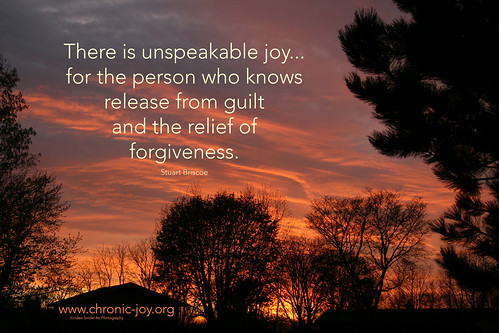
Here’s a final suggestion to think about: forgive yourself.

Feel free to leave a comment below and/or share this post on Facebook or other social media.

photo credit: Chronic Joy Ministry <a href=”http://www.flickr.com/photos/148283563@N04/33195680906″>CJUnspeakableJoy</a&gt; via <a href=”http://photopin.com”>photopin</a&gt; <a href=”https://creativecommons.org/licenses/by-nc/2.0/”>(license)</a&gt;


GROWING IN PRAYER

I have no way of knowing for sure, but my sense is that far more people pray than those who don’t. Not only that, my sense also is that many of those who do pray often wish they were better at praying. I am one of those who would like to grow in prayer.

A beginning point in learning to pray is the example Jesus set in his prayer life. Luke 11:1 tells us, “One day Jesus was praying in a certain place. When he finished, one of his disciples said to him, ‘Lord, teach us to pray’.” His response was what we call The Lord’s Prayer and a model for us.

During the last couple of months I have been thinking and reading about prayer and how I can do better in my prayer life. One of the books I read that was the most encouraging and challenging was by Robert Benson entitled In Constant Prayer (pub. by Thomas Nelson, 2008). Here are some selections that I found motivating.

“At some point, we have to move from talking about prayer to saying our prayers” (p. 81). I don’t particularly like the phrase saying our prayers, but I was convicted to stop talking about prayer to actually praying. Benson noted “The only way to become a writer is to write” (p. 96). I paraphrase his next observation: you do not become a person of prayer and then begin to pray. If you pray enough, you may yet become a person of prayer. People of prayer pray every day.

Two chapters later Benson slapped me in the face so to speak with this affirmation: “it is far more likely that we do not recognize God’s presence in our lives than it is that God is not present in our lives” (p.130, emphasis added). My takeaway is that one of the ways we can better recognize God’s presence in our lives is through growing in prayer.

Near the end of the book his honesty both challenged and encouraged me with his acknowledgement: “Sometimes I feel as though I have traveled far on this rode. But the truth is that in a way I am in the same place I was when I began all those years ago” (p.147). Based on what I had read in the previous pages I could not help but think he was being a little too hard on himself.

Benson also reminds readers that there is “the need for us to pray corporately as well as to pray personally” (p. 148). I have been present and participated many times in corporate prayer. Some have been moving and meaningful and others have been a mixed bag. Some of the most satisfying times of prayer for me have been in small groups, some with just me and my prayer partner of several years.

I’m for corporate prayer and believe Christians should be praying together. But my desire and challenge to readers of this post is to take steps to grow in our personal prayers – even if we begin with baby steps.

Feel free to leave a comment below and/or share this post on Facebook or social media.

photo credit: Joe Shlabotnik <a href=”http://www.flickr.com/photos/40646519@N00/21944196312″>Praying Outside St. Patrick’s</a> via <a href=”http://photopin.com”>photopin</a&gt; <a href=”https://creativecommons.org/licenses/by-nc-sa/2.0/”>(license)</a&gt;


MAKES SENSE TO ME

Readers who are too young to be on Medicare didn’t get the advice those of us who are recently received by email. I’m not an expert when it comes to dealing with stress, but I do have quite a bit of experience with stress. Some are more susceptible to stress than others, and I’m in that group. And I resent those of you who are not. (Just kidding, the truth is that I admire you.)

Anyway, those of us on Medicare received an email this week with some suggested ways to cope with stress. None of the suggestions require the IQ of a Mensa Scholar, but they make sense to me. And even if you are not on Medicare, you may want to consider them.

The first one is clearly the most important and most needed for me: “Take breaks from watching, reading, or listening to news stories, including social media. Hearing about the pandemic repeatedly can be upsetting.” Yep, I watch, read, and listen to too much news about Covid-19 and it upsets me. But it’s not just the news about Covid-19 that stresses me; all the back and forth with politicians and political news makes it even worse. This first suggestion makes so much sense to me that I’m cutting way back on my engagement with the news.

The second suggestion is also much needed by many of us: “Take care of your body.” Some important specifics follow: “Take deep breaths, stretch, or meditate. Try to eat healthy, well balanced meals. Exercise regularly, get plenty of sleep. Avoid alcohol and drugs.” Again, it all makes sense to me; and I’m taking baby steps with all these except avoiding alcohol and drugs – which is not an issue for me.

During these days of staying home I don’t often need the third suggestion: “Make time to unwind. Try to do some other activities you enjoy.” The only time I need to unwind is after I’ve rigorously competed with our grandsons in games like Chutes and Ladders, Moustache Smash, and games they’ve invented that involve running and throwing soft objects at one another. To unwind I’ve been watching a lot of TV shows in black and white that I watched as a youngster.

The fourth and final suggestion made by Medicare is perhaps the most difficult: “Connect with others. Talk with people you trust about your concerns and how you are feeling.” Given the restrictions most of us are under, it’s not easy to activate this one. My friends and I are not playing golf or going out to breakfast or lunch. And the stereotype when it comes to men is largely true – we don’t often talk about our concerns and how we are feeling. My wife is my go to person when it comes to my concerns and how I am feeling. She is a great listener, asks great questions, not afraid to call me out, and is wonderfully supportive. I completely trust her.

As much as I like and appreciate the suggestions from Medicare, there is one they left out that I find immensely helpful: Bible reading and prayer. This suggestion probably doesn’t surprise any readers, but it is important. I don’t want to be presumptuous, but for those who may be interested let me suggest a few selected passages you may find comforting, challenging, and encouraging during these stressful days: Psalm 13, 23, 27, 42, and 139; Matthew 6:25-34; John10:11-18; Romans 8:31-39; and Philippians 4:4-9.

Feel free to leave a comment below and/or share this post on Facebook.

Image by <a href=”https://pixabay.com/users/geralt-9301/?utm_source=link-attribution&amp;utm_medium=referral&amp;utm_campaign=image&amp;utm_content=272679″>Gerd Altmann</a> from <a href=”https://pixabay.com/?utm_source=link-attribution&amp;utm_medium=referral&amp;utm_campaign=image&amp;utm_content=272679″>Pixabay</a&gt;


THE POWER OF WORDS

“Sticks and stones will break my bones but words will never hurt me.” That little saying that we all have heard, and perhaps said, is not true. And we know it’s not true – not because sticks and stones won’t break our bones, they will – but because words can and do hurt. Everyone reading this post has been hurt by words.

Words are powerful, and we all know that. They can not only hurt, they can also heal, lift up, encourage, warm our hearts, ask for and receive forgiveness, and do much, much more.

Earlier this week I read an eBook entitled Ancient Wisdom For Future Success. The ancient wisdom cited comes from the Old Testament book of Proverbs. The book of Proverbs also offers a lot of ancient wisdom with regard to The Power of Words. There are over 100 references in the book to the tongue, mouth, lips, and words. A general foundational verse is Proverbs 18:21, “The tongue has the power of life and death,
and those who love it will eat its fruit” (NIV).

Here is a verse that underscores both the potential for words to be hurtful or helpful: Proverbs 15:4, “The soothing tongue is a tree of life, but a perverse tongue crushes the spirit” (NIV).

Here are five of my favorites that underscore ways words hurt and damage:

10:19, “Too much talk leads to sin. Be sensible and keep your mouth shut” (NLT).

11:9a, “With their words, the godless destroy their friends” (NLT).

11:12, Mean-spirited slander is heartless; quiet discretion accompanies good sense” (The Message).

25:18, “Telling lies about others is as harmful as hitting them with an ax, wounding them with a sword, or shooting them with a sharp arrow) NIV.

29:5, “Those who flatter their neighbors are spreading nets for their feet” (NIV).


Here are four of my favorites that underscore ways words help and heal:

10:11,”The words of the godly are a life-giving fountain” (NLT).

12:18, “Some people make cutting remarks, but the words of the wise bring healing” (NLT).

12:25, “Worry weighs us down; a cheerful word picks us up” (The Message).

16:24, “Gracious words are a honeycomb, sweet to the soul and healing to the bones” (NIV).


With those verses in mind, consider these four suggestions for the way we use words.

  1. First, we must learn to listen. It may sound trite, but in thinking about the power of words we need to be reminded that we need to listen. James 1:19 gives us good advice: “My dear brothers and sisters,take note of this: “Everyone should be quick to listen and slow to speak” (NIV). Some of us have a problem of assuming what a person is going to say before they say it. Years ago I saw a sign on a person’s desk that has stayed with me. It said “I love you enough to listen.”
  2. Second, we must think before we speak and choose our words carefully. Proverbs 29:20 says it well, “Do you see someone who speaks in haste? There is more hope for a fool than for them” (NIV).
  3. Third, we need to be honest with our words. Two of seven things God hates are “a lying tongue” and “a false witness who pours out lies.” I don’t have in mind here what some term as being “ruthlessly” honest. That may take us back to the destructive power of words. Ephesians 4:15a tells us “Speak the truth in love.” There is a way to speak the truth, but not in love. We are to speak the truth; but we are to do so in love.
  4. Finally, we need to take seriously Ephesians 4:29. Let me remind you of Paul’s powerful advice: “Do not let any unwholesome talk come out of your mouths, but only what is helpful for building others up according to their needs, that it may benefit those who listen” (NIV) Unwholesome talk may include foul language and dirty jokes, but I think unwholesome talk is that tears others down and that does not benefit those who listen is sarcasm, attacking, caustic, negative, and rude.

I’m pretty sure these verses and comments give us all a lot to think about – it certainly does me. I confess, I’m guilty of violating a lot of what God’s Word tells us about how we should talk. To get the most out of these verses it might be good to go over each of them and give yourself a grade from A to F.

I close with a declaration from Jesus in Matthew 15:18, “the things that come out of a person’s mouth come from the heart” (NIV).

Feel free to leave a comment below and/or share this post on Facebook.

Image by <a href=”https://pixabay.com/users/geralt-9301/?utm_source=link-attribution&amp;utm_medium=referral&amp;utm_campaign=image&amp;utm_content=1106649″>Gerd Altmann</a> from <a href=”https://pixabay.com/?utm_source=link-attribution&amp;utm_medium=referral&amp;utm_campaign=image&amp;utm_content=1106649″>Pixabay</a&gt;

EASTER REALITY THIS YEAR: SOME BORROWED THOUGHTS

EASTER REALITY THIS YEAR: SOME BORROWED THOUGHTS

Easter Sunday is almost here, but many of us have been thinking about it for several weeks. This morning I reviewed some of the articles I have read during this time and thought some who read my blog may be interested in reading them.

Looking back over these selections, I was drawn to them again as I was originally by their titles. It was the titles that got my attention because each one was so powerful that by itself it said so much.

Below are four of the titles with minimal commentary by me and the link to the article for those who might like to read more. If you don’t have the time or interest to read them, I think the titles alone will stimulate your thinking.


Have Yourself a Bittersweet Easter by Todd Hunter (March 31, 2020)

Bittersweet, of course, is the basic point and describes what we’re feeling as we come to the greatest day of celebration in the Christian year. Hunter says what’s true when he reminds us “a normal Easter is out of reach this year.” We rejoice that Jesus rose from the dead. But our world is shaken by the COVID – 19 impact with so many forced changes in our lives as well as victims of the virus. Hunter notes, “This year we celebrate in the context of deep lament.”  https://www.christianitytoday.com/pastors/2020/march-web-exclusives/bittersweet-easter-holy-week-coronavirus.html


An Easter without Going to Church – The pandemic has laid an egg on our worship. By Daniel Harrell (March 25, 2020)

Harrell refers to The Centers for Disease Control and Prevention’s guidelines and rightly reminds us “Easter worship as we’ve known it is doomed.” However, he quotes another writer’s statement of truth, “The church remains the church whether gathered or scattered.” And then he adds, “The church remains the church online, too.”  https://www.christianitytoday.com/ct/2020/march-web-only/easter-without-church-covid-19-coronavirus.html?utm_source=connection-html&utm_medium=Newsletter&utm_term=25166636&utm_content=705070787&utm_campaign=email


Not Even the Gates of a Hellish Pandemic Will Prevail over God’s Church (April 6, 2020) by Esau McCaulley

“The somber season of Lent seems perfectly suited to the moment. This is a time of national lament. But as we turn the corner for Easter, dare we say more?”

“If the prophets of the Old Testament have anything to teach us, it’s that precisely in the darkest moments of our history, we need divinely inspired and freshly articulated hope.”

“I don’t know what the future of Christianity holds in the weeks and months to come. I do know, however, that the church will not be overcome by a virus. I know this is not the end, and I know that we will in fact worship together again.”                                                                                                                       https://www.christianitytoday.com/ct/2020/april-web-only/easter-coronavirus-covid-19-not-even-gates-hellish-pandemic.html


The Resurrection Has Not Been Canceled by Timothy Dalrymple (April 8, 2020)

This just came today and sparked the idea for this post. Don’t you love the title?

“Church doors are closed. Schools are no longer meeting. Businesses are shuttered. Restaurants and cafés are empty, cinema screens are dark, and concert halls are silent. Countless meetings and gatherings, weddings and funerals, conferences and events have been canceled.

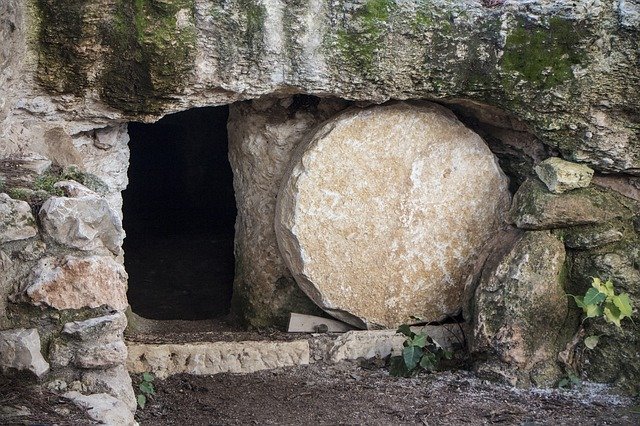
The resurrection is not canceled. God is always in the business of bringing life out of death. Jesus emerged from the tomb so that we can do the same—on Easter and every other day. There is nothing in all the world that could have stopped the resurrection of Jesus Christ two thousand years ago, and there is nothing that can stop it today.” https://www.christianitytoday.com/ct/2020/april-web-only/coronavirus-easter-resurrection-not-canceled.html?utm_source=ctdirect-html&utm_medium=Newsletter&utm_term=15819991&utm_content=706425458&utm_campaign=email

Feel free to leave a comment below and/or share this post on Facebook.

Image by <a href=”https://pixabay.com/users/TC_Perch-3834529/?utm_source=link-attribution&amp;utm_medium=referral&amp;utm_campaign=image&amp;utm_content=3326100″>TC Perch</a> from <a href=”https://pixabay.com/?utm_source=link-attribution&amp;utm_medium=referral&amp;utm_campaign=image&amp;utm_content=3326100″>Pixabay</a&gt;


ANOTHER PALM SUNDAY COMING?

Because of the situation in which we find ourselves, Palm Sunday this past weekend was not the usual day of celebration, praise, and worship that it traditionally is. Yet with our technology for broadcasting worship into our homes, many of us still marked the day that launches what is called Holy Week.

Palm Sunday marks the final entrance of Jesus into Jerusalem. It is called Palm Sunday because the common people waved palm branches as Jesus entered on a colt in the same way a king would be welcomed. Because of that greeting given to Jesus, it is also called his Triumphal Entry.

The triumphal aspect of Jesus’ entry melted the following days as both the religious leaders (Jews) and the Roman governor (Pontius Pilate) moved to get rid of Jesus. Following a few days of conflict with the Jewish religious leaders, Jesus was arrested and tried by them Thursday night, and ultimately tried by Pilate and sentenced to death by crucifixion on Friday.

Most Christians will focus the rest of this week on the events following Palm Sunday, but I want to share something new to me related to Palm Sunday I learned yesterday when I watched a Palm Sunday sermon online.

Dr. Sam Chand, a pastor from India, was the guest preacher for Palm Sunday at 12Stone Church in Lawrenceville, GA. His talk was informative, encouraging, and inspirational. He not only dealt with the accounts of Jesus’ entry, he also referred to a passage in the Old Testament about waving palm branches (Leviticus 23:40) and one in the New Testament book of Revelation (7:9 and 10).

It was the reference in Revelation that grabbed my attention:

After this I looked, and there before me was a great multitude that no one could count, from every nation, tribe, people and language, standing before the throne and before the Lamb. They were wearing white robes and were holding palm branches in their hands. 10 And they cried out in a loud voice:

“Salvation belongs to our God, who sits on the throne, and to the Lamb.”

It sounds like there is going to be something of a repeat or another Palm Sunday like event in the future in heaven. Christians will be standing before Jesus dressed in white holding palm branches. Like the first Palm Sunday they will be shouting praise to King Jesus; and I can’t help but think they will also be waving those palm branches they are holding.

That is something all of us who have decided to follow Jesus can look forward to!

Feel free to leave a comment below and/or share this post on Facebook or other social media.

photo credit: cobalt123 <a href=”http://www.flickr.com/photos/66606673@N00/41632689411″>So There</a> via <a href=”http://photopin.com”>photopin</a&gt; <a href=”https://creativecommons.org/licenses/by-nc-sa/2.0/”>(license)</a&gt;