THE OTHER SIDE OF EASTER

In this fifth week after Easter I’m thinking about what took place after Jesus’ resurrection. The Gospels tell us that for 40 days Jesus appeared several times to his followers to encourage and instruct them. He appeared to Mary Magdalene Sunday morning (John 20:11-18), to two unnamed disciples in the afternoon (Luke 24:13-35), and to 10 of the apostles that evening (John 20:19 and 20). The following Sunday he appeared to the 11 apostles, this time including Thomas who was absent the week before (John 20:24-28). Later he appeared to seven of his disciples by the Sea of Galilee after which he restored Peter who had denied him (John 21:1-19). In I Corinthians 15:6 the Apostle Paul reports Jesus appeared “to more than five hundred brothers and sisters at the same time.”

After 40 days Jesus concluded these appearances with an important act that is rarely emphasized by his followers today: he ascended (returned) to heaven. Even though it is rarely emphasized, Ascension Day is on the church calendar on the sixth Thursday after Easter—the 40th day of Easter, this year on May 25. Jesus’ ascension is important in the New Testament—so much so that Luke reports it twice: at the end of his gospel in Luke 24:49-53 and at the beginning of the book of Acts in 1:9-11. Jesus’ exalted status seated at God’s right following his ascension is also important and frequently mentioned (Ephesians 1:20, Colossians 3:1, Hebrews 1:3, and others).

Those familiar with the Apostle’s Creed will remember the reference to Jesus’ ascension in it: He ascended into heaven, and is seated at the right hand of the Father. What are we to make of this part of the classic statement of the Christian faith often recited in many churches?

One thing we should realize is that the ascension marked the end of the resurrected Jesus’ appearances to his followers. Acts 1:9 reports “he was taken up before their very eyes, and a cloud hid him from their sight.” During the 40 days of his appearances he would appear and disappear, but this time was different. He had accomplished what he came to do and returned to the Father. The creed’s affirmation that Jesus “ascended into heaven and is seated at the right hand of the Father” summarizes the teaching of the New Testament.

The descriptive words of both Jesus’ “ascending to heaven” and being “seated at the right hand of the Father” are symbolic. One theologian warns us “It is important to realize that the ascension is not making a statement about cosmology and how to find heaven on an astronomical map” (Michael Bird). Another theologian suggests the imagery of being seated at the right hand of God means he has returned “to the close presence, power and majesty of his Father” (Alister McGrath).

Jesus returned to heaven and sat down at the right hand of the Father, but that does not mean he is absent from our world or us. Nor, in the words of James Bryan Smith, does it “mean he is up in heaven taking a long nap.”

In Matthew 18:20 Jesus promised “where two or three are gathered in my name, there am I with them.” And in John 14:18 he told his apostles “I will not leave you as orphans; I will come to you.” The primary way Jesus is still with us today is through the Holy Spirit he promised following his ascension.

Ascended and sitting at the Father’s right hand, Jesus has been given absolute sovereignty. New Testament scholar Bruce Metzger put it this way: “That Christ ascended and now sits at the right hand of God means that he lives and rules with all the authority and power of God himself.”

Jesus is also talking to the Father about us. In Romans 8:34 the Apostle Paul writes Christ Jesus “is at the right hand of God and is also interceding for us.” The writer of Hebrews affirms as our high priest Jesus “always lives to intercede for those who come to God through him” (Hebrews 7:25).

To conclude this post let’s return to the account of Jesus’ ascension in Acts 1. After “a cloud hid him from [the Apostles’] sight” and “they were looking intently up into the sky” a couple of angels asked them why they were looking into the sky. Then the angels affirmed, “This same Jesus, who has been taken from you into heaven, will come back in the same way you have seen him go into heaven” (Acts 1:11). Jesus will return!

In Philippians 2:9-11, after talking about Jesus’ death on the cross, the Apostle Paul takes his readers from the ascension to the second coming, “Therefore God exalted him to the highest place and gave him the name that is above every name, that at the name of Jesus every knee should bow, in heaven and on earth and under the earth, and every tongue acknowledge that Jesus Christ is Lord, to the glory of God the Father.”

(The title of this post was borrowed from my pastor, Jim Shelburne of Washington Avenue Christian Church.)

Feel free to leave a reply below and/or share this post on Facebook or other social media.

photo credit: Leonard J Matthews <a href=”http://www.flickr.com/photos/67953162@N00/32044873833″>one way Jesus</a> via <a href=”http://photopin.com”>photopin</a&gt; <a href=”https://creativecommons.org/licenses/by-nd/2.0/”>(license)</a&gt;

WHO ARE YOUR FRIENDS?

Since I moved in December from California to Texas I have been thinking on and off about this matter of friends. Having lived in the same city and house for 32 years, when I left California I left the place of many friends I had there. I knew I would miss seeing those friends, and was concerned about the path of meeting and making new friends in my new location.

From the outset of arriving in Amarillo I was impressed by the friendliness of almost everyone. Obviously friendliness does not automatically translate to friends, but it was encouraging to me as a newcomer. I was somewhat surprised last week when I realized in multiple conversations I referred to someone I was talking with as “my friend.”

The designation “friend” has a wide range of meanings. Not every acquaintance is necessarily a friend, even though we appreciate them. Most of us have “friends” on Facebook we hardly know, but in that context they are friends. I’m intrigued by the designations “good friend,” “close friend,” and “best friend.”

The depth or level of our friendships generally vary based upon the time we spend with them. Even though I still consider them good friends, because of my move I am not as close to my friends in California as I was when I lived there. And because they were and are good friends, I miss them.

I have made and am making friends in my new city. It takes and will take time, but I am positive and making progress. You do not quickly become “good friends” with someone, but friendship grows as you spend time together.

Hopefully it will not surprise anyone to read that my best friend is my wife, Jan. And our friendship has grown through our move and our settling into our new city and home. Our move has also allowed my friendship with our daughter to intensify as I see her daily, but I miss seeing our son every day. As good as it is, talking on the phone or on Facetime is not the same as being present.

As I think about this matter of friends I am reminded of how valuable and important they are—at all levels. One of the best things about Facebook is that it allows us to connect with and stay in touch with friends all the way back to childhood and all over the world. I so appreciate interacting with friends from high school, college, my youth ministries, my time in Philadelphia, and my years in California. I am thankful for all the friends I have had and still have as well as the new friends I am making in Texas.

Here are three verses from the book of Proverbs for your contemplation:

Proverbs 17:17a, “A friend loves at all times.”

Proverbs 18:24, “One who has unreliable friends soon comes to ruin, but there is a friend who sticks closer than a brother.”

Proverbs 27:6, “Wounds from a friend can be trusted, but an enemy multiplies kisses.”

Please feel free to leave a reply below and/or share this post on Facebook or other social media.

photo credit: moodboardphotography <a href=”http://www.flickr.com/photos/67835627@N05/7301106896″>10080031</a&gt; via <a href=”http://photopin.com”>photopin</a&gt; <a href=”https://creativecommons.org/licenses/by/2.0/”>(license)</a&gt;

A PICTURE OF CONSISTENCY

This article was written almost 19 years ago the morning I learned of my mother’s death. It is also included in Chapter 12, Preacher’s Pen Columns, in my book A Pastor and the People: An inside Look through Letters. I am posting it this week in honor of Mother’s Day this coming Sunday.

July 1, 1998

I received a phone call this morning that my mom had passed away.  I’m not sure of the details yet, but apparently she died last night in her sleep.  Although we knew it was coming, we weren’t expecting it quite so soon.  I was hoping and praying she would make it until our family got there to visit in August, but it wasn’t to be.  And I’m okay with that.

My mom has fought her last battle; and I don’t view it as a loss.  Throughout her life she fought numerous battles.  All of us do, of course, but it seems like she fought more than most people do.  And she was a courageous and persistent battler.  She often had reasons to quit; but she was not a quitter.  And in her death I’m sure she did not quit; but it was time to move on.

If in his life my dad was a trophy of God’s grace, then my mom was a picture of consistency.  She was always there.  From as far back as I can remember until this past Sunday when we spoke with her she was there.  She was there caring and praying and doing what she could to help and make things better.  I guess that’s the primary role of a mother.

At times like this it’s common to think about things you didn’t do or say that it’s too late now to say or do.  There’s much in that category for me, but I also think there was an understanding between my mother and me that went beyond words.  Anyway, I sure hope that was true.

I am disappointed that I will not be able to visit her as we had planned later this summer, but I am pleased she is no longer suffering and worrying.  She feared becoming more and more incapacitated and lingering in pain.  I am thankful that is not the case.

More than that, and not speculating on what God has in store for us, I’m blessed to know that she is now with my dad.  None of us know the details of heaven, but we do know it is a reality for those who accept God’s gift in Jesus.  She sorely missed dad; and it’s a blessing to know that even though she is gone from us, she is where he is.

Knowing mom as I did, I doubt that even in heaven she will be able to completely quit worrying about my brother and me and her grandchildren.  But I hope that in light of her new surroundings and situation she can at least worry less.

Good bye mom.  I’ll bet it’s easier for you to pray for us now than it’s ever been.  I love you.

–Bob

Feel free to leave a reply below and/or share this post on Facebook and other social media.

photo credit: ru_24_real <a href=”http://www.flickr.com/photos/13101875@N00/242156831″>Mom &  Baby’s</a> via <a href=”http://photopin.com”>photopin</a&gt; <a href=”https://creativecommons.org/licenses/by-nc-nd/2.0/”>(license)</a&gt;

REAL BEAUTY

One of my favorite lesser known characters in the Old Testament is a woman named Abigail. I Samuel 25:3 describes her “as an intelligent and beautiful woman” and her husband Nabal as “surly and mean in his dealings.” It’s a great story, and if you are not familiar with it you may want to read it. But the contrast between the two challenges me to consider what real beauty is.

Real beauty is both outer and inner. It’s not only what we can see externally, but what we can see and sense that is inside a person. Writing to wives, I Peter 3:3 and 4 encourages, “Your beauty should not come from outward adornment, such as elaborate hairstyles and the wearing of gold jewelry or fine clothes. Rather, it should be that of your inner self, the unfading beauty of a gentle and quiet spirit, which is of great worth in God’s sight.”

Some readers may view what Peter says as chauvinistic, but I think the same basic principle can and should be applied to husbands and men as well. When it comes to men we don’t usually call it beauty, but isn’t being handsome basically the same idea?

Peter isn’t prohibiting us from doing things to make us look good, but warning against making the external our total focus. One writer observes, “Outward beauty is secondary to the beauty of character.” And back to the idea of applying this to men as well, we speak and hear of a man’s beautiful spirit or heart.

General speaking, with the passing of time external beauty fades. At the age of 66 I certainly am not the hunk I was when Jan and I got married 43 years ago! But just as generally speaking external beauty fades with the passing of time, ideally internal beauty grows as time goes on.

Most of us realize internal beauty often overshadows external beauty; and a lack of internal beauty can negate external beauty. We all have met people we thought at first were good-looking only to realize after we got to know them they were not. And the opposite, of course, is also true.

How do we cultivate real beauty? Simply stated, we cultivate real beauty by becoming more and more the kind of people God calls and wants us to be. We do that by inviting the Lord to work in us, as well as cooperating with Him, to make changes on the inside to become more and more beautiful. I think He does it and will do it through His Spirit, His Word, circumstances, and His people.

What do you think?

Feel free to leave a reply below and/or share this post on Facebook or other social media.

photo credit: jerseytom55 <a href=”http://www.flickr.com/photos/99576374@N02/32564636151″>2017-1-28 Ali-79</a> via <a href=”http://photopin.com”>photopin</a&gt; <a href=”https://creativecommons.org/licenses/by/2.0/”>(license)</a&gt;

NOSTALGIA?

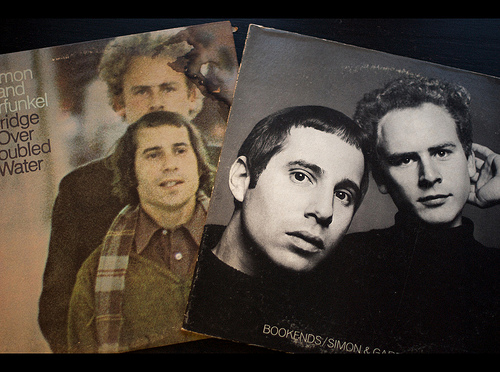
For the past several years while on road trips and listening to oldies but goodies on the radio, the music has taken me back to my time in high school. Up until recently I would tell my wife the songs made me melancholy, but I don’t think that is the best word to describe my feelings. Last week I watched a video on Facebook posted by a guy I went to high school with of Simon and Garfunkel singing “The Sounds of Silence” and commented on the post: “listening to this takes me back and impacts me in ways I don’t fully understand.”

As I reflected on my comment, I wondered if nostalgic was a better word to describe my feelings. I looked the word up and the dictionary definition of nostalgia gets close to describing what listening to the music instills in me: “a sentimental longing or wistful affection for the past, typically for a period or place with happy personal associations.” While I do not have a “sentimental longing” to return, I do have a “wistful affection” for my years of high school and college as well as “happy personal associations.” As happy and excited as I was to graduate from high and college, I clearly remember those were not the only feelings I had the night I graduated from high school and the day I graduated from college.

So much was going on not only in my life, but in our nation and the world during those eight years from 1965-1973. I’m sure readers who experienced those years remember the seismic changes, the progress, the unrest, and the tragedies. There certainly was a mixture of “the good, the bad, and the ugly.” I would guess those who are younger have heard reports and stories about what were tumultuous years.

As I write this post I am back in Cincinnati where I grew up and lived until 1975. This afternoon I drove back to my hometown, through the neighborhood in which I grew up, past where my high school used to be, and by a variety of other places. I had dinner with a high school friend I haven’t seen in 48 years. Tomorrow I’m having lunch with two long time friends from my youth ministry while I was in college. I am not feeling melancholic, but I do have a lot of wistful affection.

Even though it can be cruel at times, memory is a precious gift. It’s not just the music of my high school and college years that make me nostalgic, but lots of other things as well that remind of the life I have lived to this point. I am grateful as I look back, and optimistic as I look forward. And I am reminded of the truth of three trite phrases I have often heard and repeated myself: “things will never be the same,” “we can’t go back,” and “life goes on.” But that does not mean we cannot remember the past with wishful affection.

Feel free to leave a reply below and/or share this post on Facebook and other social media.

photo credit: Steve.Bernacki <a href=”http://www.flickr.com/photos/50194260@N00/3856900987″>Simon & G-funk</a> via <a href=”http://photopin.com”>photopin</a&gt; <a href=”https://creativecommons.org/licenses/by-nc/2.0/”>(license)</a&gt;

WHAT IS LEGACY?

A good friend recently asked me in a phone conversation if I had any Bible references about legacy. She was leading a break-out session at a conference and wanted to include Scripture in the discussion. I couldn’t think of anything off the top of my head, but I’ve been thinking about the subject since we talked.

One of the first things I did was look up the word in the dictionary and found that the first definition of legacy is “a gift by will especially of money or other personal property.” I knew passing on wealth was a part of legacy, but didn’t think of legacy as only, or even primarily, about it. When I consulted two Christian authors I was surprised—and disappointed–to note how much they wrote about money and wealth in their discussion of legacy.

Two and a half years ago when I stepped down after 30 years as pastor of Discovery Christian Church, I was honored by the theme promoted for my last Sunday “Celebrating a Legacy.” I can assure you the church body was not celebrating any financial gift I was giving as I left!

My preferred understanding of legacy is the second part of the definition as “something transmitted by or received from an ancestor or predecessor or from the past.” And the reality is what is transmitted or received can be either good or bad. The definition gives the illustration of a negative: “The war left a legacy of pain and suffering.” I’m confident all of us are aware of situations in which people have been hurt by damaging legacies passed on to them.

There are also many illustrations and avenues of positive and good legacies transmitted and received. I love the report of author Dave Ramsey who wrote “My grandfather left me an inheritance of character and wonderful memories.” I also appreciate his usage of the word inheritance to refer to something other than money and wealth. Perhaps we should remind ourselves that all of us are leaving and are going to leave a legacy. While wealth, education, and job or career are factors, legacy is about so much more.

To me, the most important aspect of a good legacy transmitted and received by those who follow is a person’s example. For the most part, one’s example is unintentional and far reaching. There will no doubt be some specifics that stand out to those impacted by our legacy, but there will also be innumerable incidents that don’t stand out, but have an accumulated impact.

Drawing from Ramsey’s comment, more than money and wealth, our most important legacy is about our character. And our character is shown by things such as how we treat others (including family, friends, strangers, those in need, our critics, and our enemies), how we respond to our mistakes (admitting and learning from them or denying and repeating them), and how we deal with problems. Again, in my mind, it’s about our example.

Understandably, we usually don’t think much about legacy until we realize we are getting older. Then, of course, we can’t go back and do it all over. What we can do, however, is use the realization to become more intentional from then on.

Jan and I moved to Texas in December to be closer to and more involved with our two grandsons. Interestingly enough, our home in Texas (not the one pictured above) is on Legacy Parkway. Is that prophetic for Jan and me?

Feel free to leave a reply below and/or share this post on Facebook and other social media.


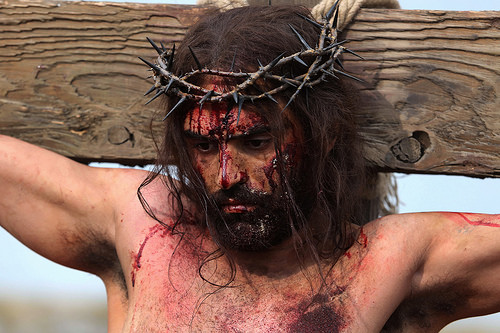
THREE TAKEAWAYS FROM THE CROSS

As we come to Good Friday and think about the cross, I want to share three truths about ourselves, about God and about Jesus from one of my favorite authors: John Stott.

“First, our sin must be extremely horrible. Nothing reveals the gravity of sin like the cross. For ultimately what sent Christ there was neither the greed of Judas, nor the envy of the priests, nor the vacillating cowardice of Pilate, but our own greed, envy, cowardice and other sins, and Christ’s resolve in love and mercy to bear their judgment and so put them away. It is impossible for us to face Christ’s cross with integrity and not feel ashamed of ourselves.

Secondly, God’s love must be wonderful beyond comprehension. God could quite justly have abandoned us to our fate. He could have left us alone to reap the fruit of our wrongdoing and to perish in our sins. It is what we deserved. But he did not. Because he loved us, he came after us in Christ. He pursued us even to the desolate anguish of the cross, where he bore our sin, guilt, judgment and death. It takes a hard and stony heart to remain unmoved by love like that. It is more than love. Its proper name is ‘grace’, which is love to the undeserving.

Thirdly, Christ’s salvation must be a free gift. He ‘purchased’ it for us at the high price of his own life-blood. So what is there left for us to pay? Nothing! Since he claimed that all was now ‘finished’, there is nothing for us to contribute. Not of course that we now have a license to sin and can always count on God’s forgiveness. On the contrary, the same cross of Christ, which is the ground of a free salvation, is also the most powerful incentive to a holy life.”

Taken from The Cross of Christ by John R.W. Stott, pp. 83 and 84; pub. by IVP, 1986.

Feel free to leave a reply below and/or share this post on Facebook or other social media.

photo credit: babasteve <a href=”http://www.flickr.com/photos/64749744@N00/25306637214″>Easter Week No. 1</a> via <a href=”http://photopin.com”>photopin</a&gt; <a href=”https://creativecommons.org/licenses/by-nc/2.0/”>(license)</a&gt;


WHO DO YOU THINK YOU ARE?

One of the ways we might call someone down when we think they are out of line is to ask them, “Who do you think you are?” Parents sometimes ask that of their children, a teacher may ask that of a student, and a supervisor might ask it of a subordinate. It’s clearly not a question seeking information, but an expression of disagreement with something said or done. More than that, however, it is an attempt to put someone in his or her place. During the final week of Jesus’ life leading up to His crucifixion a group of Jesus’ critics asked a similar question for the same reason.

It was the week of Passover and the roads were crowded with people going to Jerusalem. On Palm Sunday Jesus entered the city riding on a donkey with crowds cheering and spreading their cloaks and palm branches before him. It resembled the entrance of a king and must have reminded some of the messianic prophecy of Zechariah 9:9: “Rejoice greatly, Daughter of Zion! Shout, Daughter of Jerusalem! See, your king comes to you righteous and victorious, lowly and riding on a donkey, on a colt, the foal of a donkey.” Certainly Jesus’ enemies noticed.

Then early in the week Jesus entered the temple and turned over the tables of the money-changers quoting Jeremiah 7:11, “It is written, ‘My house will be called a house of prayer,’ but you have made it ‘a den of robbers’” (Matthew 21:13). This action also got everyone’s attention, including his critics—who were not at all pleased.

Only Matthew reports that after this Jesus healed some who were blind and some who were lame. “But when the chief priests and the teachers of the law saw the wonderful things he did and the children shouting in the temple courts, ‘Hosanna to the Son of David,’ they were indignant” (Matthew 21:13). Matthew doesn’t record it, but this must have been “the final straw” because Mark tells us that after the money-changers episode, “The chief priests and the teachers of the law heard this and began looking for a way to kill him, for they feared him, because the whole crowd was amazed at this teaching” (11:18). And so they questioned him.

Matthew, Mark, and Luke all include this incident with only minor differences. Mark tells us the chief priests, the teachers of the law, and the elders came to Jesus in the temple and demanded of Him, “By what authority are you doing these things? And who gave you authority to do this?” (11:27 and 28). One of the things they had to be referring to by “these things” was Jesus throwing out the money-changers; but they were also no doubt going back to the way he had entered the city on Palm Sunday and everything else he had done since then.

They asked Jesus two related questions. They wanted to know what authority he had, and they wanted to know who gave it to him. In other words, as suggested above, “Who do you think you are?” They knew that to do what he was doing required some kind of authorization, and they knew they hadn’t given him that authority.

From these gospel accounts, it’s not immediately obvious what was behind this line of questioning. Perhaps they thought Jesus would claim the authority of the Messiah. He had certainly done and said things that suggested he thought he was the Messiah. But if he made that claim overtly the question was still relevant: who gave him that authority? Not only that, they might accuse him of blasphemy as they did a few days later when he was before the Sanhedrin.

Throughout his ministry Jesus had taught and acted in his own name and with God’s authority. That’s why his disciples followed him and crowds came to hear him. As a teacher Jesus was not like the other “official” teachers of the time. After Jesus preached the Sermon on the Mount, Matthew tells us “the crowds were amazed at his teaching, because he taught as one who had authority, and not as their teachers of the law” (7:28b and 29).

As always, Jesus’ response to their questions was masterful. At this point he was not yet ready to directly tell them he was the Son of God, so he responded with a question for them. “Answer me, and I will tell you by what authority I am doing these things. John’s baptism—was it from heaven, or of human origin? Tell me!” (Mark 12:29 and 30). On first reading, Jesus’ response seems evasive, but it really wasn’t. Is was the same basic question they had asked him, but Jesus’ question was not about himself, but John.

Jesus’ question of his questioners put them on the spot. All three accounts tell us they argued (Matthew and Mark) or discussed (Luke) with one another their two possible answers, neither of which worked for them. They had not accepted John’s message so they said to themselves, “If we say, ‘From heaven,’ he will ask, ‘Then why didn’t you believe him?’” (Mark 11:31). But because of John’s popularity they reasoned among themselves, “But if we say, ‘Of human origin’—we are afraid of the people, for they all hold that John was a prophet’” (Matthew 21:26).

New Testament scholar Alan Cole suggests Jesus was not trying to trap them, but to give them the opportunity to admit they were wrong and acknowledge that both John and Jesus were legitimate. But they resolved their dilemma by giving the only answer they thought they could: “We don’t know” (Mark 11:33a). That answer, of course, did not help them, but it served to authenticate Jesus.

Note that Jesus did not deny he had authority, but responded, “Neither will I tell you by what authority I am doing these things” (Mark 11:33b). Many in the crowd that day, as well as Jesus’ critics, knew he approved of John as a true prophet. And John had approved of Jesus as a prophet and much more. If John’s authority came from heaven, then so did Jesus’ authority. Commentator R.T. France affirms, “No one who heard Jesus’ response could fail to understand the implied claim to continuity between his ministry and that of John, and therefore to a divine authority for it.” But in the way Jesus handled the exchange, those who questioned him could not use it against Him.

It is telling that these critics were unwilling to answer Jesus’ question. Even though they thought they knew the answer, they pleaded ignorance. But their non-answer was an expression of fear; not fear of bodily harm, but fear that the people would lose respect for them and their position. Ironically, their unwillingness even to answer Jesus’ question probably also resulted in loss of respect for them among those witnessing the exchange.

You and I know not only who Jesus thought he was, we know who he was and is. And we know where He got His authority. He was and is the Son of God.

(Adapted from chapter 10 of my book “Questioning Jesus: Considering His Responses.” Feel free to leave a reply below and/or share this post on Facebook and other social media.)


DO YOU NEED THIS?

Although I’ve never participated in Ash Wednesday, like many Christians, for many years I have focused my devotional life in a variety of ways during Lent. As we approach Palm Sunday, Holy Week, Good Friday, and Easter Sunday, I have been intensifying my focus. Earlier this week I read something that has given me a fresh challenge during these last two weeks of the season.

I was reading a 2004 college commencement address by Dallas Willard and his definition of repent got my attention. He said “Repent means to change the way you’ve been thinking and acting.” I don’t know about you, but given that definition, I need to do some repenting.

Most of the time we think of repentance as something that is needed and takes place at the beginning of the Christian life. Both John the Baptist, as well as Jesus, called people to repent as they launched their public ministries. And on the Day of Pentecost, when the Church was born, Peter told those present they needed to repent.  Clearly there is an initial repentance in becoming a follower of Jesus; but I don’t think that’s the only time believers need to repent.

With Willard’s definition in mind, I went to an old book by William Barclay I remembered that had a brief discussion of repentance. In it he reports that repent “literally means an afterthought as opposed to a forethought. An afterthought, a second thought, is usually a changed thought.” It’s not as crisp a definition as Willard’s, but if you read it slowly it has some pop.

As I read Barclay’s description I could not help but think about Jesus’ Parable of the Prodigal/Lost Son in Luke 15:11-32. In the story, after the boy had lost everything, Jesus tells us in verse 17 “When he came to his senses” he had a change of heart and decided to go home. Verses 17-20 paint a picture in Barclay’s words of an afterthought, a second thought, which was a changed thought. I think the boy repented.

The general understanding of repentance is that it requires three things: a recognition of having done something wrong, regret/sorrow for doing it, and a resolve to do better. I hope you see why I don’t think repenting is something limited to the beginning of the Christian life, but is needed throughout the Christian life.

Today through Easter Sunday seems to me like a good time to consider the practice of repenting. Beyond that, participating in the Lord’s Supper seems like an appropriate time. Would it be too much to suggest we give it some thought on a daily basis?

Feel free to leave a reply below and/or share this post on Facebook.

photo credit: Saunderses <a href=”http://www.flickr.com/photos/24845565@N00/14130360300″>U Turn Permitted Sign</a> via <a href=”http://photopin.com”>photopin</a&gt; <a href=”https://creativecommons.org/licenses/by-nc-sa/2.0/”>(license)</a&gt;


SOME THINGS HAVE CHANGED

In a book published in 1985 that is new to me, the author declares “to note the obvious: some things have changed.” Yes, it is obvious; some things have changed. At the age of 66, and having recently moved from Southern California (after 32 years) to the Texas Panhandle, I’m well aware of much change in my life. And I am intrigued by this matter of change.

Change is inevitable. Yesterday I went to get my Texas driver’s license and had to fill out those four areas describing my appearance. My height, weight, and eye color are all still the same as my old license; but I changed my hair color from brown to gray. (I don’t mind my gray hair–at least I have hair!) Not only is change inevitable with our bodies and physical appearance, change is inevitable with almost anything and everything. We may not like it, but we cannot stop it.

A lot of change is good. Much of what we call progress is good change. In my life I have benefited, and hope to benefit in the future, from changes in the medical field. As Christians we want to change—we want to grow and be transformed into the kind of people the Lord has called us to be. Admittedly, the process of even good change can be uncomfortable, but we like the result.

Change often is good, but not everyone agrees whether certain changes are good or bad. Change that is progress to some is certainly not progress to others. Often a person’s perspective on whether social and cultural changes are good or bad is generational. I think it’s safe to say not all the changes are good, nor are they all bad.

I am most interested in changes in Christian theology and doctrine, understanding and interpreting the Bible, and living the Christian life. When I was in high school our youth group was split down the middle with regard to the question “Can Christians dance?” That may or may not be a question asked today, but I’ve always agreed with Tony Campolo’s answer: “Some can, some can’t.”

A couple of current high profile controversial issues in the larger Christian community, not necessarily related, are the role of women in ministry and the traditional view of sexuality and marriage. A variety of Christian leaders have changed their views on one or both while many have maintained longstanding positions.

I don’t think it is wrong for a Christian to change her or his mind about a particular issue, doctrine, or biblical interpretation. For years the magazine The Christian Century published a number of essays titled “How My Mind Has Changed.” And in 2010 a book titled How I Changed My Mind about Women in Leadership was published with multiple authors contributing.

I think there is value in the suggestion made by the author I quoted earlier that perhaps what we presently believe, as well as believed in the past, both need to be carefully rethought. Those two words “carefully rethought” get my attention. It seems to me a lot of changes are made that are not carefully rethought as well as some changes resisted without careful rethinking.

One thing we do know is that God does not change. Theologians call it the immutability of God. A.W. Tozer explains that means “He never differs from Himself.” Later he adds: “What peace it brings to the Christian’s heart to realize that our Heavenly Father never differs from Himself.” In his classic book Knowing God, J.I. Packer has a chapter entitled “God Unchanging.” In it he notes God’s life, character, truth, ways, purposes, and Son do not change. He summarizes, “This thought brings comfort as we enter into the perplexities of each day; amid all the changes and uncertainties of life, God and Christ remain the same.”

Some things have changed and things will continue to change. I gain comfort and peace from knowing God doesn’t. Don’t you?

Feel free to leave a reply below and/or share this post on Facebook and other social media.

photo credit: Colin-47 <a href=”http://www.flickr.com/photos/38972744@N06/30578612195″>Autumn</a&gt; via <a href=”http://photopin.com”>photopin</a&gt; <a href=”https://creativecommons.org/licenses/by-nc-nd/2.0/”>(license)</a&gt;