I’M A HYPOCRITE, ARE YOU ONE TOO?

Being called a hypocrite by others is not a good thing, but it doesn’t seem quite so bad to call yourself one. In that light I am willing to acknowledge that at times I am a hypocrite. And I am fairly confident at times you are as well.

The designation hypocrite originally referred to an “actor” playing a role (holding up a mask) in Greek theater, but in our popular English usage it has a much different meaning. The way we use the word today comes from the way Jesus used it in His teaching. Hypocrites is what He repeatedly called the religious leaders of His day who constantly criticized Him. As a matter of fact, because of Jesus’ usage today Pharisee and hypocrite are synonymous as a negative designation for someone.

Hypocrite in Jesus’ usage and Christian usage today refers to someone who is acting as though he or she is much better and more holy than she or he really is.  A favorite example of this usage is in Matthew 6:1-18 when Jesus warns His followers “not to practice [their] righteousness in front of others to be seen by them.” He gives three specifics regarding not calling undue attention to one’s giving, not praying in public to be seen, and not going overboard to make it obvious when fasting “as the hypocrites do.” The basic idea is about motive and a call not to show off your righteousness with the purpose of being seen and applauded by others.

A second way Jesus used the word hypocrite was in connection with deception. In Matthew 22:15-22 there is an account of the Pharisees trying to trap Jesus with regard to whether or not the Jews should pay the imperial tax to Rome and Caesar. Before they asked Him the question they “buttered Him up” with flattery. Verse 18 reports “But Jesus, knowing their evil intent, said, ‘You hypocrites, why are you trying to trap me?’” In this exchange the issue seems to be deceit by pretending you are something you are not with the goal of doing damage to someone.

The third way Jesus used the word hypocrite is the best known usage and has to do with judging. In Matthew 7:3 and 4 Jesus asks, “Why do you look at the speck of sawdust in your brother’s eye and pay no attention to the plank in your own eye? How can you say to your brother, ‘Let me take the speck out of your eye,’ when all the time there is a plank in our own eye?” Then in verse 5 He uses our word: “You hypocrite, first take the plank out of your own eye, and then you will see clearly to remove the speck from your brother’s eye.” In this oft quoted teaching Jesus is forbidding the harsh judgement of others (remember in Matthew 7:1 He cautions, “Do not judge”), and especially with no awareness of or taking into account your own shortcomings.

In all honesty I don’t think I’m guilty of showing off my righteousness to be seen and approved by others. Nor am I aware of being deceitful by pretending I am something I am not with the goal of tricking someone. But when it comes to Jesus’ best known usage of the designation hypocrite I reluctantly admit there have probably been a few occasions in my life when I might have possibly judged someone harshly while not fully being aware of my own failing. Or to state it more succinctly—yes, I have certainly judged others when I shouldn’t have while being blind to my own sin. I hope we understand and will take seriously these important lessons from Jesus about not being hypocrites.

At the same time I am concerned that some Christians misunderstand and misapply the concept of hypocrisy. To avoid being a hypocrite does not mean you should or have to always be totally honest and forthcoming about what you think or believe. Sometimes we say things that hurt others we don’t really need to say. There are times in life when it is to our credit not to be absolutely transparent. I can’t tell you when those times are, but I can challenge you to realize that not always saying exactly what you think does not make you a hypocrite.

Think about these things and leave a reply below letting others and me know what you think. Also share this post with others on social media if you think it will be convicting and challenging.

photo credit: <a href=”http://www.flickr.com/photos/88197862@N02/26204325230″>DSC01540</a&gt; via <a href=”http://photopin.com”>photopin</a&gt; <a href=”https://creativecommons.org/licenses/by-nc-sa/2.0/”>(license)</a&gt;


A FATHER’S DAY OBSERVATION

My sense is that while we often sentimentalize mothers on Mother’s Day we often chastise fathers on Father’s Day. And both, of course, can be appropriate. As we come to Father’s Day this year I want to challenge and encourage fathers by relaying and commenting on the perceived common failure of fathers of a previous generation. 

In his 2013 book about celebrity Johnny Carson author Henry Bushkin briefly comments on Carson as a father. Bushkin knows what he is talking about because he was Carson’s best friend and lawyer for many years and had no ax to grind.

Bushkin reports “that by any standard Johnny was not a very good father.” He notes that Johnny was concerned about his sons and often “expressed real worry about their well-being—but he was not a significant presence in their lives.”

Then came the observation that so struck me: “Johnny was very much a member of a generation of men that saw their principal paternal obligation as providing for their family’s material well-being.” My family was by no means well-off, but to a large degree I think that was true also of my father, and probably of his father as well.

Not to minimize the importance of a father providing materially for his family, but that is not enough. Thankfully many, if not most, contemporary dads know that and are a significant presence in the lives of their children. I’m not well read enough to know exactly when things began to change, but I do know I was a significant presence in the lives of my two children. I was committed and intentional about being engaged in what they were doing through every stage of their growing up and education.

I don’t understand why some dads are not more involved with their children, their children’s activities, and their children’s friends. I can’t count the number of soccer games, softball games, baseball games, basketball games, golf tournaments, speeches, and debates that Jan and I enjoyed while Audrey and Rob were growing up.

We also made family vacations and getaways a high priority by saving for them and putting them on the calendar. Camping wasn’t my favorite way to vacation, but we did it and we have some great memories. Periodically we would vacation with other families who had children near the ages of ours.

As talented and successful as Johnny Carson was he missed something important and valuable by not having a significant presence in the lives of his children. Perhaps he and many other dads of previous generations did not know any better. But things are different today. If you are a dad I hope you have enjoyed, are enjoying, and will enjoy being a significant presence in the lives of your children.

Happy Father’s Day!

Feel free to share this post with others on social media and/or leave a reply below.

(If you receive email notification of my blogs I thank you for your interest and for reading. If you are not receiving email notification I hope you will click “Follow Blog via Email” in the upper right hand corner of any post and enter your email address to receive notifications. I realize many read the blogs from my Facebook posts but you may miss one from time to time. By the way, I will never share your email address with anyone else. If you know a couple of associates, friends, or family members who might enjoy these posts I encourage you to share this post with them and invite them to follow the blog via email.)

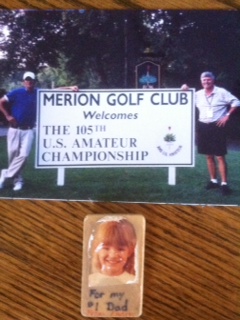
Photo Credit: Dad’s photo of a Father’s Day gift from Audrey when she was in preschool and a picture of Rob and me when he played in the US Amateur in Philadelphia.


YEAR ONE’S TOP FIVE

In the middle of June last year I launched my blog under the heading “Considering the Christian life, the Bible, and the Church.” In that first post I stated “My passion and dream is to write honestly about the Christian life, the Bible, and the Church.” This week marks the first anniversary of that “New Venture.”

Over the course of the past year I have published 62 blog posts. The original plan was to write one or two pieces a week, but I soon decided the quality would be better if I stuck to just one most weeks. As would be expected, some were better than others, but I stayed with the theme of considering the Christian life, the Bible, and the Church.

As we turn the page on a new year I thought you might enjoy rereading or reading for the first time the top five most read posts of last year.

Number 5 was written three months ago and titled “On Turning 65.”

Here’s the link https://bobmmink.com/2016/03/11/on-turning-65/

Number 4 was posted August 11 and is titled “Where’s the Joy?”

Here’s the link https://bobmmink.com/2015/08/11/wheres-the-joy/

Number 3 was written at the end of September and was titled “I’ve Been Everywhere.”

Here’s the link https://bobmmink.com/2015/09/25/ive-been-everywhere/

Number 2 came out in January and was titled “My Baseball Coach.”

Here’s the link https://bobmmink.com/2016/01/20/my-baseball-coach/

The most read blog of the past year was published in April and titled “It Still Hurts.”

Here’s the link https://bobmmink.com/2016/04/06/it-still-hurts/

Two of my personal favorites were posted in April and are related. The first was “Must We Be So Harsh?” (https://bobmmink.com/2016/04/20/do-we-need-to-be-so-harsh/) and the second was “Humble and Kind” (https://bobmmink.com/2016/04/22/humble-and-kind/).

I would be interested in knowing if a particular post stood out as especially meaningful to you—one that you could call your favorite. It could be one of the top five or another one that you remember. If you have one tell the rest of us about it by leaving a reply below.

If you receive email notification of my blogs I thank you for your interest and for reading. If you are not receiving email notification I hope you will click “Follow Blog via Email” in the upper right hand corner of any post and enter your email address to receive notifications. I realize many read the blogs from my Facebook posts but you may miss one from time to time. (By the way, I will never share your email address with anyone else.) If you know a couple of associates, friends, or family members who might enjoy these posts I encourage you to share this post with them and invite them to follow the blog via email.

If you have any observations that you think would help me improve my blog posts please leave a reply below or email me (bobmmink@gmail.com).  If you have any suggestions for future topics please do the same.

My plan is to continue in the coming year to write honestly about the Christian life, the Bible, and the Church at least once a week. I hope you will be encouraged, challenged, and informed by reading my posts.

photo credit: <a href=”http://www.flickr.com/photos/21450297@N06/7172581051″>1</a&gt; via <a href=”http://photopin.com”>photopin</a&gt; <a href=”https://creativecommons.org/licenses/by-nc-sa/2.0/”>(license)</a&gt;


GRACE AND PEACE TO YOU

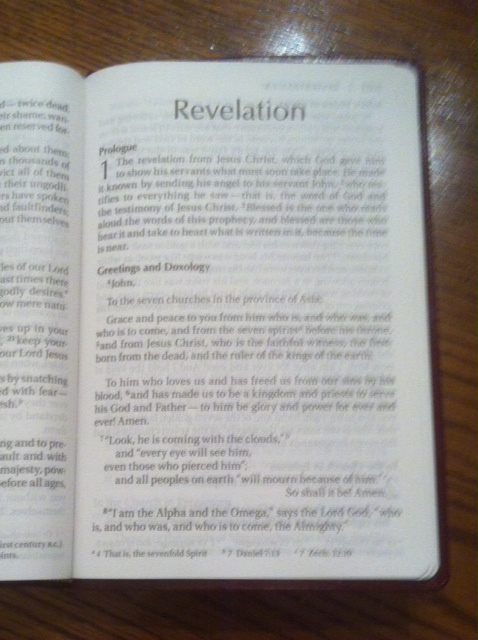
In reading the opening verses of the book of Revelation this morning I noted the salutation “Grace and peace to you” in Revelation 1:4 and paused to think about it. I then wondered about the greetings in the other New Testament letters and after checking found that all but four (Hebrews, James, I John, and III John) include “grace and peace to you.” I and II Timothy, II John, and Jude include “mercy” as well.

Why is this salutation so frequent and what is the implication? Part of what is going on is the adaptation of standard letter writing practice of the time. It is somewhat similar to our “Dear” at the beginning of many letters and “Sincerely yours” at the end. But for Christian writers and readers it is much more than just convention. New Testament scholar Bruce Metzger observes “None of the ancient pagan letters has anything like the magnificence of ‘Grace to you, and peace’.”

“Grace” is primarily the Christian component and “peace” (shalom) the basic greeting and farewell of the Jewish people—richer and deeper than the Greek word for “peace.” The two together are filled with meaning and significance for Christians.

Every time these two words are used in a New Testament letter greeting the word grace comes before the word peace. Both, of course, come from God and in that order. The same New Testament scholar quoted above, but in a different book, notes “it is because of God’s grace that his people can enjoy peace.”

Grace is God’s unmerited (unearned and undeserved) favor shown to us through the coming and work of Jesus. We are forgiven and saved by grace through our faith in Him–“not by works, so that no one can boast” (Ephesians 2:10). Peace—peace with God because we have been redeemed and the inner peace of God—is the result of God’s grace.

I’m not suggesting we incorporate this New Testament salutation into our letters, notes, cards, and emails today. Readers would probably think we had been in the sun too long! But when we read this greeting in our Bibles we should not simply blow by the writers’ call for these blessings upon us as Christians. We should rejoice in God’s grace and peace and give Him thanks.

Even though we don’t include the greeting in what we write, we can wish and pray for others and ourselves what Peter asked for his readers in I Peter 1:2, “Grace and peace be yours in abundance.”

“Grace and peace to you from God our Father and from the Lord Jesus Christ” (Romans 1:7b).

Feel free to leave a reply below and/or share these thoughts on social media.

ON BEING PROMOTED

After we celebrated our 42nd wedding anniversary Jan and I went to Texas to spend the week with our two grandsons. Bobby, the older of the two, is now six and had just graduated from kindergarten. Ryan is two and out of daycare for June and July.

That means that Jan and I had them all day every day for five days. What a week—and I’m still exhausted! Even though I need my right knee and my left hip replaced, I’d do it again without hesitation. As a matter of fact, we will be doing it again later this month. The only difference will be I will have them without Jan for two and a half days. (Pray for me!)

One of the tee shirts I wore while there was a gift from Audrey (my daughter) a few years ago soon after Bobby was born. While walking in the park I asked Bobby if he could read it and concentrating on the front of my shirt he read, “Great DADS get promoted [I had to give a little help with this word] to GRANDPA.” And he flashed his wily smile.

I love the shirt and what it says, but I wouldn’t say I was or am a great dad (perhaps a good dad). I realize not every man wants to or can be a dad, but being a dad is one of life’s greatest privileges. It is also one of life’s greatest responsibilities. And it is a privilege and responsibility that never ends.

Often being a dad does provide the opportunity of becoming a grandpa. And if my daughter thinks that is a promotion I am thrilled. Promotion or not, being a grandpa, like being a dad, is a privilege and a responsibility. But most of the time being a grandpa is higher on the privilege side and lower on the responsibility side than being a dad.

Last week I was reminded of all of this and more. One thing that disappointed me was the realization of my lack of patience. Two year olds and six year olds need to be permitted to be six years old and two years old. But there were other times when I was at the other extreme being too lenient and permissive. That I believe is part of the privilege of being a grandpa.

Another thing I realized last week is that I am the grandpa and not a parent. There is a difference. While I have some responsibility of oversight and care when with them, that is not my primary role—I am a backup. And that again is part of the privilege and responsibility of being a grandpa.

But there are a few things that I’m not a backup for in being a grandpa. I’m not a backup in terms of loving those boys, caring about those boys, encouraging those boys, modeling the Lord to those boys, praying for those boys, and worrying about them. I know I’m not supposed to worry—I wasn’t and am not supposed to worry about my own children, but I did and do—and I do and will worry about my grandsons.

In case it isn’t obvious, I love being a grandpa–it’s a promotion!

Don’t hesitate to share these thoughts with others on social media and/or leave a reply below.

Photo courtesy of their grandmother—my wife!


JESUS’ REPLACEMENT?

I can’t remember where it was I heard him say it, but I’ll never forget something Dr. Lewis Foster said in a Bible study I was attending. Talking about Christians he said, “I don’t think we make enough of the gift of the Holy Spirit in us.”  I didn’t grasp the full impact of what he was saying that day, but after all these years I’m coming to understand it.

When Jesus was preparing His disciples for His death, resurrection, and return to heaven He told them the Father would give them another advocate to be with them (John 14:16). A little later He told them: “Unless I go away, the Advocate will not come to you; but if I go, I will send him to you” (John 16:7b). There is a lot more from Jesus about the Holy Spirit in chapters 14, 15, and 16; but I want to focus on the designation another advocate for the Holy Spirit and as a replacement for Jesus.

The Holy Spirit really isn’t a replacement for Jesus (that is my word to get your attention), except in the sense of Jesus’ presence with and in His followers. Jesus’ absence from them when He returned to heaven was replaced by the coming of the Holy Spirit. I certainly don’t understand exactly what and how it all happened, but after His resurrection Jesus “breathed on them and said, ‘Receive the Holy Spirit’” (John 20:22). Following His ascension they “were filled with the Holy Spirit” on the Day of Pentecost when the church was born (Acts 2:4).

The rest of the New Testament makes it clear that every follower of Jesus has the gift of the Holy Spirit. While much more can and should be said about His role, the basic purpose of the gift of the Holy Spirit in believers is to help them live the Christian life. But the Spirit does not force us—He does not make us do what is right or keep us from doing wrong. He invites us to allow Him to help us and to cooperate with Him.

I’m intrigued by this term advocate for the Holy Spirit. (Remember Jesus said the Spirit would be another advocate, indicating He was the first one.) The Greek word literally means “one called alongside of.”  In addition to advocate, the word is variously translated comforter, helper, counselor, strengthener, supporter, and exhorter. There are no clear distinctions among these meanings as they overlap, but I’m confident we all would agree that at times we need what each meaning suggests.

We will never perfectly understand how God can be three in one as the Father, Son, and Holy Spirit or exactly how the Holy Spirit works in our lives. But we know God is three in one and that as Christians we have received the Holy Spirit. Our challenge and privilege is to continue to invite Him more and more into our lives and to cooperate with Him in what He wants to do in us and for us and through us.

I don’t think we make enough of the gift of the Holy Spirit in us. Do you?

Let me and others know what you think by leaving a reply below and I hope you will share this post on social media.

photo credit: <a href=”http://www.flickr.com/photos/45409431@N00/2522669590“>”Flying gull” – Möwe im Flug</a> via <a href=”http://photopin.com“>photopin</a> <a href=”https://creativecommons.org/licenses/by-sa/2.0/“>(license)</a>


WHAT’S IT LIKE TO BE A PASTOR?

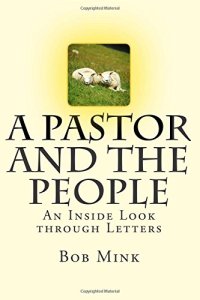
This week marks the first anniversary of the publication of my book A Pastor and the People: An inside Look through Letters. Divided into three parts and 14 chapters, the book includes a variety of letters I received and wrote during my 44 years of ministry.

I was a summer youth minister and youth minister in two churches in Ohio, the minister of a small church in Pennsylvania, and the pastor of a large church in Southern California.

Whether you are a church leader, church member, or do not attend church, this book “pulls back the curtain” on one of the most interesting “jobs” anyone can have.

Here are a few endorsement reviews of the book:

Whether you are a preacher, church leader or simply member of the congregation, I think you’ll enjoy Bob Mink’s book, a compilation of letters he received and sent during his 44 years of ministry. Not only will you be entertained by these letters and enriched by Bob’s commentary, I think you’ll benefit from the lessons Bob learned about leading a church, preaching the Gospel, and shepherding his flock.

Bob Russell, Retired Senior Minister, Southeast Christian Church, Louisville, KY


You can learn a lot reading other people’s mail. Here is a pastor in love with his people, his Lord, his calling. It’s a big world God called him to: challenging, joy-filled, frequently frustrating, never boring and ultimately fulfilling. This is good reading.

LeRoy Lawson, Ph.D., Distinguished Professor of Christian Ministries and Director of Doctor of Ministry Program, Emmanuel Christian Seminary


Bob Mink has compiled a lifetime of professional and personal correspondence. This book will impact your heart and head. Bob identifies why we have been called to ministry as a profession and way of life.

Dr. Joseph C. Grana II, Dean of Pacific Christian College of Ministry & Biblical Studies, Hope International University


With his unique sense of humor and unfiltered transparency, Bob Mink puts on display for all to see that being a pastor is undeniably one of the most humbling and rewarding adventures of grace and mercy a person can travel.

Steve Walker, Pastor, Canyon Hills Community Church, Bothell, WA


Would you like to see how a seasoned pastor navigated several decades of ministry, and how those he served reacted to it? Do you enjoy reading other people’s mail? Then you’ll enjoy reading Bob Mink’s unique insight into ministry shared here in letters he received and kept throughout the years. You’ll laugh and learn as you look over Bob Mink’s shoulder.

Mark Taylor, Editor, Christian Standard


Our lives are shaped by relationships and those relationships are shared through our stories. Pastor Bob takes us on a journey as he shares through letters what it means to throw your life into the arena of pastoral ministry. If you are in relationships of any kind (and we all are) you will relate, connect and be moved. I encourage you to let this man of God’s story impact your own.

Randy Paredes, Lead Pastor, Florence Christian Church


A Pastor and the People: An inside Look through Letters is an incredible resource for not only pastors but for anyone interested in an inside look at a pastor’s life. These letters paint a picture of the joys, challenges, and blessings that come along with being a pastor. Whether you feel called to vocational ministry, have an interest in what pastors actually do and go through, or simply want to read the journey of a pastor over the past forty plus years, this book is for you.

Bryan Sands, Director of Campus Ministires, Hope International University


Both the print book as well as the Kindle edition are available at amazon.com. The print book is also available at Barnes and Noble.com.

For more about the book or to order it from amazon.com click on the picture below:

pastor n people

If you would like to read the introduction to the book send me an email at bobmmink@gmail.com and I will send you a copy.

Please share this post on social media and feel free to comment below (especially if you have read the book).

Photo credit: courtesy of our grandson’s mother–our daughter.


I’M EMBARRASSED

A couple of weeks ago I was reading the book of Jeremiah and was grabbed by the prophet’s assessment of the people in 6:15: “Are they ashamed of their detestable conduct? No, they have no shame at all; they do not even know how to blush.” I forgot about the verse until a day or two later when I came to Jeremiah 8:12 and the exact same assessment: “Are they ashamed of their detestable conduct? No, they have no shame at all; they do not even know how to blush.” I’ve been thinking about it on and off since I read it the second time.

What God said through Jeremiah about His people then could also be said about a lot of people today. Think about it. There doesn’t seem to be very much embarrassment today about much of anything. Jeremiah’s observation of “detestable conduct” in the NIV is rendered “disgusting actions” in the New Living Translation.

The reason people are not ashamed is because they don’t think what they are doing is disgusting. They may not be embarrassed, but I am. And I am not only embarrassed myself, I am embarrassed for them. To me disgusting actions demean the person or persons doing them.

It is true that what is detestable or disgusting to one person may not be disgusting or detestable to someone else. I agree that something could be acceptable in one context and not be acceptable in another one. I have no specific actions in mind, but I think things are different in mixed company and when children are present.

The point of Jeremiah’s indictment is the loss of awareness and sensitivity to what is inappropriate and out of place. Many of us have heard and seen so much that is disgusting and detestable we have become desensitized to it. And because of that we are no longer embarrassed by it like we used to be.

I’m not sure how we get it back, but I think we need to do so. We cannot raise other people’s standards, but we can raise our own.  We can ask the Lord to help us return to seeing what is disgusting as disgusting, being embarrassed by what is detestable, and blushing because of it.

We can take seriously the call of Romans 12:2 to “not conform to the pattern of this world, but to be transformed by the renewing of [our minds].” And we can commit to accepting the challenge of Philippians 1:27: “Whatever happens, conduct yourselves in a manner worthy of the gospel of Christ.”

I am embarrassed by the actions of others. But more than that, I am ashamed that I have gotten to the place where I am not more embarrassed by some of the things I say and do. Are you ever ashamed and do you ever blush?

I welcome your comments below and encourage you to share this post on social media.

photo credit: <a href=”http://www.flickr.com/photos/11652635@N00/2898403042″>I should have known better….</a> via <a href=”http://photopin.com”>photopin</a&gt; <a href=”https://creativecommons.org/licenses/by-nc-nd/2.0/”>(license)</a&gt;


ARE YOU LISTENING?

While doing my cardio workout at the Fitness Center last week I watched as the gentleman in front of me on a stationary bicycle listened to two fellow exercisers talk.

The first guy went on and on about how bad the Lakers were. And it wasn’t just the players who were bad, he was really unhappy with the ownership and management. Based upon what I could hear I think he thought he knew a lot more about the Lakers and professional basketball than he does. After about 15 minutes he blustered off.

Right after the first guy left the man on the adjacent stationary bicycle dismounted and began to talk to the gentleman. He unloaded about a few subjects but mostly went on and on about the current state of politics. According to him no one really knows what they are doing. Again, based upon what I could hear I think he thought he knew a lot more about politics than he does.  After about 15 minutes he left.

As the gentleman on the stationary bicycle dismounted he accidently kicked my elliptical machine and apologized. I said, “You are a quite a listener.” To which he replied something along the lines, “Somebody has to do it, it’s very important.” He had not refuted either of them, or agreed with them, or joined in with them. He just listened. I told him I was impressed and thought that he could be a therapist. And I suggested that perhaps I should make an appointment to see him.

He told me he had been a probation officer for 30 years and had learned the importance listening. I told him I was a retired pastor and unfortunately had done too much talking and not enough listening. He then began to talk about his two uncles who were pastors and about his church. I was finished with my workout and needed to get going so I again affirmed him and told him he inspired me. We exchanged names and shook hands.

As I thought about what I had witnessed and our discussion it occurred to me that I missed a golden opportunity to follow his example. I wish I would have been more like him and invited him to say more. I’m pretty sure listening to him would have been well worth my time and encouraging.

My confession is that not just as a pastor, but in a lot others roles as well I have talked too much and not listened enough. I’m also fairly confident I really don’t know as much as I think I do. Don’t get me wrong: I have a lot to say that is worth hearing. But so do a lot of people I talk with and I am challenged and inspired to be a better listener.

I don’t need to always agree with what I hear nor do I need to always refute what I hear. Sometimes I just need to take the time and listen. If it’s important for me to be listened to, and it is, then it is also important for me to listen.

I look forward to seeing my new friend at the Fitness Center and talking with him.

Are you listening?

Feel free to comment below and share this post on social media.

P.S. If you’re really interested in the content of this post I encourage you to get and read a novel entitled The Listener by Taylor Caldwell first published in 1976. I’m confident you will not only enjoy the book but also be impacted by it.


GOD’S TOP 10 REVISITED

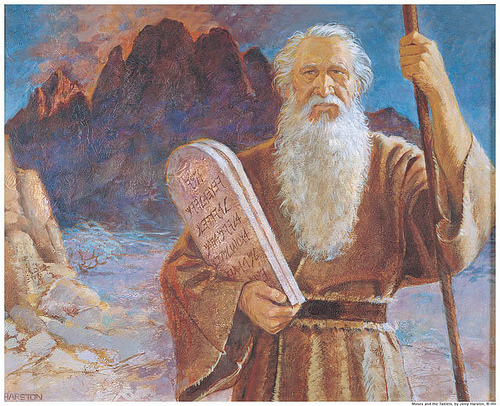
The 10 commandments were the heart of God’s expectations for His people in the Old Testament. There were many other “laws” as well in Exodus and Leviticus, but the 10 on the two stone tablets were the foundation for everything else.

Sometimes Christians wonder and ask if the 10 commandments are still binding on them. Does God expect us as followers of Jesus to obey them today? The short and not so simple answer is yes and no. In the New Testament Jesus has some important things to say about the Old Testament Law and Christians.

In Matthew 5:17 He seems to correct a misunderstanding when He affirms “Do not think I have come to abolish the Law or the Prophets; I have not come to abolish them but to fulfill them.” While Jesus fulfilled the Law and the Prophets in multiple ways, one was in giving the deeper meaning of six laws in the remaining verses of Matthew 5. Two of those laws were the sixth and seventh commandments and Jesus made it clear that the deeper meaning of these commandments were violated long before someone committed the physical acts of murder and adultery.

I am most intrigued by Jesus’ answer to a questioner who asked Him about the greatest commandment in the Law. His answer: “Love the Lord your God with all your heart and with all your soul and with all your mind,” and He added “This is the first and greatest commandment.” Then He continued, “And the second is like it: ‘Love your neighbor as yourself’.” He concluded His response with “All the Law and the Prophets hang on these two commandments” (Matthew 22:35-40).

We can’t improve on what Jesus said, but there are a couple of summaries of the 10 commandments that do seem helpful. William Barclay suggests, “The whole of The Ten Commandments are based on two great principles. They are based on reverence, reverence for God, for God’s name, for God’s day, for the parents God has given to us. They are based on respect, respect for a man’s life, and possessions, and personality, and good name, and for oneself.”

J.I. Packer gives a paraphrase of the 10 commandments in what he calls “positive and Christian terms.” “You shall worship your covenant God exclusively and wholeheartedly, according to his own self-revelation, regarding him with consistent reverence and setting aside regular time for rest and worship in his honor; you should respect those who have nurtured you, and labor to sustain the family unit; you must do all you can to safeguard the life, sexual purity, property, reputation, and well-being of all you meet; and knowing that your God watches over you, you are to be content.”

As you reflect on Jesus’ take on the two greatest commandments, Barclay’s idea of reverence and respect, and the excellent paraphrase of Packer, do you think Christians today are called to obey the 10 commandments?

Comment below and share this post with others.

photo credit: <a href=”http://www.flickr.com/photos/53130433@N08/5136020842″>Ten Commandments Mormon Moses</a> via <a href=”http://photopin.com”>photopin</a&gt; <a href=”https://creativecommons.org/licenses/by-nc/2.0/”>(license)</a&gt;