AN OUT OF THE ORDINARY CHRISTMAS

Most us would agree that Christmas 2020 is out of the ordinary from what is usual. And the primary contributor to this year’s unusual celebration, of course, is the Covid-19 pandemic in which we find ourselves.

The photo above makes the point. It’s a Christmas angel that was on a gift I received in our staff white elephant gift exchange. Note the angel is made from two masks like the ones most of us have worn the last several months. The person who made it wrote the year 2020 on it as a reminder of what we have experienced this year.

Obviously we have not completely done away with Christmas, but we have cut back and will miss a lot. This week I went to do some shopping and could hardly believe how few shoppers there were.

Many will follow suggested guidelines and not travel to be with family, or even have family gatherings with those who live nearby. The reason, of course, is to avoid as much as possible being in situations in which the virus can be passed on to others.

In following suggestions from government officials a lot of churches will not have their traditional Christmas Eve services so as to avoid crowds. To cancel a tradition that so many look forward to each year is an indication of how serious the pandemic is.

As I have reflected on how out of the ordinary Christmas will be this year I have been reminded how out of the ordinary the first Christmas was. Although it was the fulfillment of prophecy and God’s promise, it was the only time what happened ever happened. It was certainly out of the ordinary – far more than our Christmas celebration will be this year.

Even if the ordinary happenings of Christmas like shopping, decorations, cookies, family gatherings, giving gifts, singing carols, feasting, and more may not take place this year, we can still celebrate.

For me four words express the heart of Christmas: hope, love, joy, and peace. The birth of Jesus that we celebrate reminds us of these four beautiful and needed words, ideas, and feelings. Even in this unsettling time, celebrating the birth of Jesus can renew the promise of peace, joy, love, and hope that he brought and still brings to us.

Perhaps our out of the ordinary Christmas this year will result in a more focused recognition of what it is we are celebrating. Merry Christmas!

Feel free to leave a comment below and/or share this post on Facebook or other social media.

IS FEAR A SIN?

I want to be very clear in my answer to the question asked in the title of this post, “Is fear a sin?” I don’t know for sure, but my sense is that maybe it is and maybe it isn’t; it all depends.

I’ve never run the numbers myself, but I have heard from multiple sources that “fear not” appears in the Bible 365 times – one for each day of the year. The repeated instruction “fear not” is clearly something Christians need to hear and take seriously.

I read a article yesterday by Megan Briggs in which she reported “the Bible verse most shared, bookmarked, and highlighted on the YouVersion Bible app during 2020 is Isaiah 41:10: “So do not fear, for I am with you; do not be dismayed, for I am your God. I will strengthen you and help you; I will uphold you with my righteous right hand.” Through the years I have used that verse many times in funerals I have conducted and other difficult situations. It is a comforting and encouraging statement relevant to many situations we face in life.

But there are other passages in the Bible that instruct us to fear. Most readers probably are familiar with Proverbs 1:7, “The fear of the Lord is the beginning of knowledge, but fools despise wisdom and instruction.” Not everyone will remember the book, chapter, and verse; but most readers will have heard Ecclesiastes 12:13 and 14: “Now all has been heard; here is the conclusion of the matter: Fear God and keep his commandments, for this is the duty of all mankind. For God will bring every deed into judgment, including every hidden thing, whether it is good or evil.”

Which is it? Are we to fear or are we not to fear? My answer is both. To fear God doesn’t mean we cower in fear of him, but rather to respect, honor, and worship him for who he is and what he has done and does. In Luke 12:4 and 5 Jesus tells us more: “I tell you, my friends, do not be afraid of those who kill the body and after that can do no more. But I will show you whom you should fear: Fear him who, after your body has been killed, has authority to throw you into hell. Yes, I tell you, fear him.” 

Sometimes Christians overstate the maxim that faith overcomes fear. Faith certainly helps us face and deal with fear, but it doesn’t always melt our fears. Two definitions I read that make sense to me are “fear is threat of harm, real or imagined,” and “fear is one of the most basic human emotions,”

I’m pretty sure the reason the most popular Bible verse(s) of 2020 tell us “not to fear” or “fear not” is the Covid-19 pandemic. In the interest of transparency, I have been fearful at times of being infected. And I’ve also been fearful of what the outcome could be for me if I did become infected.

Here’s the point I want to make about this subject of fear: to not fear does not mean because we are Christians everything will always go well for us.  Nor does to not fear mean we can be irresponsible, overly casual or reckless, take risks we don’t have to take, or think we are somehow not vulnerable to problems, illness, tragedies, pain, and many other things both unbelievers and believers fear.

Because of our deep and growing faith we should appropriately fear God and continue to trust him as we experience and deal with the many fears of which we may be vulnerable. And when we do realize we are fearful, we might remind ourselves that our Heavenly Father is a God of grace and forgiveness.

Feel free to leave a comment below and/or share this post on Facebook.

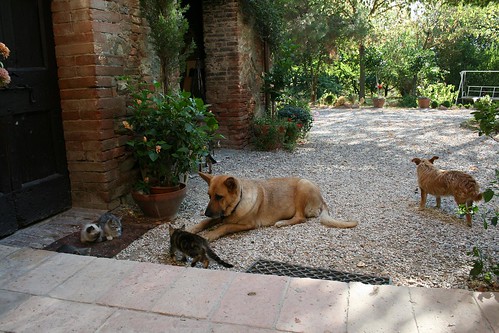
photo credit: Quetzalcoalt0 Chilling under the table via photopin (license)

LETTING GO AND MOVING ON

The opening sentence in author Scott Peck’s classic 1978 book The Road Less Traveled is as true today as it was then. The observation “Life is difficult” may be even truer today than it was over four decades ago.

One of the things that makes life difficult is the wounds we receive along the way. All of us have been hurt in a variety of ways by others. Often unintentionally, but sometimes intentionally, we are hurt and wounded by family, friends, foes, and others.

Some of our wounds are lesser scrapes and bruises and we heal quickly. Others are painful deep cuts that do not go away easily. Deep cuts, bruises, and scrapes are all inflicted by words, actions, betrayals, and misunderstandings.

(In this post I am focusing on our wounds, but we should also note that not only are we wounded in life, we also wound others. Perhaps this reminder that we also wound others will challenge and convict us to be more aware of pain we inflict.)

Through the years I have noted a variety of situations in which a person who was wounded has not allowed the wound to heal. Deep wounds are slow to heal, but holding on to and picking at one is not helpful. And the reality is that even as the worst wounds heal they do leave scars.

For many the challenge of a deeply hurtful wound is with the passing of time to let go and move on. I’m not suggesting that doing so is easy or automatic. Letting go means we don’t repeatedly replay in our minds what happened and how hurtful it was. Letting go also means we give up the idea of getting back at or paying back the one who hurt us. Letting go does not mean a person who has been wounded puts himself or herself in a position to be wounded again by the same person.

As we let go we also need to move on as well. I’m not exactly sure what moving on means in every situation of a deep wound.  It doesn’t mean we miraculously forgive and forget or that we get over it. Some wounds are so deep and painful we never get over them. But for our own healing and health I do think we need to make progress looking ahead and not stay stuck in the past.

Deep wounds can be the result of such things as abuse, abandonment, neglect, infidelity, divorce, termination from a job, constant belittling, gross disrespect, false charges, rejection, and much more.

Not to say Scott Peck was wrong, but I prefer to say life can be difficult. Most of us know that because we have been recipients of pain and wounds from others. When wounded our challenge is not to aggravate or prolong the pain ourselves. What seems appropriate to me is that we take steps to let what hurt us go and move on. It may take time and effort, but will hopefully be worth it.

Feel free to leave a comment below and/or share this post on Facebook or other social media.

Image by 95C from Pixabay

ME, REPENT?

The answer to my short question in the title of this post is “yes.” The truth is that I need to repent more often than I wish I did. Since I read an article last week by David Smith entitled REPENTANCE I’ve been reading and thinking a lot about the subject: both the verb and the noun.

I think the thing that has impacted me the most in terms of my thinking and reading is that to repent means much more than simply saying you are sorry. Most of the time it is not at all hard to say, “I’m sorry.” Too often we say we are sorry but don’t do anything to make needed changes. One common definition or repent is “to turn around.”

The word repent is used a total of 78 times in the Bible: 24 in the Old Testament and 54 in the New Testament. Given that it is used that often suggests that it is important.

In Matthew 3:1 and 4:17 both John the Baptist and Jesus proclaimed, “Repent, for the kingdom of heaven has come near.” And in Matthew 3:8 John the Baptist sheds some light on the meaning of repentance: “Produce fruit in keeping with repentance.” Clearly John is saying that when a person repents it results in some changes in his or her life.

In Luke 3:3 John the Baptist tells us more about the outcome of repentance, “He went into all the country around the Jordan preaching a baptism of repentance for the forgiveness of sins.” In the book of Acts repent and repentance are used 10 times often referring to becoming a Christian and receiving forgiveness.

Repentance is a vital element in coming to Christ for salvation; but it is not limited to becoming a Christian. A call to repent is given 10 times in the book of Revelation addressed to Christians about changes they need to make.

In a Google search I came across a definition I think hits the nail on the head: “Repentance is the activity of reviewing one’s actions and feeling contrition or regret for past wrongs, which is accompanied by commitment to and actual actions that show and prove a change for the better.”

I don’t know about you, but I’m pretty good about feeling contrition and regret when I mess up. The challenge for me is not just to say I’m going to do better, but to put into practice actual actions that show a change for the better. Not to bring anyone else down, but I don’t think I’m the only one who needs to do more.

(Those who are interested may find Thomas Watson’s book The Doctrine of Repentance informative, instructional, and challenging.)

Feel free to leave a comment below and/or share this post on Facebook.

photo credit: Saunderses U Turn Permitted Sign via photopin (license)

WHAT IS FAMILY?

A combination of things this past weekend spurred my thinking about family as I was driving home from church this past Sunday. I realize there are no perfect families, and that families can be hurtful, but I am a fan of family. One of the reasons I am such a fan of family is because I have greatly benefitted from many families.

As I revisited my thinking about family later Sunday evening I typed in family on my computer and came across a broad definition that reinforced part of what I had been thinking on my drive home. Here it is: “To some, the true meaning of family means a group of people related by blood or ancestry. To others, it has nothing to do with genes and everything to do with love, compassion, and support. The definition of the word family can mean many things.”

Friday and Saturday I had been thinking about the first part of the definition: “a group of people related by blood.” Thursday night our son and daughter-in-law (there’s another aspect of family) drove into town and Rob and I played golf on Friday. It was great to spend time with him on the golf course and the rest of the weekend with the two of them.

Jan and I moved to Amarillo to be close to our daughter and two grandsons. Saturday morning I went to our six year old’s indoor soccer game and in the evening I went to our ten year old’s indoor soccer game – spending quality time with both grandsons and our daughter. Saturday evening all of us had dinner together and had a great time playing some silly game at the dinner table after we had eaten.

The last sentence of the definition of family I inserted at the end of the second paragraph above rings true: “The definition of the word family can mean many things.” Of course family consists of people related by blood, but family is also found among people that have nothing to do with genes. Both family related by blood, as well as family having nothing to do with genes, is about love, compassion, and support.

Sunday morning following worship I taught my Bible class consisting of participants all in our general age group. At the end of the Bible discussion we gave some prayer updates and concluded with prayer. In my prayer I thanked God for the privilege to be a part of his family, for the privilege to be a part of our church family, and for the privilege to be a part of our Bible class family.

I have been and am blessed by many members of a variety of families from the neighborhood in which I grew up through the churches I have been privileged to serve as an intern, youth minister, pastor, founding pastor, and pastor of senior adult ministry.

However, I do have some regrets. I wish I had engaged more with family members related by blood as a young adult. To his credit, my older brother did stay engaged. I also regret that I did not engage more often with him.  Although we do not live close geographically, I phoned him on his birthday yesterday.

Join me in thanking God for the many things family can be and the blessings they are to us and hopefully we are to them.

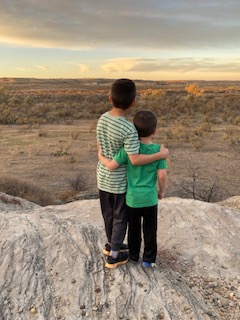
Image of our grandsons courtesy of our daughter.

Feel free to leave a comment below and/or share this post on Facebook.

THE DAY AFTER THE DAY AFTER

My original idea for this week’s blog was to write Wednesday following Tuesday’s vote and call it The Day After. Since no final result has yet been confirmed in terms of the presidential vote I’m preceding with some thoughts on this day after the day after.

For one thing, it seems obvious that every voter has some results in which they are disappointed, as well as some results in which they are pleased.

Certainly the presidential vote, but also many other votes on candidates and issues, led to deep divisions among friends, neighbors, family members, and Christians. If possible, I wish following all the acrimony and disrespect everyone would come together without necessarily agreeing on everything.

I think those who saw this election as a battle between good and evil were off the mark. And I was especially unsettled reading the harsh back and forth on Facebook between committed Christians who disagreed on candidates and issues.

As sad as I am about the divide and polarization among families, friends, and Christians due to this election, I am hopeful the rhetoric will be softened and mutual respect restored. We may or may not understand why some took the positions they took, but it is not our responsibility to question their reasoning for their choices.

Christians do not have to agree on everything political (or lots of other areas) to maintain unity in Christ. I like Pastor Chris Rea’s observation, “I think a church ought to be solidly purple.” He is saying there should be room for both blue and red voters in the Church. Just because we are Christians does not mean we all walk in lock step uniformity.

I read that one faith advisor made the case that “Christians should vote to reelect the president” and another faith advisor spoke on “why Christians should vote for Joe Biden.” I was shocked to read that one prominent pastor told President Trump, “Any real, true believer is going to be on your side in this election.”

I cannot help but wonder where we go as a nation and as Christians from here. It seems obvious that we have to accept the results of the election when everything is finalized. It also makes sense to me to challenge ourselves to “get over” the results we had hoped would come out differently.

We need in general to restore civility, but Christians should go beyond just civility. We are called to love one another and to love our enemies as well. It seems totally out of place to me, however, to view a fellow believer as an enemy because we don’t agree on everything political.

I’m reminding myself of one of the best known instructions in the Bible for God’s people: “Trust in the Lord with all your heart and lean not on your own understanding; in all your ways submit to him, and he will make your paths straight” (Proverbs 3:5 and 6).

Feel free to leave a comment below and/or share this post on Facebook.

Image by conolan from Pixabay

THE CHRISTIAN LIFE IN A NUTSHELL

I’m currently leading a Bible study of Paul’s letter to the Colossians and in coming to chapter two was reminded of one of the briefest statements about the Christian life in the Bible. In Colossians 2:6 and 7 Paul instructs his readers then and us now, “So then, just as you received Christ Jesus as Lord, continue to live your lives in him [or walk with him], rooted and built up in him, strengthened in the faith as you were taught, and overflowing with thankfulness.”

It is indeed a short statement, but it is also a packed and pithy one. I don’t know of anyone having done it, but in reading the two verses I can imagine someone writing an entire book explaining and expanding on this nutshell. I’m not going to write a lengthy essay on the passage, but I do want to make some observations about it.

Paul begins with the reminder that the beginning of the Christian life takes place when someone receives or accepts Jesus as Lord. Receiving Christ as Lord is crucial, and even though Paul doesn’t mention it here, it also includes accepting him as Savior. Both mark the beginning of living in and walking with Christ consistent with one’s confession.

Paul then moves to challenge those who have received Christ Jesus as Lord to live in him [or walk with him]. That includes, of course, not doing things that followers of Jesus are not to do, but also, and equally as important, doing what Jesus calls his followers to do.

Paul assumes that those who received Christ Jesus as Lord are “rooted and built up in him.” These two metaphors use the examples of a tree with deep roots and a house built on a strong foundation for Christians who have received Christ. In the next phrase, “strengthened in the faith,” Paul reminds them that they have been taught about these things.

I’m thinking Paul’s reminder to these believers about their becoming Christians, and his encouragement to them to live the life, is something needed in churches today. And my sense is that it is happening in many ways in most churches through preaching, Bible studies, classes, small groups, and more.

Before I conclude these thoughts I want us to note the last instruction Paul gives in this nutshell to those who have received Christ as Lord in verse 8: “overflowing with thanksgiving.” Of all people, those of us who are Christians should be filled with gratitude. And if we are filled with gratitude, then we should be overflowing with thanksgiving. Grateful first I would think to God the Father, Jesus, and the Holy Spirit; but also to those who enrich our lives in so many ways by their words and actions.

Perhaps those of us who have received Christ Jesus as Lord and walk with him can get a head start on Thanksgiving this year as we ramp up our overflowing with thanksgiving during the entire month of November.

Thank you for reading this post. Feel free to leave a comment below and/or share the post on Facebook or other social media.
Image by Free-Photos from Pixabay

DO YOU HAVE A TENDER CONSCIENCE?

In July I saw a book advertised in an email entitled The Duty and Blessing of a Tender Conscience that got my attention. As I read about it my interest increased when I saw that it was originally published in London in 1691. That’s an old book! Intrigued, I ordered the 2019 reprint in which spelling, formatting, and grammar changes have been made. It has been a relatively easy read with a lot of challenge and conviction.

Author Timothy Cruso (1656-1697) begins his discussion about the subject with a partial verse in II Kings 22. The account is about good King Josiah and his response to God’s message to him through the prophet Huldah. Cruso cites part of her message from God to the king “Because thine heart was tender . . .” (II Kings 22:19).

Those five words from the King James Version provide the starting point for The Duty and Blessing of a Tender Conscience. A broader statement about Josiah’s tender conscience is given in the full verse from the New International Version: “Because your heart was responsive and you humbled yourself before the Lord when you heard what I have spoken against this place and its people—that they would become a curse and be laid waste—and because you tore your robes and wept in my presence, I also have heard you, declares the Lord” (II Kings 22:19, NIV).

Chapter four in the book has the title “The Proper Ingredients of This Tenderness of Heart.” First is the hatred of sin. That certainly makes sense as long as we keep the oft quoted saying in mind: “love the sinner, hate the sin.” Second is love of holiness. Without this ingredient no one will be truly tender in conscience. Third is a fear of God. My sense is that our love of holiness and hatred of sin are the automatic outcomes of what is the real meaning of a fear of God (which is often misunderstood).

I can’t repeat everything in the book in this post, but I do want to relay Cruso’s “The Evidences and Tokens of a Tender Conscience” (chapter six):

            1. The first evidence is a zealous concern for the honor of God, when it interferes and stands in competition with our own, both in matters of faith and practice.

            2. A second evidence is a strict endeavor that both the ends that we propose, and the means which we employ upon all occasions, may be equally good.”

            3. A third evidence is a vigorous resistance of the most plausible and powerful temptations.

            4. A fourth evidence is an impartial shunning of the smallest sins.

            5. A fifth evidence is a particular care in bridling the tongue, and setting a watch against those common unobserved evils that are especially incident thereunto.

At the risk of including too much, I want to also share six things Caruso suggests we need to monitor to have a tender conscience: much speaking, passionate raging, foolish jesting, rash vowing, unregarded promises, and needles protestations.

With these selections I’m confident you see why I said the book is challenging and convicting. I won’t bore you or set myself up by telling you on which of these I most need to work. But I do encourage you to review what I have borrowed from the book and do some self-examination. Do you have a tender conscience?

Please feel free to leave a comment below and/or share this post on Facebook.

photo credit: francescominucci Animals via photopin (license)

WHAT HAPPENED TO MATURITY, RESPECT, CLASS, AND GRAVITAS?

Before reading this post, please note that it is different from my description of what my blogs are about. My site says in these posts I am “Considering the Christian life, the Bible, and the Church.” Clearly that is not true about this one. Yet it is something I have been thinking about and I wanted to share.

Like many who are paying attention to the current political climate as we move closer and closer to Election Day, I am disappointed and embarrassed. It seems to me that grown women and men who are politicians and leaders should be showing more maturity, class, and gravitas, as well as respect to their fellow candidates, politicians, and the public.

I’ve been following presidential elections since 1960 when I was nine years old and cannot remember any political season lacking these qualities as much as we are witnessing now.

And I have in mind not just the two presidential candidates, but their running mates also, as well as the senate majority and minority leaders and the speaker of the house. To me the only one of this group who exhibits these qualities very much at all is the Republican VP candidate.

When it comes to gravitas, where is the seriousness, sobriety, and solemnity in demeanor in campaigning and giving speeches? You would think we would especially see more gravitas when the candidates are interacting with one another or being asked hard questions.

To have class “means to be a gentleman or a lady the old-fashioned way: a respectful, considerate, elegant, discreet, well-mannered, cultured, civilized, witty, funny, faithful, and kind gentleman or lady” (copied from a definition on the internet). That’s a high standard for sure, but I think most of us think our current leaders could and should do far better than they are.

I watch speeches, rallies, and interviews with our candidates now and wonder where the respect politicians showed one another years ago is? It seems like every four years respect between candidates on different sides disappears more and more.

And it’s not just the candidates and leaders who are failing in these crucial qualities. As disappointed as I am with the candidates and political leaders, I am even more disappointed in and by the political commentators and news reporters. So many on their cable shows are lacking in gravitas, class, respect and maturity.

But it is not just people who are involved full time with politics that we see and hear a lot that lacks these important qualities. Many in the entertainment business are as bad if not worse than the candidates, the politicians, the news reporters, and the political commentators.

In the title of this post I listed four qualities I think we are missing from our candidates, political leaders, political news reporters, and many celebrities. The one of the four I have not mentioned is maturity. My challenge to everyone who tries to stay informed about this political season and discuss it with others is simple. Don’t you think it’s time we grow up and show some maturity? I think with some intentionality we all could do better.

Feel free to leave a comment below and/or share this post on Facebook or in other ways.

Thank you for reading; in my next post I will be returning to “Considering the Christian life, the Bible, and the Church.”

photo credit: Thomas Hawk First Light on Mount Rushmore via photopin (license)

WHAT DOES IT MEAN TO BE BLESSED?

While not original with Chick-fil-A, their network of restaurants made the phrase “Have a Blessed Day” a common expression. When we first moved to Amarillo a few years ago I was surprised that almost everywhere I went to shop or be served employees told me “Have a Blessed Day.”

What does it mean to be blessed or to “Have a Blessed Day?” I’m reminded of a song we sang in grade school that declared what “Happiness is.” The refrain of the song reminded us that happiness is “different things to different people.” My sense is that today “being blessed” and “having a blessed day” means different things to different people.

The Bible uses the word blessed many times in both the New and the Old Testaments. And when the Bible uses this word the writer or speaker is declaring that those who have and practice certain characteristics are blessed. Blessed suggests God’s favor, approval, pat on the back, or congratulations. We call these descriptions of those who are blessed beatitudes.

One of the best known uses in the Old Testament is Psalm 1:1 and 2, “Blessed is the one who does not walk in step with the wicked or stand in the way that sinners take or sit in the company of mockers, 2 but whose delight is in the law of the Lord, and who meditates on his law day and night.” To get the full explanation look up Psalm 1 and review verses 3-6.

Probably surprising to some readers, the last book of the Bible – the book of Revelation – has seven declarations about those who are blessed. One of my favorites is Revelation 14:13, Then I heard a voice from heaven say, “Write this: Blessed are the dead who die in the Lord from now on.” “Yes,” says the Spirit, “they will rest from their labor, for their deeds will follow them.”

The best known beatitudes in the Bible are the eight pronouncements Jesus made in Matthew 5:3-10 in the opening verses of the Sermon on the Mount. He underscores eight qualities or attitudes of people who are blessed. And after each pronouncement Jesus specifies the special blessing that goes with the quality or attitude.

My sense is that the first of Jesus’ beatitudes is the most misunderstood, and at the same time the most important. In Matthew 5:3 Jesus declares, “Blessed are the poor in spirit, for theirs is the kingdom of heaven” (NIV).

The quality “poor in spirit” means more than simply being poor. One misunderstanding of the phrase is to shorten it to say “poor-spirited.” But to be poor in spirit does not mean a person has no value, or that he or she is unimportant or insignificant. It isn’t to be like Eeyore who is pessimistic, gloomy, depressed, and no fun.

A couple of different translations of the quality helps us better understand what it means to be “poor in spirit.” The Good News Translation renders the first beatitude “Happy are those who know they are spiritually poor; the Kingdom of heaven belongs to them!” The New Century Version reads “They are blessed who realize their spiritual poverty, for the kingdom of heaven belongs to them.”

To be “poor in spirit” is to be aware that on our own we are not worthy of God’s love.  It is to acknowledge our spiritual poverty and therefore humbly depend on God’s mercy and grace. I hope it is obvious why I suggest this first beatitude is so important.

The specific blessing (in addition to the general blessing) of being “poor in spirit” is to be a member of the kingdom of heaven. Christians acknowledge their need for God’s gift of salvation through Jesus. The kingdom belongs to us because we belong to the kingdom.

Have a blessed day!

Feel free to leave a comment below and/or share this post.

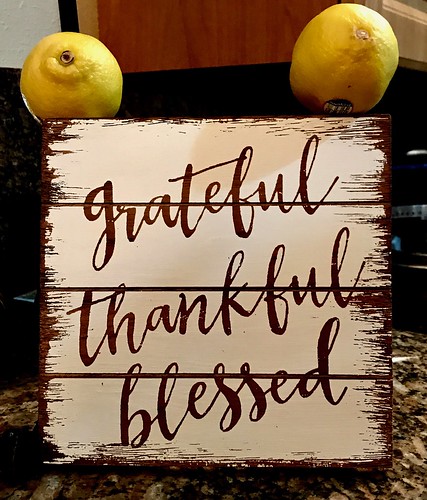
photo credit: byzantiumbooks Grateful for Lemons via photopin (license)